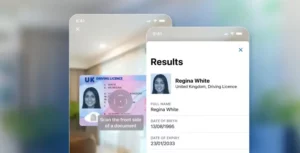
Experience the proven power of our computer vision solutions for yourself in a few simple steps.


Account takeover (ATO) occurs when a fraudster gains unauthorized access to a user’s account. Learn how ATO happens, common warning signs, and how to prevent it.
Learn moreAccount Takeover (ATO) occurs when unauthorized individuals gain control over user accounts using phishing, keyloggers, or malware. Protect against ATO attacks with strong authentication, unique passwords, and advanced security tools.
Learn morePrevent unauthorized access to online accounts & safeguard personal information with strong passwords, authentication, monitoring, & anti-fraud tools.
Learn moreAccount Validation Services verify user info during sign-up or changes, preventing fraud, maintaining data accuracy, and enhancing trust.
Learn moreAn address card neatly organizes contact details like name, phone number, and address, making personal info quick to access and share.
Learn moreAddress risk measures exposure to crime, disasters, or hazards at a location. Use it to make safer, data-informed decisions.
Learn moreAddress Verification Service (AVS) validates customer address info for e-commerce & credit card transactions. Enhances security & prevents fraud.
Learn moreAdvance Fee Fraud, exemplified by the Nigerian Prince scam, deceives victims into paying upfront fees or providing personal info under false pretenses.
Learn moreAdverse Media Screening: Identify risks by analyzing news, social media, and legal data. Protect reputation, comply with regulations, and make informed business decisions. Advanced technology tools used for searching and analyzing vast amounts of data.
Learn moreEnsure age-restricted content is accessed legally by using ID checks, biometrics, or AI estimation tools to verify age and protect minors.
Learn moreAge-restricted Purchases: Transactions involving products or services that are legally restricted to be sold only to individuals above a certain age.
Learn moreAI-powered refers to technologies, systems, or devices that utilize artificial intelligence to enhance their capabilities, performance, or functionality.
Learn moreAlien ID is an official document issued to non-citizens, verifying their immigration status and providing legal recognition in a country.
Learn moreThe Alien Passport is an official document issued by a country to non-citizens, granting them legal identification and temporary residency status.
Learn moreAML Audit examines and evaluates an organization's Anti-Money Laundering program for compliance with laws, preventing illicit activities. Enhance controls, mitigate risks, and maintain financial system integrity. Required for transparency and safeguarding against financial crime.
Learn moreBoost your SEO with anomaly detection - Identify outliers, errors, fraud, and unusual events in data using statistical methods and machine learning algorithms. Essential for cybersecurity, finance, healthcare, and more!
Learn moreAnonymised data refers to information that has been stripped of identifying details, ensuring the identities of individuals cannot be determined.
Learn moreAnti-Money Laundering (AML) refers to regulations and procedures aimed at preventing illicit funds from disguising as legitimate money. It helps combat financial crimes like terrorism financing and corruption, ensuring the integrity of the financial system. Compliance is mandatory for banks and institutions.
Learn moreDiscover the primary AML regulators worldwide: FinCEN in the US, FCA in the UK, AUSTRAC in Australia, FIU in Singapore, FSC in South Korea, and FSA in Japan.
Learn moreApplication fraud involves false data to obtain benefits. Prevent it by verifying information during onboarding, lending, and hiring processes.
Learn moreThe Area Under the Curve (AUC) is a metric used in statistics and machine learning to assess binary classification models' performance. Learn more here.
Learn moreDiscover the power of Artificial Intelligence (AI) in revolutionizing industries, automating tasks, and enhancing decision-making capabilities. Learn more about machine learning, natural language processing, computer vision, and robotics.
Learn moreDiscover the various methods attackers use to exploit system vulnerabilities & gain unauthorized access. Mitigate attack vectors with effective security measures.
Learn moreSecurely verify user identity, grant access to resources, and maintain system security with authentication. Protect sensitive information with trusted credentials.
Learn moreAutomate approval processes, streamline operations, and reduce manual intervention with auto-approval systems. Increase efficiency and reduce costs.
Learn moreStreamline decision-making with auto-decision systems powered by AI. Improve efficiency, accuracy, and reduce costs in finance, healthcare, and more. Stay transparent and accountable.
Learn moreProtect integrity and security against fraud, corruption, and data breaches, safeguarding fairness across all domains.
Learn moreBank drops are used by criminals to receive illicit funds through legitimate accounts, hiding their true origin to evade detection.
Learn moreCompare KYC documentation needs for personal and business accounts. Understand verification timelines and compliance categories.
Learn moreLearn about the Bank Secrecy Act (BSA), a federal law in the US aimed at preventing money laundering and financial crimes. Discover its requirements and importance.
Learn moreEnhance customer experience and build innovative financial solutions with Banking as a Service (BaaS). Seamlessly integrate banking services into your platform.
Learn moreBarcode scanning technology enables efficient and accurate identification, tracking, and management of products, improving operational efficiency and customer satisfaction.
Learn moreDetect and prevent fraud with behavior-based analysis. Analyze behavioral patterns and use advanced analytics to identify suspicious activities.
Learn moreGain insights and make informed decisions with behavioral analytics. Track user behavior, optimize strategies, and enhance user experiences. Drive growth with data-driven decisions.
Learn moreDiscover the importance of beneficial ownership in finance, business, and property law. Learn how it helps identify true stakeholders and ensures transparency.
Learn moreBiometric refers to the measurement and analysis of unique physical or behavioral characteristics, such as fingerprints or voice patterns, for identification or authentication purposes.
Learn moreA biometric passport is a secure, tamper-proof travel document with an encrypted chip for efficient and safe international travel.
Learn moreUnderstand the different types of biometric verification, how they work, and why this authentication process is more secure than traditional passwords.
Learn moreThe Border Crossing Card is a U.S. travel document for Mexican citizens entering the U.S. for specific purposes like tourism or business.
Learn moreBoost productivity & save time with bots, automated software applications that simulate human interactions & perform tasks in various domains.
Learn moreProtect your business from cyber scams with Business Email Compromise (BEC) awareness. Implement security measures and educate employees to stay safe.
Learn moreBust outs are illegal escapes from custody involving force or deception. Law enforcement uses various measures to detect and prevent them.
Learn moreThe California Consumer Privacy Act (CCPA) grants California residents rights over their personal information, including the right to know, delete, and opt out of data collection and sales. Improving consumer privacy and control.
Learn moreLearn about Card Not Present Fraud (CNP) - unauthorized online, phone, or mail-order transactions without card present. Find out security measures to mitigate risk.
Learn moreCarding: Verifying stolen card data for malicious use. Carders obtain details from underground markets or data breaches to validate and sell for fraud.
Learn moreCEO fraud (BEC) is a cyber attack where fraudsters impersonate a CEO to deceive employees into taking unauthorized actions, leading to financial losses and compromise of sensitive data.
Learn moreChallenge-Response Authentication verifies identity by exchanging challenges and responses, enhancing security against replay attacks.
Learn moreChargeback: A customer-initiated reversal of a card payment, used for consumer protection in cases like fraud or non-delivery. Merchants may face penalties.
Learn moreCheck fraud is the manipulation of checks for illegal gain, including forgery, alteration, counterfeit checks, and unauthorized use, posing a threat to individuals, businesses, and financial institutions.
Learn moreCOPPA is a US law protecting online privacy of children under 13. It sets guidelines for websites collecting personal data, ensures parental consent, and allows control over information. FTC enforces compliance.
Learn moreA Citizenship Certificate is an official document that confirms an individual's citizenship status in a particular country.
Learn moreClean fraud: Financial fraud using real information. Perpetrators use stolen or fake identities to bypass security measures and make unauthorized transactions. Difficult to detect.
Learn moreCNP fraud: Unauthorized transactions made using card details without physical presence. Businesses employ security measures to combat and protect against monetary losses.
Learn moreAdhere to laws, rules, and standards with compliance. Ensure ethical boundaries, mitigate risks, and protect stakeholders' interests.
Learn moreA Compliance Officer ensures adherence to policies, laws, and regulations, mitigating risks and promoting ethical practices for an organization.
Learn moreExplore the field of computer vision, an AI discipline focused on enabling machines to interpret visual information from digital images or videos. Learn about algorithms and applications.
Learn moreA Consular ID is an official identification document issued by a foreign government to its citizens residing or traveling abroad.
Learn moreThe Consumer Financial Protection Bureau (CFPB) promotes fairness and accountability in the financial marketplace, protecting consumers and enforcing regulations.
Learn moreProactively analyze real-time data to detect risks, vulnerabilities, and breaches. Improve security, comply with regulations, and stay ahead of threats.
Learn moreConversion Rates: The percentage of website visitors who complete a desired action, such as making a purchase or filling out a form.
Learn morePrevent unauthorized access & data breaches with unique passwords & multi-factor authentication. Learn about the risks of credential stuffing.
Learn moreUnauthorized use of credit card details for fraudulent transactions. Learn about methods, consequences, and security measures to protect yourself.
Learn moreLearn how credit piggybacking works as an authorized user strategy. Discover the process, timeline, and key differences from cosigning arrangements.
Learn moreCross-channel fraud: Exploiting vulnerabilities in online and offline channels for fraudulent activities. Learn how to protect your business and customers.
Learn moreCustomer Churn refers to the rate at which customers cease to do business with a company or unsubscribe from its services.
Learn moreCustomer Due Diligence (CDD) is a process that financial institutions use to verify and assess the risk associated with their customers.
Learn moreCustomer Identification Program (CIP) is a mandatory process conducted by financial institutions to verify and authenticate the identity of their customers.
Learn moreCustomer Identity & Access Management (CIAM) refers to the process of managing and securing customer identities and their access to digital resources.
Learn moreCustomer Onboarding is the process of guiding and familiarizing new customers with a product or service to ensure a smooth transition and positive experience.
Learn moreCustomer risk profiling helps financial institutions assess user risk, ensure compliance, and tailor products or services to risk levels.
Learn moreThe Dark Web is a hidden part of the internet that is not indexed by search engines and is often associated with illegal activities.
Learn moreA data breach is the unauthorized access, disclosure, or loss of sensitive information, such as personal data or trade secrets, by a third party.
Learn moreData Capture Automation uses smart tools to extract and process data from documents, cutting down manual work and boosting efficiency.
Learn moreData Entry Automation: The process of utilizing software or systems to automatically input, validate, and manipulate data with minimal human intervention.
Learn moreData Extraction: The process of collecting and retrieving specific data from various sources, such as databases or websites, for analysis or storage.
Learn moreThe Data Protection Act 2018 is a UK law that safeguards individuals' personal data, ensuring it is processed lawfully and securely.
Learn moreDebit Card Fraud: Unauthorized use of a debit card to make fraudulent transactions, often resulting in financial loss for the cardholder.
Learn moreDeepfake: A deceptive technique that uses artificial intelligence to create manipulated videos or images, often replacing a person's face with another's, resulting in highly realistic but fabricated content.
Learn moreDDA fraud involves unauthorized access or manipulation of funds in a deposit account, often through cyberattacks or identity theft.
Learn moreDevice Fingerprinting is the process of uniquely identifying and tracking devices based on their distinctive characteristics, such as hardware, software, or network configurations.
Learn moreDevice Risk refers to the potential threats or vulnerabilities associated with electronic devices, including the risk of data breaches, malware attacks, and unauthorized access.
Learn moreA digital certificate is an electronic document that verifies the authenticity and integrity of digital information, ensuring secure online communication.
Learn moreDigital Footprint: The trail of information left by an individual's online activity, including social media posts, browsing history, and online interactions.
Learn moreDigital Forgery: Falsification or alteration of digital content, such as photos or documents, with the intent to deceive or mislead.
Learn moreDigital Identity refers to the online representation of an individual or entity's personal information, activities, and interactions on the internet.
Learn moreDigital Manipulation: The alteration or modification of digital images using software tools to enhance, correct, or create visual content.
Learn moreDigital onboarding is the process of integrating new users into a digital platform or service, ensuring a seamless and efficient experience.
Learn moreA Digital Passport is an electronic document that verifies a user's identity online, enabling secure access to digital services.
Learn moreDigital Tampering: Unauthorized manipulation or alteration of digital content, such as images or documents, with the intent to deceive or mislead.
Learn moreDigital Trust is the confidence in the reliability, integrity, and security of digital technologies and online interactions.
Learn moreDNI is a compulsory identity document in Spain, containing personal details like name, photo, and date of birth for official use.
Learn moreDocument Capture refers to the process of digitally capturing and converting physical or electronic documents into a searchable and editable format.
Learn moreDocument Type Recognition is the process of automatically identifying and classifying different types of documents based on their content and layout.
Learn moreDocument verification is the process of confirming the authenticity and validity of a document, typically through comparisons with trusted sources or by using advanced technologies.
Learn moreThe Driver Card is a small identification card issued to licensed drivers, providing proof of their driving privileges and personal information.
Learn moreA government-issued document that grants individuals legal permission to operate motor vehicles on public roads.
Learn moreThe drop address is a specific location where packages or items are delivered or picked up, often different from the sender's or recipient's address.
Learn moreDrop-off Rates: The percentage of users who leave a website or app after visiting only one page or without completing a desired action.
Learn moreThe Egmont Group is an international organization of financial intelligence units that collaborate to combat money laundering and terrorist financing.
Learn moreEmail Risk: Potential dangers or vulnerabilities associated with the transmission, storage, and access of electronic messages via email platforms.
Learn moreThe Employment Pass is a work visa issued by certain countries that allows foreign professionals to work and reside in the country for a specified period.
Learn moreEmulators let one system imitate another, enabling apps or OS from other platforms to run smoothly. Learn how they’re used in development.
Learn moreEnhanced Due Diligence (EDD) is a thorough investigation process that involves gathering additional information to assess higher-risk customers or transactions.
Learn moreEntity Resolution is the process of identifying and merging duplicate records or entities within a dataset to ensure data quality and consistency.
Learn moreEU eIDAS Regulation: EU regulation that establishes a framework for electronic identification and trust services in the European Union.
Learn moreThe European Banking Authority (EBA) is an EU agency that ensures the effective and consistent regulation and supervision of banking activities within the European Union.
Learn moreESMA is a European regulatory body overseeing securities and markets, ensuring investor protection, stability, and transparency in the EU financial system.
Learn moreIndonesia’s eKTP system modernizes ID access using smart card tech, helping 172M+ citizens engage with public services securely.
Learn moreeKYC is an electronic process that allows individuals to verify their identity and authenticate themselves digitally, eliminating the need for physical documents.
Learn moreFacial Matching: The process of comparing and analyzing facial features to determine whether two or more facial images belong to the same person.
Learn moreFacial Recognition is a technology that identifies and verifies individuals by analyzing unique facial features, used for security and authentication purposes.
Learn moreFake Check Scams: Fraudulent schemes where victims receive counterfeit checks, are instructed to deposit them, and then send money back to scammers before banks discover the fraud.
Learn moreFalse Negative: A result that incorrectly indicates the absence of a condition or attribute, despite it actually being present.
Learn moreFalse Positive: An incorrect result that indicates a condition or event is present when it is not.
Learn moreThe False Positive Ratio is the proportion of incorrect positive results among all positive results obtained in a test or system.
Learn moreThe Federal Trade Commission (FTC) is a government agency in the United States responsible for promoting consumer protection and preventing unfair business practices.
Learn moreThe Financial Action Task Force (FATF) is an intergovernmental organization that sets global standards to combat money laundering and terrorist financing.
Learn moreThe Financial Conduct Authority (FCA) is a regulatory body in the UK that ensures financial markets are fair, transparent, and consumers are protected.
Learn moreFinancial Crime refers to illegal activities involving deceit, fraud, or manipulation of financial systems, resulting in monetary loss or illegal gains.
Learn moreFinCEN is a U.S. government agency that combats money laundering, terrorist financing, and other financial crimes through data analysis and regulation.
Learn moreFingerprint scan is a biometric authentication method that uses unique patterns on a person's fingertips to verify their identity.
Learn moreFirst Payment Default (FPD) refers to the failure of a borrower to make the initial payment on a loan or credit agreement.
Learn moreFirst-Party Fraud: Occurs when individuals deceive a business using their own identity to obtain goods, services, or money through fraudulent means.
Learn moreFraud Alert: A warning or notification that is issued to protect individuals or organizations from potential fraudulent activities or identity theft.
Learn moreFraud Analytics is the practice of using data analysis techniques and algorithms to detect and prevent fraudulent activities within a system or organization.
Learn moreFraud Detection refers to the process of identifying and preventing dishonest or deceptive activities, such as financial scams or identity theft.
Learn moreFraud Investigation is the process of examining and uncovering fraudulent activities or deceptive behavior to gather evidence for legal action or prevention measures.
Learn moreA Fraud Management System is a software solution designed to detect, prevent, and mitigate fraudulent activities within an organization's operations.
Learn moreFraud Prevention refers to measures and techniques implemented to detect, deter, and mitigate fraudulent activities, protecting individuals and organizations from financial losses and reputational damage.
Learn moreA fraud ring is a network of individuals collaborating to engage in illegal activities, such as identity theft or financial scams, for personal gain.
Learn moreThe 'Fraud Score' is a numerical value that assesses the likelihood of fraudulent activity, providing a measure to detect and prevent potential fraud.
Learn moreThe Fraud Triangle (Pressure, Opportunity, Rationalization) is a concept that explains the factors that typically lead individuals to commit fraudulent acts.
Learn moreFraudulent Transaction: An unauthorized or dishonest activity involving the deceitful use of funds or assets for personal gain or illegal purposes.
Learn moreFriction is the resistance encountered when two objects rub against each other, resulting in a force that opposes their relative motion.
Learn moreFriendly Fraud: A deceptive practice where a customer disputes a legitimate transaction, resulting in chargebacks, often due to forgetfulness or intentional abuse.
Learn moreFuzzy Matching: A technique used to find approximate matches between similar but not identical strings of text or data.
Learn moreThe General Data Protection Regulation (GDPR) is a set of regulations that governs the protection and processing of personal data within the European Union.
Learn moreA ghost employee is a fictitious identity listed on a company's payroll, typically used for fraudulent purposes or embezzlement.
Learn moreThe Global Entry Card grants fast-track entry at airports and borders for low-risk, pre-approved travelers through a U.S. government program.
Learn moreThe Global Watchlist is a comprehensive database of individuals or entities subject to scrutiny due to potential risks or suspicious activities worldwide.
Learn moreHealthcare Fraud: Illegitimate activities committed by individuals or organizations to deceive or defraud healthcare systems for personal or financial gain.
Learn moreHeuristic Analysis: Evaluating the usability of a product or system by identifying and uncovering potential design flaws and user experience issues.
Learn moreIdentity Access Management (IAM) is a system that manages and controls user access to resources, ensuring security and reducing unauthorized access risks.
Learn moreIdentity as a Service (IDaaS) is a cloud-based solution that enables businesses to manage user identities and access privileges securely and efficiently.
Learn moreIdentity Document Verification: Process of confirming the authenticity and accuracy of a person's identification documents, such as passports or driver's licenses.
Learn moreIdentity Fraud: The deliberate use of someone else's personal information without their consent to commit crimes or fraudulent activities.
Learn moreIdentity Fraud Detection and Prevention Software: A tool that identifies and prevents unauthorized use of personal information, mitigating the risk of identity theft and fraud.
Learn moreIdentity fraud in banking involves using stolen personal info for transactions. Learn how banks detect and prevent these threats.
Learn moreThe Identity Graph is a database that associates and links individuals' data across different devices and platforms, creating a unified profile.
Learn moreIdentity Proofing is the process of verifying a person's identity by collecting and validating their personal information and credentials.
Learn moreIdentity Theft: Unauthorized acquisition and misuse of personal information, such as social security numbers or bank account details, for fraudulent purposes.
Learn moreIdentity Verification: The process of confirming an individual's identity, often through the use of personal information, documents, or biometric data.
Learn moreAn Identity Verification Service Provider (IVSP) is a company that offers solutions for confirming the authenticity and accuracy of individuals' identities.
Learn moreAn Image Capture Application is a software program that enables users to capture, edit, and save images from various sources, such as cameras or scanners.
Learn moreImage pre-processing enhances raw images for better quality and suitability in further analysis.
Learn moreImage processing is the manipulation and analysis of digital images to enhance or extract useful information, using algorithms and computer systems.
Learn moreIQA is the evaluation of the overall visual fidelity and perceived quality of an image, typically based on metrics and algorithms.
Learn moreIn-browser SDK is a software development kit that allows developers to create and integrate web applications directly within a web browser.
Learn moreThe Indian IT Act (2000) is a legislation that governs electronic transactions, data protection, and cybersecurity in India.
Learn moreInsider Trading: Illegal practice of trading stocks or securities based on non-public information obtained by individuals within a company.
Learn moreInsurance Fraud: Deliberate deception to obtain financial gain from insurance companies by submitting false claims or inflating the value of legitimate claims.
Learn moreThe International Monetary Fund (IMF) - Financial Integrity Group is a department that promotes and monitors global financial integrity and transparency.
Learn moreInterpol is an international organization that facilitates global police cooperation to combat crime, terrorism, and other cross-border threats.
Learn moreInvoice Fraud is a deceptive practice where scammers create fake invoices or manipulate existing ones to trick individuals or businesses into making unauthorized payments.
Learn moreISO Certification is a globally recognized accreditation that certifies an organization's compliance with international standards for quality management systems.
Learn moreKYC (Know Your Customer) is a process used by businesses to verify the identity and assess the risk of clients before engaging in a business relationship.
Learn moreKnowledge Based Authentication (KBA) is a security method that verifies a person's identity by asking them questions only they should know the answers to.
Learn moreLiveness Detection is a biometric technology that verifies the presence of a live person by distinguishing real faces from fake ones.
Learn moreLoan Fraud: Deceptive practices involving misrepresentation or falsification of information to obtain a loan, often resulting in financial losses for lenders.
Learn moreLottery or prize scams trick people into believing they’ve won, only to steal personal info or money. Stay alert and learn to spot red flags.
Learn moreMachine Learning (ML) is a branch of artificial intelligence (AI) that enables computers to learn from and make predictions or decisions without explicit programming.
Learn moreThe Machine Readable Zone (MRZ) is a section on official documents, such as passports, that contains encoded personal information for automated scanning.
Learn moreMail Fraud: A criminal offense that involves using the postal system to deceive or defraud individuals or businesses.
Learn moreManual Review: A process of evaluating and analyzing information or transactions by human reviewers instead of relying solely on automated systems.
Learn moreMobile payment fraud exploits device or platform vulnerabilities, resulting in unauthorized transactions. Learn how to reduce this risk.
Learn moreA mobile proxy enables private, secure internet access from mobile devices by masking IP addresses. Discover its security advantages.
Learn moreMoney Laundering: The illegal practice of making illegally-gained proceeds appear legitimate by disguising their true origin.
Learn moreA Money Mule is an individual who transfers illegally obtained funds on behalf of criminals, often unaware of their involvement in money laundering schemes.
Learn moreMortgage Fraud: Deceptive practices involving misrepresentation or omission of information in a mortgage loan application for personal gain.
Learn moreMulti-factor Authentication (MFA) is a security measure that requires multiple forms of identification to access a system, providing an extra layer of protection.
Learn moreMyKad, short for "Malaysian Identity Card", is a government-issued identification card for Malaysian citizens
Learn moreNIST is a federal agency that promotes innovation and industrial competitiveness by developing and applying technology, measurements, and standards.
Learn moreNew Account Fraud is the act of creating unauthorized accounts using stolen or fabricated identities for illicit purposes.
Learn moreOFAC is a U.S. government agency that enforces economic sanctions against foreign entities to protect national security and foreign policy interests.
Learn moreThe Office of the Comptroller of the Currency (OCC) is a U.S. federal agency responsible for overseeing and regulating national banks.
Learn moreOmnichannel Verification: A seamless and integrated process that verifies the identity of customers across multiple channels, ensuring a consistent and secure user experience.
Learn moreOn Device Processing: The execution of computational tasks and data processing directly on a device, such as a smartphone or computer, without relying on a remote server or internet connection.
Learn moreOnboarding is the process of integrating and familiarizing new employees with an organization, its culture, and their roles and responsibilities.
Learn moreOnline Fraud (or Cyber Fraud) refers to illegal activities conducted on the internet with the intention to deceive or trick individuals or organizations for financial gain.
Learn moreOCR is a technology that converts printed or handwritten text into digital format, enabling computers to recognize and process it for various applications.
Learn moreThe OECD is an international organization that promotes economic growth and social well-being through cooperation and policy recommendations among member countries.
Learn moreOut of Wallet Questions (OOW): Security questions used to verify a user's identity by requesting personal information not commonly known to others.
Learn moreP2P Fraud: Illicit activities that involve the fraudulent use of peer-to-peer (P2P) networks or platforms for financial gain.
Learn morePassive liveness detection verifies identity using biometrics—no user effort required. Learn how it improves UX and fraud prevention.
Learn moreThe Payment Services Directive 2 (PSD2) is an EU regulation that aims to regulate payment services and promote competition and innovation in the market.
Learn morePayroll Fraud is the illegal manipulation of financial records or processes related to employee compensation, resulting in unauthorized gains for the perpetrator.
Learn morePDF417 is a type of barcode holding lots of data and is used on IDs, boarding passes, and packages.
Learn moreThe Peel Chain refers to a blockchain scaling solution that enhances the performance and efficiency of transactions by using a multi-layered approach.
Learn morePIPEDA is a Canadian law that governs the collection, use, and disclosure of personal information by private businesses during commercial activities.
Learn morePersonally Identifiable Information (PII) refers to any data that can be used to identify an individual, such as their name, social security number, or address.
Learn morePhishing is a form of cyber attack where scammers impersonate trustworthy sources to deceive individuals into revealing sensitive information or performing malicious actions.
Learn morePhone Risk: The potential danger or negative consequences associated with using a mobile phone, such as distractions, privacy breaches, or exposure to harmful radiation.
Learn morePiggybacking refers to the act of unauthorized access to a wireless network by using someone else's internet connection without their knowledge or permission.
Learn morePEP checks identify individuals in high-risk positions to prevent corruption or money laundering. Explore how due diligence protects your org.
Learn morePollination is the transfer of pollen from the male part of a flower to the female part, enabling fertilization and the production of seeds.
Learn moreA Ponzi Scheme is a fraudulent investment operation that pays returns to existing investors using funds contributed by new investors.
Learn morePredictive Analytics is the practice of extracting information from data to forecast future outcomes or behavior, enabling informed decision-making.
Learn moreA pyramid scheme is a fraudulent business model that recruits members through a hierarchical structure, where participants make money by recruiting others.
Learn moreQR Code Scanning is the process of using a mobile device's camera to scan and decode Quick Response (QR) codes, allowing users to quickly access information, websites, or perform actions.
Learn moreReal ID, a new type of USA state-issued ID, is easily identifiable by a special marking, like a star symbol, on the card.
Learn moreRed Flags: Warning signs or indicators of potential problems, risks, or suspicious behavior that should be carefully considered or investigated.
Learn moreRegulatory Reporting is the process of submitting accurate and timely financial information to comply with regulations set by governing authorities.
Learn moreRental Scam: A fraudulent scheme where individuals pose as landlords or agents to deceive potential renters, often requesting payment for fake listings or properties.
Learn moreA RESTful API is a web-based application programming interface that follows the principles of Representational State Transfer (REST).
Learn moreReturn Fraud: Unauthorized return or exchange of merchandise, typically involving stolen goods or fraudulent receipts.
Learn moreRisk Assessment: Process of identifying, analyzing, and evaluating potential risks to determine their impact on objectives and develop appropriate responses.
Learn moreRisk-Based Authentication (RBA) is a security method that assesses user behavior and potential threats to determine the level of authentication required.
Learn moreRomance Scam: Fraudulent scheme where individuals manipulate emotions to deceive victims for financial gain.
Learn moreA Sanctions List is a compilation of individuals, organizations, or countries subject to restrictions or penalties due to violations of international laws or policies.
Learn moreSanctions Screening is a process of checking individuals or entities against government lists to ensure compliance with regulations and avoid engaging in prohibited activities.
Learn moreThe Securities and Exchange Commission (SEC) is a government agency responsible for regulating and overseeing the securities industry in the United States.
Learn moreSecurities fraud deceives investors with false claims or market manipulation. Learn to spot the signs and protect against these practices.
Learn moreA self-hosted API is an application programming interface that is hosted and managed by the user themselves, rather than by a third-party provider.
Learn moreSelfie Checks are verification processes that require individuals to submit a selfie as proof of identity or to confirm their physical presence.
Learn moreShipping Fraud: A form of fraudulent activity that involves deceiving individuals or businesses during the process of shipping goods, often resulting in financial loss.
Learn moreSigma Fraud Score is a numerical measure that assesses the likelihood of fraudulent activity based on specific indicators and patterns.
Learn moreSingle Frame Liveness Detection: A method that verifies the authenticity of an individual using a single image, ensuring they are physically present and not a spoof.
Learn moreSkimming is a reading technique where one quickly glances over a text to get an overall understanding of the main ideas and key points.
Learn moreSleeper Fraud: A deceptive scheme where fraudulent activity remains dormant or undetected until a later time, causing significant financial harm.
Learn moreSmishing is a form of phishing where cybercriminals attempt to deceive individuals by sending malicious messages via SMS or text messages.
Learn moreSOC 2 Type 2 Controls refer to the measures and safeguards implemented by organizations to ensure compliance with the SOC 2 Type 2 certification requirements.
Learn moreAn SDK equips developers with the tools, code, and libraries needed to build apps faster and more efficiently for specific platforms.
Learn moreSpear Phishing: A targeted form of cyber attack where individuals or organizations are deceived into revealing sensitive information through personalized and deceptive emails.
Learn moreA sponsor bank is a financial institution that supports and oversees the operations of a prepaid card program or other financial services.
Learn moreSpoofing is a fraudulent act of impersonating or masquerading as someone else in order to deceive or gain unauthorized access to information or systems.
Learn moreA Suspicious Activity Report (SAR) is a document used to report potentially illegal or suspicious activities to law enforcement agencies.
Learn moreSynthetic Identity Fraud: A type of fraud where thieves create new identities by combining real and fake information to commit financial crimes.
Learn moreSynthetic Identity Theft: A form of identity theft where a new identity is created by combining real and fake information to commit fraudulent activities.
Learn moreTax fraud is the illegal act of intentionally evading or manipulating tax obligations, such as underreporting income or inflating deductions, to avoid paying full taxes.
Learn moreText extraction pulls key data from documents like receipts or articles, enabling automation and insights. Discover use cases and benefits.
Learn moreThe Basel Committee on Banking Supervision (BCBS) is an international forum that develops banking regulations to promote global financial stability.
Learn moreThe JMLSG provides UK financial institutions with guidance to comply with AML and counter-terrorism financing regulations. Learn more.
Learn moreThe Payment Card Industry Security Standards Council (PCI SSC) sets security standards for the protection of cardholder data and promotes secure payment transactions.
Learn moreThe Wolfsberg Group develops AML and CTF standards, helping global banks align with best practices and reduce financial crime risk.
Learn moreThin File: A term used to describe a credit report with a limited history, typically due to a lack of credit accounts or recent credit activity.
Learn moreThird-Party Identity Fraud: The unauthorized use of another person's personal information by an individual or entity not directly involved in the original transaction or relationship.
Learn moreTransaction Filtering is the process of identifying and sorting transactions based on specific criteria, such as type, amount, or time, for better organization and analysis.
Learn moreTransaction Monitoring is the process of tracking and analyzing financial transactions to detect and prevent fraudulent activities or money laundering.
Learn moreA travel or vacation scam refers to fraudulent schemes aimed at deceiving individuals when booking or planning their trips or holidays.
Learn moreA type of fraud where a scammer uses a third party to deceive and exploit a victim, often involving fraudulent transactions or communication.
Learn moreTrue Acceptance Rate refers to the measure of how often a security system correctly identifies and allows access to legitimate users.
Learn moreTwo-factor Authentication (2FA) is an additional layer of security that requires users to provide two different authentication factors to access an account.
Learn moreThe unbanked refers to individuals who do not have access to traditional banking services or do not possess a bank account.
Learn moreUnderbanked: Individuals or businesses with limited access to traditional banking services and rely on alternative financial solutions.
Learn moreUnstructured documents lack consistent format, making data harder to find and analyze. Learn how to handle them with smart extraction tools.
Learn moreThe USA PATRIOT Act is a US law passed in response to the September 11 attacks, expanding surveillance powers to combat terrorism.
Learn moreUser transactions are a record of interactions and activities carried out by individuals on a platform, typically involving the exchange of goods, services, or information.
Learn moreVelocity checks are used to assess the speed at which something is moving or changing, ensuring it stays within predetermined limits.
Learn moreVishing is a form of phishing that uses voice communication, usually over the phone, to deceive individuals into providing sensitive information.
Learn moreWarranty Fraud: Deceptive act of intentionally misrepresenting or falsifying information to exploit or abuse warranty claims for personal gain.
Learn moreWhaling attacks target executives with fake emails to steal credentials or sensitive info. Learn how to spot and prevent these threats.
Learn moreLearn what are agentic payments and discover how AI agents make autonomous financial decisions. Understand the 5-stage technical process behind intelligent transactions.
Learn moreIdentify exit scams, fake endorsements, and plagiarized whitepapers. Learn the tactics fraudsters use in ICO scams to deceive investors.
Learn moreLearn how injection attacks work, understand common types, and discover proven techniques to protect vulnerable applications from malicious code.
Learn morePresentation Attack Detection (PAD) is the process of identifying and preventing attempts to deceive biometric systems by using fake or altered data.
Learn moreLearn what third party payment processors are, their advantages and drawbacks, plus guidance on choosing the best payment method.
Learn moreLearn how video deepfake attacks use GANs and machine learning to create fake videos. Discover the AI creation process and key differences from traditional video editing.
Learn moreA chargeback is a payment reversal initiated by a customer through their bank. Learn how chargebacks work, why they happen, and how businesses can prevent them.
Learn moreA fraudulent transaction is an unauthorized or deceptive payment made without the account holder’s consent. Learn how these transactions occur and how to prevent them.
Learn moreLearn how KYC API systems automate customer identity verification through document validation, biometric authentication, and database integration.
Learn moreLearn how liveness checks prevent biometric fraud through active, passive, and hybrid detection methods. Guide to anti-spoofing technology for identity.
Learn moreLearn what a rug pull is, how developers steal investor funds, and examine real cases like AnubisDAO. Discover the mechanics behind these crypto scams.
Learn moreMaster the art of spotting venmo scam attempts before they succeed. Understand psychological tactics and warning patterns fraudsters use.
Learn moreLearn what is ACP agent communication protocol and how it enables AI agents to work together using standardized REST APIs and message formats.
Learn moreExplore active liveness detection fundamentals and how the technology works to verify human presence through user actions in biometric systems.
Learn moreLearn about 5 common afterpay scam tactics including fake confirmations, phishing attempts, and fraudulent stores that steal your information.
Learn moreLearn how A2A protocol enables AI agents to communicate autonomously across platforms. Discover the open standard that allows task delegation between agents.
Learn moreLearn what is agentic commerce and discover how autonomous AI agents make independent purchasing decisions, execute transactions, and complete workflows.
Learn moreLearn what is AML in crypto, how it differs from traditional finance, and why cryptocurrency presents unique money laundering challenges for businesses.
Learn moreLearn how identity verification sdk tools work, from document scanning to biometric matching. Discover core components and technical requirements.
Learn moreLearn to identify five common Apple Pay scam tactics including fake receipts, phishing emails, and romance fraud. Discover key warning signs that protect you.
Learn moreLearn how biometric authentication works and understand the different security methods. Compare benefits, drawbacks, and costs of each authentication process.
Learn moreUnderstand why biometric liveness detection is essential for authentication systems and how the technology prevents spoofing attacks by verifying live users.
Learn moreExplore how crypto phishing differs from traditional fraud by exploiting blockchain's irreversible transactions and decentralized nature of cryptocurrency.
Learn moreLearn what is crypto currency through clear explanations of digital money, blockchain technology, and decentralized transactions without banks.
Learn moreLearn how AI systems identify synthetic media through facial analysis, audio patterns, and pixel forensics. Discover current accuracy rates and limitations.
Learn moreLearn how document liveness detection verifies physical documents in real-time to prevent fraud. Discover the technology behind identity verification.
Learn moreLearn how EIDV replaces manual identity checks with automated digital processes using AI, database cross-referencing, and biometric analysis.
Learn moreLearn what electronic identity verification means, how digital systems confirm user identities, and why businesses use automated verification instead of manual processes.
Learn moreDiscover the three main face liveness detection approaches, how the technology works to confirm human presence, and explore use cases across industries.
Learn moreDiscover what facial biometrics is, how it works, and why it’s becoming a key technology for secure and seamless identity verification.
Learn moreLearn what facial deduplication means in identity verification systems. Discover how this biometric technology prevents duplicate accounts and protects against fraud.
Learn moreFind out how organizations deploy fraud detection technology, including cost considerations and integration challenges.
Learn moreA friendly fraud chargeback occurs when a customer disputes a legitimate transaction. Learn why friendly fraud happens and how businesses can prevent it.
Learn moreFullz refers to a complete set of stolen personal information, including credit card details, sold on the dark web.
Learn moreLearn what is identity intelligence and how it applies machine learning to identity data for smarter authentication and risk assessment decisions.
Learn moreDiscover Know Your Actor (KYA), the next evolution of KYC. Learn how KYA verifies intent and behavior for both humans and AI agents to prevent deepfakes and fraud.
Learn moreLearn how KYA (know your agent) verifies AI agent identities and capabilities. Discover key differences from traditional KYC processes.
Learn moreMarketplace Fraud: Deceptive activities involving online marketplaces where sellers or buyers engage in illegal or dishonest behavior to manipulate or exploit the platform.
Learn moreUnderstand MiCA regulation obligations including governance, risk management, client protection, and authorization for crypto companies.
Learn moreLearn how payment screening works to prevent money laundering and sanctions violations. Discover the technical process and compliance requirements.
Learn moreDiscover the six most common PayPal scam methods targeting users today. Learn how phishing emails, overpayment fraud, and fake confirmations work.
Learn moreLearn what proof of address means, why institutions require it for compliance, and discover which documents qualify for verification purposes.
Learn moreDiscover how to create structured processes that guide customers through virtual product introductions while maintaining personal connections.
Learn moreSkimming is a type of theft where criminals capture card data using hidden devices on ATMs or payment terminals. Learn how skimming works and how to protect yourself.
Learn moreSynthetic identity fraud occurs when criminals combine real and fake data to create new identities for fraudulent activity. Learn how it works and how to detect it.
Learn moreLearn what is EU Entry Exit System, how it replaces passport stamps with digital records, and why it affects non-EU travelers visiting Europe.
Learn moreUnderstand the three-tier oversight system, 1:1 backing requirements, and compliance obligations under this federal stablecoin law.
Learn moreFind out how exchanges use compliance to meet regulatory requirements, stop financial crimes, and build legitimate business relationships.
Learn moreLearn about five major travel fraud schemes targeting travelers and discover proven methods to protect yourself from fake bookings and scams.
Learn moreFollow essential steps to take immediately after a zelle scam including contacting banks, reporting fraud, and understanding recovery limitations.
Learn moreWire Transfer Regulations: Rules and guidelines governing the electronic transfer of funds between financial institutions.
Learn moreThe World Bank - Financial Market Integrity Unit combats corruption and promotes transparency in global financial markets.
Learn moreZelle Fraud refers to unauthorized and deceptive activities aimed at exploiting the Zelle digital payment platform for personal gain.
Learn moreExploring our solutions is just a click away. Try our products or have a chat with one of our experts to delve deeper into what we offer.

Esteemed group includes global, award-winning, SaaS company with industry-leading number of customers touting triple-digit pe…

Automated document verification software speeds up onboarding by reducing manual effort, improving accuracy, and enhancing co…

We live in an age where we have dozens, if not hundreds, of online accounts. They form a core link between us and the service…

Among all participating vendors, Microblink was the only provider to meet RIVR “high performing” system benchmarks across every measured accuracy metric.
Continue Reading