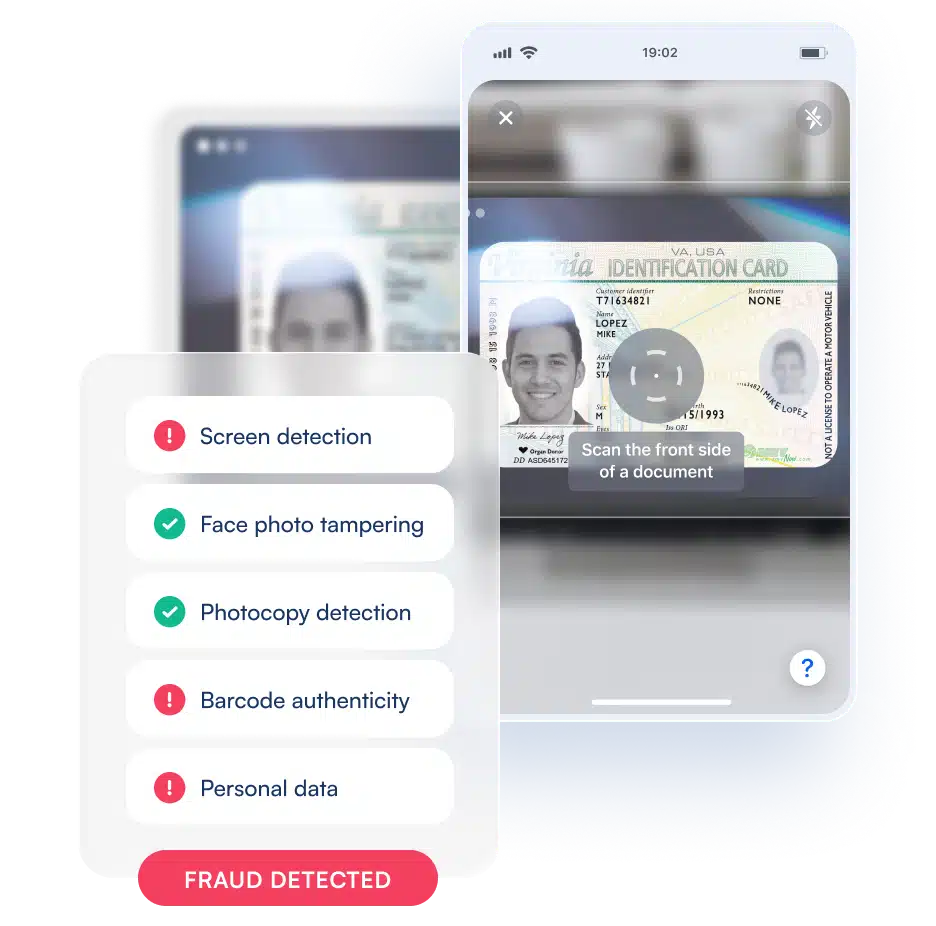

How to Use Device Intelligence to Detect and Prevent Fraud

Fraud prevention has become a data arms race. As synthetic identities, deepfakes, and coordinated bot attacks grow more sophisticated, traditional KYC and AML controls alone are no longer enough. Financial institutions and crypto platforms now need to see beyond the user and must analyze the devices they use to interact with their systems.
Device intelligence offers that missing visibility. By analyzing device-specific signals such as IP address, browser configuration, behavioral patterns, and location data, businesses can instantly determine whether a device, and by extension its user, can be trusted. When integrated with identity verification workflows, device intelligence becomes a powerful tool for detecting and preventing fraud in real time, without adding friction to the customer experience.
Why Device Intelligence Matters in Fraud Prevention
Fraudsters have learned to manipulate the identity layer. They use stolen documents, AI-generated IDs, and synthetic profiles to pass verification checks and fool onboarding systems. But devices leave digital fingerprints that are far harder to fake.
Device intelligence focuses on identifying anomalies in those fingerprints. For example, if multiple accounts are created from the same device, if a VPN or emulator is masking location, or if behavioral patterns don’t align with human activity. These are strong fraud indicators that traditional identity checks might miss.
For risk management leaders, device intelligence provides accuracy, accountability, and efficiency. It lets teams prevent losses before they occur, reduce false positives, and maintain regulatory confidence that their fraud controls are up to standard.
How Device Intelligence Works
At its core, device intelligence involves collecting and analyzing signals tied to a user’s physical or virtual device. These include:
- Device fingerprinting: Identifies unique configurations of hardware, operating system, and browser attributes.
- Behavioral analytics: Detects patterns such as typing speed, mouse movements, or session duration that indicate whether a user is genuine or automated.
- Network and geolocation data: Flags VPNs, proxies, or suspicious geographic inconsistencies that may suggest account takeovers or sanctions evasion.
- Reputation scoring: Assigns a trust level based on device history — for example, whether that device has been linked to chargebacks, mass registrations, or failed verifications.
When combined, these signals build a dynamic profile of every interaction. If the device behaves consistently over time, it strengthens trust. If certain signals deviate from the norm, the system can automatically trigger additional verification or block access.
Use Cases: Detecting Sophisticated Crypto and Financial Fraud
Device intelligence plays a crucial role in uncovering fraud patterns that traditional verification methods often miss. Below are some of the most common fraud typologies it helps detect.
| Fraud Type | How Device Intelligence Detects It | Example Signal or Trigger |
| Multi-accounting | Identifies recurring devices used to create multiple profiles for bonuses, promotions, or evading limits. | Same device fingerprint appears across several “new” accounts, even with different emails or IPs. |
| Account takeovers (ATO) | Flags login attempts from unfamiliar or high-risk devices to protect against unauthorized access. | Device reputation score changes suddenly, or login originates from a new location or emulator. |
| Synthetic identity attacks | Reveals hidden fraud rings when a single device verifies multiple supposedly unique identities. | Multiple ID verification attempts tied to the same hardware ID or browser configuration. |
| Bot-driven market manipulation | Distinguishes automated behavior from legitimate user activity using behavioral analytics. | Identical mouse patterns, typing speed, or session timing across multiple accounts. |
| VPN/proxy abuse | Detects mismatches between claimed identity data and device geolocation or network origin. | IP address indicates VPN/proxy use inconsistent with the declared country or compliance region. |
Device Intelligence as a Compliance Control
Regulators increasingly expect financial and crypto platforms to demonstrate proactive fraud controls. Device intelligence aligns directly with this expectation, serving as a risk-based control layer that supports KYC and AML requirements.
During regulatory audits, device intelligence data provides concrete evidence of monitoring efforts. Compliance officers can document how suspicious device patterns were detected, justify escalations to enhanced due diligence, and include device-level evidence in SAR narratives.
Conversely, failing to implement device-level monitoring can be seen as “willful blindness.” Enforcement actions have cited cases where platforms ignored repeated mass account creation or coordinated ATO attempts, signals that proper device intelligence could have caught.
Integration with Existing KYC/AML Workflows
The power of device intelligence lies in how seamlessly it integrates with existing verification, monitoring, and compliance systems. It’s not a standalone tool; it’s a multiplier.
When layered with identity verification, device intelligence helps confirm that the person and their device match expected patterns. Integrated with transaction monitoring, it highlights devices linked to high-risk transfers. Combined with sanctions screening and blockchain analytics, it gives compliance teams a complete view of user behavior.
Modern platforms can also automate workflow triggers: for example, if a high-risk device is detected during onboarding, the user is instantly routed to manual review or secondary verification. This multi-signal approach ensures both regulatory defensibility and operational efficiency.
The Future of Fraud Prevention Is Multi-Signal
Fraudsters no longer rely on just one tactic and neither should compliance teams. Device intelligence adds a vital layer of defense that bridges the gap between identity verification and behavioral analysis.
By adopting device intelligence today, organizations not only improve detection accuracy but also future-proof their compliance posture in an era where regulators expect measurable, data-driven fraud controls.
To learn more about how Microblink uses device intelligence to help organizations fight fraud, get in touch today.