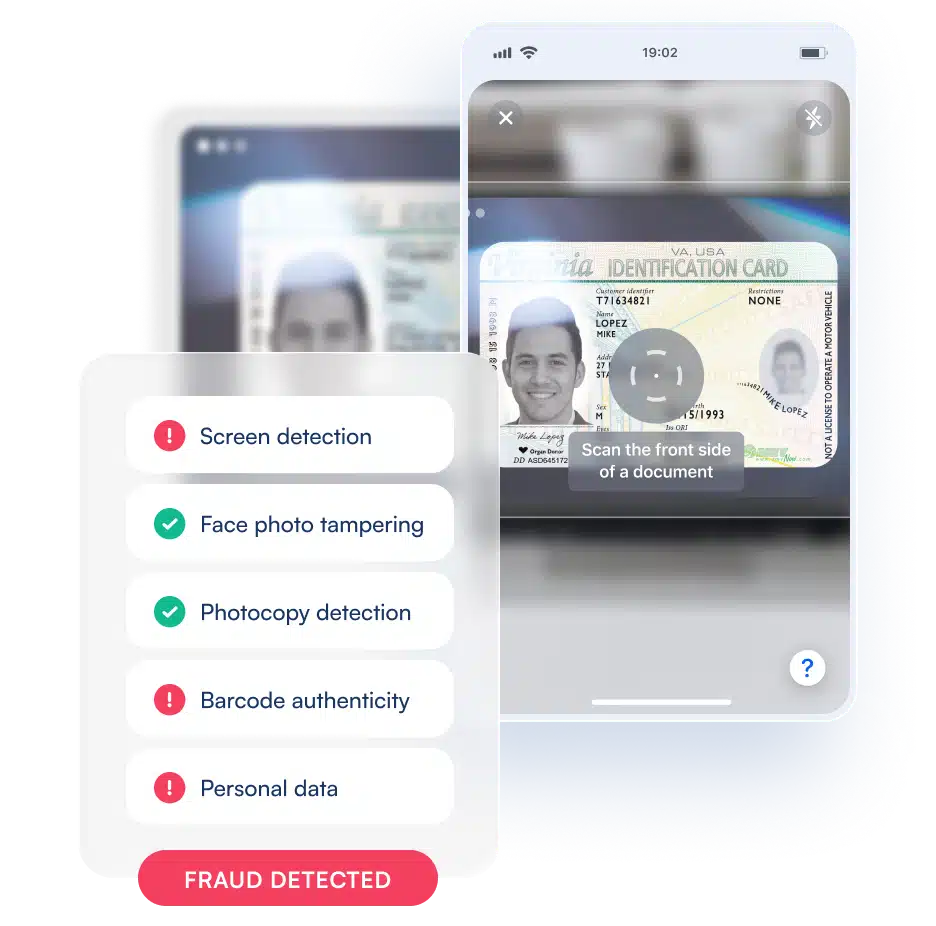

Top Fintech Fraud Prevention Solutions: Compare Features, Use Cases, and Benefits

Fraud prevention is critical for fintechs, digital banks, and marketplaces to safeguard revenue, maintain customer trust, and stay compliant. The right AI-powered fraud prevention software detects and prevents identity, account, and transaction fraud in real time while minimizing false positives and maintaining a seamless user experience.
This guide compares Microblink, Alloy Fraud, Fraugster, Forter, Ravelin, and Salv Bridge, highlighting their core features, strengths, and practical use cases to help fintech, banking, and compliance teams choose the best solution.
Fraud Prevention Software at a Glance
| Provider | Primary Strength | Core Features | Ideal For | Pricing |
| Microblink | AI-driven identity verification + fraud prevention | Real-time ID verification, biometric checks, deepfake detection, AML/KYC integration | Fintechs & digital banks needing onboarding + fraud prevention | Quote-based |
| Alloy Fraud | Decisioning & orchestration for identity & transaction fraud | Unified risk scoring, workflow engine, AML/KYC integration | Banks & fintechs needing flexible orchestration | Usage-based |
| Fraugster | AI-powered payment fraud prevention | Transaction monitoring, chargeback prevention, ML risk scoring | Digital banks, fintechs handling card payments | Custom / volume-based |
| Forter | Real-time transaction fraud prevention | Behavioral analytics, payment monitoring, API-first integration | Fintechs & marketplaces needing fast approvals | Custom / usage-based |
| Ravelin | Multi-layer fraud prevention | Payment & account monitoring, device fingerprinting, risk scoring | Neobanks, fintechs, marketplaces | Custom / usage-based |
| Salv Bridge | Collaborative fraud detection & fund recovery | Real-time alerts, scenario library, encrypted data sharing | Banks & financial institutions | Custom / membership-based |
1. Microblink
Best for lightning-fast AI identity verification and fraud prevention across onboarding and payments.
Key Features
- Real-Time Document and Identity Verification: Instantly validates IDs, passports, and other documents globally
- Deepfake & Synthetic Fraud Detection: Detects manipulated images/videos to prevent identity fraud
- AML/KYC Integration: Combines identity verification with compliance checks
- Adaptive Capture & SDK Integration: Guides users for high-quality submissions; developer-friendly API
Pricing
Quote-based; depends on volume, geographies, and compliance needs
Pros
- Exceptional speed and accuracy in document verification
- Advanced fraud detection including synthetic identity prevention
- Scales for fintechs, banks, and digital marketplaces
Cons
- Platform launched 2025, newer orchestration compared to legacy providers
- No manual reviewers
- Not suitable for IAM use cases
Use Cases
- Fintech Onboarding: Verify users quickly while preventing synthetic fraud
- E-commerce Checkout: Reduce account takeovers and fraudulent transactions
- Regulated Industries: Automate KYC/AML and fraud checks efficiently
2. Alloy Fraud
Best for banks and fintechs needing flexible orchestration across identity and transaction fraud.
Key Features
- Unified Risk Scoring across multiple sources
- Low-Code Workflow Engine for real-time decisioning
- AML/KYC and Fraud Rule Integration
- API-first platform for rapid deployment
Pricing
Usage-based; depends on volume and workflows
Pros
- Highly flexible orchestration for complex risk workflows
- Centralizes fraud and identity checks in one platform
- Scalable for global fintechs and banks
Cons
- Requires internal resources for configuration
- Not a direct document verification provider
Use Cases
- Centralized fraud decisioning across products
- Real-time account and transaction risk scoring
- Compliance integration with AML/KYC workflows
3. Fraugster
Best for AI-driven payment fraud prevention for digital banks and fintechs.
Key Features
- Real-time transaction monitoring
- Chargeback prevention and risk scoring
- Machine learning models for predictive fraud detection
- Integration with payment processors
Pricing
Custom / volume-based
Pros
- Strong focus on payment fraud and chargeback reduction
- AI continuously improves with transaction data
- Scales for high-volume fintech and banking environments
Cons
- Primarily focused on payment fraud
- Advanced workflows may require configuration
Use Cases
- Card payment fraud prevention for neobanks
- Reducing chargebacks in digital marketplaces
- Transaction monitoring for high-risk accounts
4. Forter
Best for real-time transaction fraud prevention in digital platforms.
Key Features
- Behavioral analytics for transaction and account monitoring
- API-first integration for seamless deployment
- Automated decisioning for instant approvals
- Payment fraud detection with adaptive machine learning
Pricing
Custom / usage-based
Pros
- Fast, accurate approvals with low false positives
- Real-time fraud detection without impacting user experience
- Scales globally for fintechs and marketplaces
Cons
- Focused primarily on payments
- Advanced customization requires technical resources
Use Cases
- Real-time fraud detection for digital wallets
- Prevent account takeover and fraudulent transactions
- Payment approvals for marketplaces and neobanks
5. Ravelin
Best for layered fraud prevention across payments and accounts.
Key Features
- Payment and account monitoring
- Device fingerprinting and behavioral analytics
- Risk scoring and alerts
- Integration with payment processors
Pricing
Custom / usage-based
Pros
- Multi-layer fraud detection across channels
- Reduces fraud while maintaining user experience
- Suitable for neobanks, marketplaces, and fintechs
Cons
- Limited onboarding verification
- Custom workflows may require setup
Use Cases
- Fraud monitoring for multi-currency transactions
- Payment fraud prevention for neobanks and marketplaces
- Account takeover detection and alerting
6. Salv Bridge
Best for collaborative, cross-institutional fraud detection and fund recovery.
Key Features
- Real-time alerts across institutions
- Scenario library for proven fraud rules
- Secure data sharing with encryption
- Network-driven recovery of fraudulent funds
Pricing
Custom / membership-based
Pros
- Increases fund recovery through collaboration
- Promotes network-based intelligence sharing
- Strong security and privacy compliance
Cons
- Most effective with active institutional participation
- Not a full transaction monitoring platform
Use Cases
- APP fraud detection and prevention
- Coordinated bank-to-bank fraud recovery
- Compliance investigations for financial institutions
How to Choose the Right Fraud Prevention Software
- Identify fraud vectors: onboarding, payments, accounts
- Consider integration and workflow flexibility: APIs, SDKs, low-code platforms
- Assess global coverage if operating internationally
- Evaluate real-time detection vs post-transaction monitoring
- Review compliance features: AML/KYC, PEP/sanctions
- Factor in scalability, pricing, and operational overhead
Frequently Asked Questions
What is fintech fraud prevention software?
Software that monitors and prevents identity, account, and transaction fraud in digital financial platforms.
Which businesses benefit most?
Neobanks, digital banks, marketplaces, e-commerce, agentic commerce and fintechs scaling user onboarding and payments.
Can these solutions reduce false positives?
Yes, AI-driven platforms detect true risk while minimizing unnecessary friction for legitimate users.
Is integration secure?
Top providers use encryption, secure APIs, and compliance with standards like ISO 27001 and GDPR.
Are these solutions suitable for small businesses?
Some, like Microblink and Ravelin, are accessible to SMBs; others, like Alloy Fraud or Fraugster, scale best for mid to large enterprises.