
Best Biometric Verification Software & AI Solutions (2026 Review)
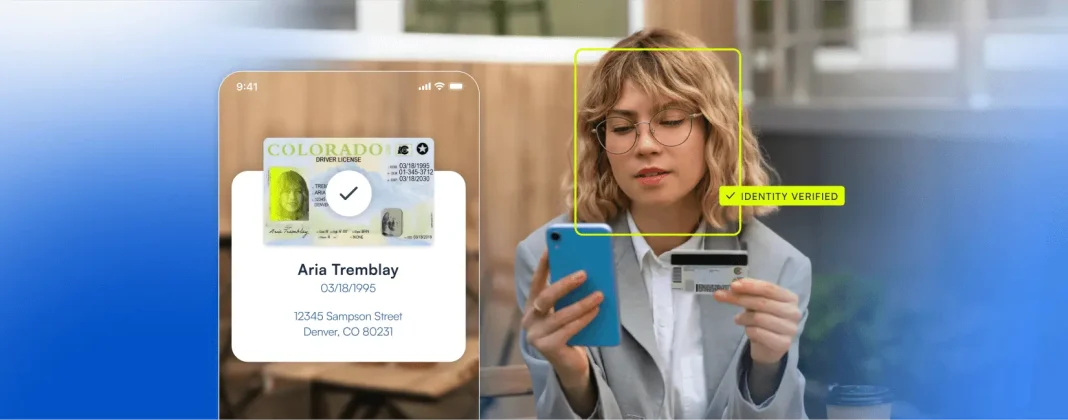
In an era where deepfakes and sophisticated synthetic identities are becoming commonplace, the traditional « username and password » approach isn’t just outdated—it’s a liability. For modern enterprises, the challenge has shifted from simply identifying a user to proving their physical presence in real-time.
ID verification software has evolved into a critical layer of the tech stack, moving beyond basic fingerprint scans to advanced AI-driven facial recognition, iris scanning, and behavioral analysis. These tools are no longer just about security; they are about creating a « zero-friction » onboarding experience that satisfies both the Chief Information Security Officer (CISO) and the Head of Product.
Whether you are a startup focused on fintech fraud prevention or a global enterprise securing high-stakes transactions, choosing the right biometric partner is essential. The market is currently split between « privacy-first » on-device processors and massive « global data » aggregators.
This 2026 review analyzes the top fraud prevention solutions and AI tools available today, focusing on liveness detection, document verification accuracy, and the seamless integration workflows required to keep your users safe without slowing them down.
Biometric Verification Software Comparison Table
| Tool | Compliance Features | Industry Focus | AI Capabilities | User Experience | Developer Experience |
|---|---|---|---|---|---|
| Microblink | High precision document scanning, liveness detection | Mobile-first banks, travel, gig economy | Proprietary AI for on-device processing, enhanced liveness detection | Fast user experience due to on-device processing, privacy-first design | Requires mobile development expertise for integration |
| iDenfy | KYC, AML compliance, bank account verification | Fintech, high-risk transactions, international | Precise face and document matching, active liveness detection | Active liveness checks can add friction, dependent on internet connectivity | Cloud-based solution with high automation, manual review for complex cases |
| Entrust | Global document support, customizable risk profiles, audit-ready compliance tools | Banking, insurance, cross-border operations | Enhanced AI-driven identity verification through Onfido | Strong global document coverage, complex interface navigation | High customization capabilities, limited self-service options |
| Plaid | Identity verification with bank account linking | Fintech, payment apps, ACH transfers | Simultaneous identity and account verification | Clean, minimal steps for high conversion rates | Excellent developer documentation, robust APIs and SDKs |
| Trulioo | Global person match, modular verification solutions, business verification (KYB) | Cross-border marketplaces, cryptocurrency, B2B | Extensive global data coverage, modular API | Unmatched global reach, complex pricing structure | Steep learning curve for setup, requires deep understanding of global compliance logic |
1. Microblink

Platform Summary
Microblink sets the gold standard for user-centric biometric verification by moving the heavy lifting of AI processing away from the cloud and onto the user’s local device. This technical choice eliminates the common friction of upload delays and connectivity drops, providing a near-instantaneous experience that is critical for maintaining high conversion rates during the onboarding phase.
Beyond speed, Microblink prioritizes data privacy and security by ensuring that sensitive biometric information is processed locally. This « privacy-by-design » architecture is particularly appealing to Fraud Decision-Makers who must navigate increasingly stringent global data protection regulations while simultaneously defending against sophisticated spoofing attempts. Real-world implementations show the impact of this approach; for instance, Latin ID achieves 98% identity verification success rate with Microblink.
Key Benefits
- Privacy-first, on-device processing for enhanced security and compliance.
- Near-instantaneous user experience that reduces onboarding drop-off.
- Multi-layered fraud defense against deepfakes and synthetic identities.
- Scalable, global coverage supporting over 140 countries.
Core Features
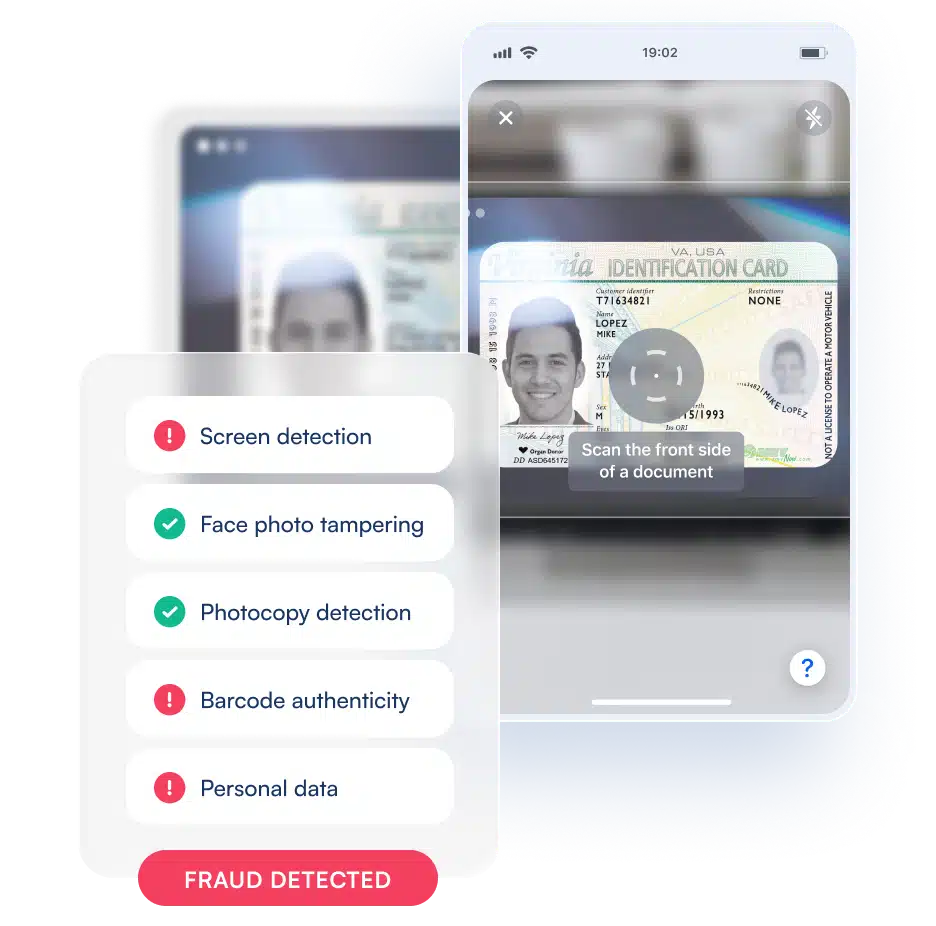
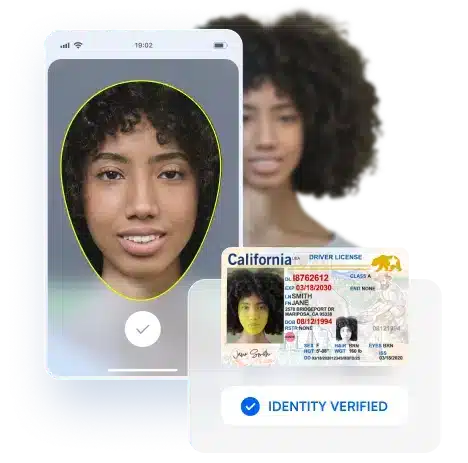
- AI-Driven Liveness Detection & Facial Recognition: Proprietary, multi-layered AI models confirm a user’s physical presence and defend against presentation attacks and deepfakes.
- On-Device Processing: Critical verification processes are performed directly on the user’s device, minimizing data transfer and supporting GDPR compliance.
- High-Speed Document Scanning & Data Extraction Software: Captures and extracts data from ID documents in under one second, eliminating manual entry and reducing errors.
- Multi-Layered Fraud Defense: Combines biometric checks with document authenticity analysis, device intelligence, and behavioral analytics.
Primary Use Cases
- Secure Customer Onboarding: For financial institutions, fintechs, and regulated industries seeking fast, accurate, and compliant registration.
- KYC/AML Compliance: Combines verifiable ID document checks with biometric proof of identity, providing comprehensive AML for banks and audit trails.
- Advanced Fraud Prevention: Prevents stolen or synthetic identity fraud during account creation and can be layered into workflows to stop account takeover attempts.
Recent Updates
- Enhanced AI models to support a wider range of complex document types, including vertical IDs and niche regional permits.
- Improved liveness detection algorithms to combat high-fidelity deepfake technology and injection attacks.
- Expanded global coverage, making it the engine behind the best ID scanning app experiences on the market.
Limitations
- Integration complexity: On-device processing may require more development effort compared to web-redirect solutions.
- Focus on capture over management: Less of a full-lifecycle case management platform than some competitors.
- File size considerations: Embedding high-performance AI models can slightly increase app download size.
2. iDenfy

Platform Summary
iDenfy provides a highly versatile identity verification platform that bridges the gap between traditional KYC and modern financial security. By integrating biometric checks directly with bank account ownership verification, iDenfy offers Fraud Decision-Makers a more holistic view of a user’s legitimacy than standard IDV tools.
The platform is designed for agility, allowing businesses to scale their fraud prevention efforts across different jurisdictions without needing multiple vendors. Its focus on reducing manual review times through automated risk scoring makes it a favorite for fast-growing fintechs and e-commerce platforms.
Core Features
- Precise face and document matching to catch inconsistencies and tampered IDs.
- Bank account ownership verification to ensure the user is legitimately associated with the account.
- Active liveness detection requiring user actions (e.g., blinking, turning head) to block spoofing attempts.
Primary Use Cases
- Fintech compliance: Meeting KYC and AML regulations while verifying both identity and bank account legitimacy.
- High-risk transaction monitoring: Flagging and verifying high-risk orders for e-commerce to minimize chargebacks.
- International expansion: Simplifying compliance across jurisdictions with a unified solution.
Recent Updates
- Launched a comprehensive guide and automated toolset for risk scoring in line with updated AML requirements.
- Introduced automated tools for detecting high-risk orders, tailored for platforms like Shopify.
Limitations
- Active liveness checks can introduce friction and lower conversion rates.
- Dependent on stable internet connectivity for cloud-based verification.
- Manual review fallback can introduce delays during peak volumes.
3. Entrust

Platform Summary
Entrust is a heavyweight in the identity space, offering a high-assurance platform that caters to the most demanding regulatory environments. Following its acquisition of Onfido, Entrust has solidified its position as a leader among ID verification providers, merging enterprise-grade security with cutting-edge fraud detection.
For Risk Managers at large-scale enterprises, Entrust provides the peace of mind that comes with robust audit trails and customizable risk profiles. The platform is built to handle complex, multi-channel identity lifecycles, making it more than just a verification tool—it is a comprehensive identity governance solution.
Core Features
- Global document support for a wide range of international IDs.
- Customizable risk profiles to adjust verification strictness by context.
- Audit-ready compliance tools with detailed logs and decision reasons.
Primary Use Cases
- Regulated industry onboarding: Secure onboarding for banking and insurance sectors.
- Digital credential issuance: Managing high-assurance credentials across channels and devices.
- Cross-border operations: Handling diverse verification needs across countries and languages.
Recent Updates
- Full integration of Onfido’s technology suite, enhancing AI-driven verification and passive liveness detection.
Limitations
- Advanced features and policy customizations can make initial setup complex.
- Limited self-service configuration; changes often require support or sales engagement.
- Heavily tailored for large enterprises, potentially overkill for smaller startups.
4. Plaid

Platform Summary
Plaid has revolutionized the fintech landscape by making bank account linking and identity verification a unified, frictionless experience. By leveraging its massive network of financial institution connections, Plaid allows users to prove their identity and fund their accounts in a single, cohesive flow.
For Compliance Officers, Plaid offers a developer-first approach that simplifies the technical hurdles of KYC. Its ability to cross-reference identity data with actual bank account records provides a unique layer of trust that traditional document-only verification services struggle to match.
Core Features
- Identity verification with simultaneous bank account linking.
- Developer-centric tools with the best ID verification API documentation and SDKs.
- Clean, minimal-step user experience for high conversion rates.
Primary Use Cases
- Payment app onboarding: Quick verification for peer-to-peer payment apps.
- ACH transfer authorization: Securing ACH transfers by verifying account ownership.
- Fintech account opening: Combining KYC compliance with instant account funding.
Recent Updates
- Expanded identity verification layer for better integration with core banking network.
- Enhanced match rates for account ownership and expanded international bank coverage.
Limitations
- Primarily designed for financial use cases; limited utility outside fintech.
- Geographic coverage is strong in North America and Europe but less so globally.
- Faces high scrutiny regarding data privacy as a major financial data aggregator.
5. Trulioo

Platform Summary
Trulioo is the go-to solution for businesses requiring massive global scale and deep insights into both individuals and business entities. With access to hundreds of local data sources, Trulioo allows Fraud Decision-Makers to verify users in nearly every corner of the globe using the most relevant regional data available.
What sets Trulioo apart is its robust Know Your Business (KYB) capabilities. In an era where B2B fraud is on the rise, Trulioo’s ability to verify corporate registries and identify Ultimate Beneficial Owners (UBOs) makes it one of the top KYC solution providers for international marketplaces and crypto exchanges.
Core Features
- Global person match with access to over 450 data sources across 195 countries.
- Modular verification solutions via a streamlined API.
- Business verification (KYB) for corporate entities and UBOs.
Primary Use Cases
- Cross-border marketplaces: Standardizing onboarding for buyers and sellers globally.
- Cryptocurrency exchanges: Meeting diverse regulatory requirements across jurisdictions.
- B2B vendor onboarding: Automating international vendor and partner verification.
Recent Updates
- Enhanced ‘Workflow Studio’ for granular control over verification logic.
- Added dozens of new data sources in emerging markets across Southeast Asia and Africa.
Limitations
- Steep learning curve to understand data sources and configuration options.
- Requires active internet connectivity; not suitable for offline use.
- Complex pricing structure, especially for high-volume, multi-region checks.
Looking for more on how to integrate biometric verification into your compliance stack?
Explore our in-depth guide to KYC automation or learn about AI-powered fraud prevention for enterprise risk teams.
What is biometric verification software and how does it work?
Biometric verification software uses unique biological characteristics—such as facial features, fingerprints, iris patterns, or behavioral traits—to confirm a user’s identity. Modern solutions leverage AI to analyze these traits in real time, often combining them with document verification and liveness detection to ensure the person is physically present and not using a spoof (like a photo, video, or deepfake). The process typically involves capturing biometric data via a device camera or sensor, securely processing it (either on-device or in the cloud), and comparing it to a trusted reference or ID document.
How does on-device biometric processing improve privacy and compliance?
On-device biometric processing means that sensitive biometric data is analyzed and verified directly on the user’s device, rather than being uploaded to external servers. This approach significantly reduces the risk of data breaches and unauthorized access, as biometric information never leaves the user’s device. It also helps organizations comply with strict data protection regulations like GDPR, which require minimizing the transfer and storage of personal data. For Fraud Decision-Makers, this architecture offers a strong privacy-by-design foundation and can simplify compliance audits.
What is liveness detection and why is it important in biometric verification?
Liveness detection is a security feature that ensures the biometric sample (such as a face or fingerprint) is being captured from a live person rather than a static image, video, or synthetic deepfake. Advanced liveness detection uses AI to analyze subtle cues—like blinking, head movements, or skin texture—to confirm real-time presence. This is crucial for preventing fraudsters from bypassing verification with stolen photos, masks, or digital forgeries, making it a core requirement for secure onboarding and compliance workflows.
How do I choose the right biometric verification solution for my business needs?
Selecting the best biometric verification solution depends on your industry, compliance requirements, user experience goals, and technical resources. Key factors to consider include:
- Compliance features: Does the tool support KYC/AML and relevant regulations in your jurisdictions?
- AI and liveness detection: How robust are the anti-fraud and deepfake defenses?
- Integration complexity: Is the solution easy to integrate with your existing systems (APIs, SDKs, on-device vs. cloud)?
- User experience: Does it offer fast, low-friction onboarding?
- Global coverage: Can it verify users and documents from all your target markets?
- Privacy and data handling: Does it align with your organization’s privacy standards and regulatory obligations?
What are the main challenges or limitations of implementing biometric verification?
While biometric verification offers strong security and user convenience, there are some challenges to consider:
- Integration complexity: On-device solutions may require more development resources, while cloud-based tools depend on stable internet connectivity.
- User friction: Active liveness checks can slow down onboarding and reduce conversion rates if not well-designed.
- Coverage gaps: Some solutions may have limited support for certain document types or regions.
- Privacy concerns: Handling biometric data requires strict adherence to privacy laws and user consent.
- Cost and scalability: Pricing models can be complex, especially for high-volume or multi-region deployments, and some platforms may be overkill for smaller businesses.