
What is liveness detection? How not to get spoofed

To stay ahead of identity fraud, more organizations are adopting liveness detection technology, which is a method used to determine whether a biometric trait (like a face or fingerprint) is being presented by a live human being rather than a spoof. Unlike traditional biometric scanning alone, liveness detection adds an extra layer of defense by analyzing real-time signs of life, such as eye movement, blinking, or subtle facial texture changes. This helps ensure that the person attempting to access a system isn’t using a photo, video, mask, or synthetic biometric to impersonate someone else.
While facial liveness detection is becoming more common across digital onboarding and login experiences, it’s not immune to risk. Fraudsters are getting more sophisticated in using “presentation attacks” (which we will discuss further in-depth below) that mimic liveness to trick biometric systems. As attacks become more advanced, liveness detection must constantly evolve, making identity verification and fraud prevention an ongoing battle between innovation and deception.
What is liveness detection?
Liveness detection is a security technique used to determine whether a biometric sample—such as a face or fingerprint—comes from a live person physically present during the authentication process. Beyond just using facial, retinal, or fingerprint recognition as a means for identity verification, liveness detection goes one step further by determining whether the source of the sample is a live human being or a presentation attack, also referred to as “spoofing the system.”
Liveness detection technology can even be applied to voice recognition, as there is no limit to the number of vectors a hacker will infiltrate when attempting identity fraud.
Essentially, liveness recognition utilizes AI-based algorithms to weed out presentation attacks, whether during an initial identity verification process (e.g., someone signing up for a bank account) or any authentication attempt (e.g., someone logging into their account). With facial liveness detection, for example, liveness verification leverages computer vision technology to more accurately detect whether the sample (either a selfie or video) is a real human face that also matches the identity document presented.
Types of liveness detection methods
While solutions vary based on the type of biometric sample being considered, there are two main methods for liveness detection: active and passive.
Active Liveness Detection
Active liveness detection, as its name implies, requires active participation from the user. For facial recognition, this can include turning their head from side to side or up and down, which allows the scan to create a 3D map of the subject’s face through depth perception. This version of active liveness detection is ideal for combatting 2D spoofing attempts, where a fraudster may try to bypass a selfie prompt with a photo of the subject they are trying to impersonate.
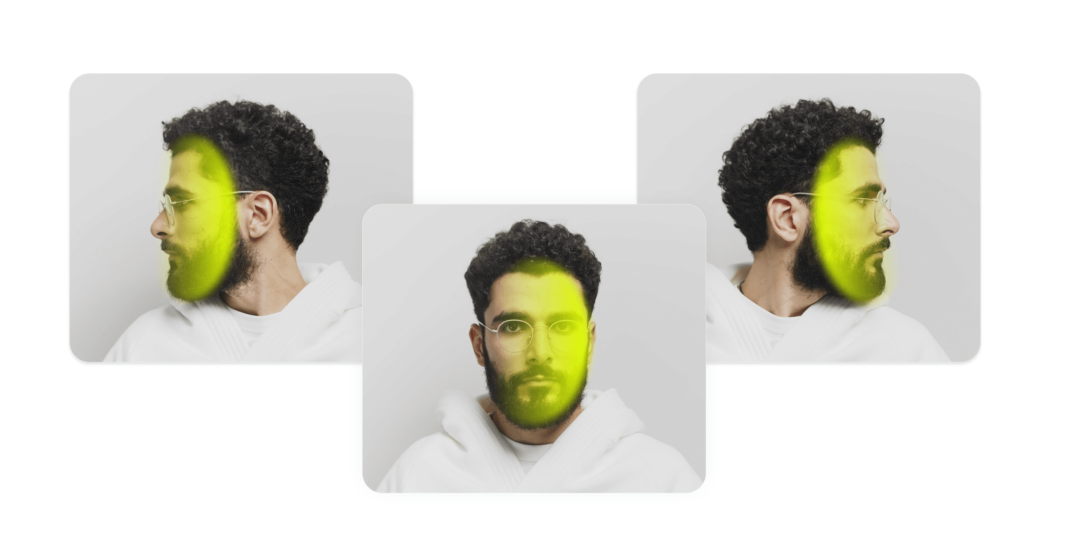
Active liveness checks may also include blinking or following dots on a screen—tasks that are difficult to fake convincingly.
Passive Liveness Detection
Passive liveness detection technology is performed with little to no user interaction. A user can take a selfie without having to move their head. The system uses advanced algorithms to assess the image for signs of life, such as skin texture, natural shadows, and lighting consistency. This liveness verification method is faster and less intrusive, which helps reduce friction and abandonment during onboarding.
There is also a hybrid method known as semi-passive liveness check, which may prompt a simple action like smiling.
Benefits of liveness detection
Liveness detection significantly strengthens fraud prevention by ensuring that a real, live person is present during identity verification—not a spoof, mask, or deepfake. This added layer of biometric security helps reduce synthetic identity fraud, account takeovers, and presentation attacks. For industries subject to regulatory oversight—like finance, healthcare, and e-commerce—liveness detection can play a critical role in staying compliant and avoiding costly breaches.
Beyond fraud prevention, liveness detection enhances the reliability of identity verification systems overall, creating a safer ecosystem for both users and businesses.
How to implement liveness detection
There are several approaches to implementing liveness detection, each with varying levels of sophistication and security:
- 3D depth sensing uses infrared or structured light to measure facial depth and contours, making it difficult to spoof with flat images or masks.
- Motion analysis prompts users to perform actions like blinking, turning their head, or smiling, detecting whether the biometric trait responds in real time.
- AI-based passive liveness evaluates subtle indicators such as skin texture, lighting consistency, and micro-movements without requiring user interaction—ideal for reducing friction.
When choosing a method, it’s crucial to factor in the environment in which the verification will take place, including lighting conditions, device capabilities, and potential accessibility needs.
Types of Presentation Attacks
As noted above, there are several different methods that hackers and fraudsters use to spoof detection systems, which are evolving at almost the same rate as the methods developed to thwart identity-based fraud attacks.
Depending on the sophistication level of the biometric scan being infiltrated, presentation attacks can involve 2D or 3D (i.e., photograph or video) spoofing, as well as mechanisms for modification or replication (changing one’s facial hair vs wearing a synthetic mask). The least sophisticated attacks will typically involve the fraudster trying to bypass a facial recognition scan with a photo or video of the intended subject.
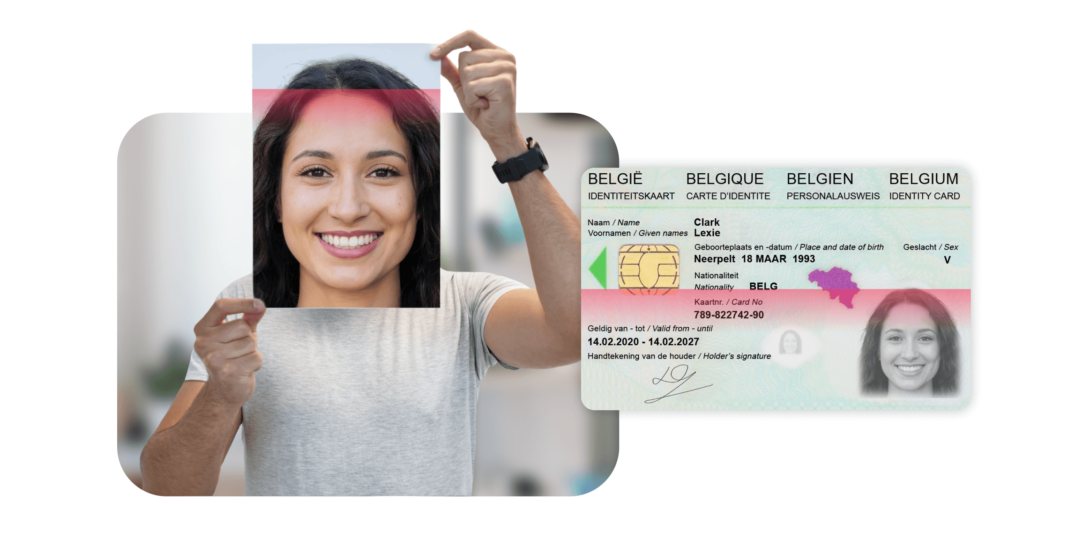
However, there are several more savvy methods that involve a variety of masks (whether made of paper, latex, or silicone), which attempt to create a 3D rendering that exploits a certain weakness in a biometric scan. Fraudsters use the same synthetic properties for retina and fingerprint scans, with the level of sophistication usually matching the level of access or amount of money the fraudster is after, as more advanced methods of spoofing tend to be more expensive.
For fraudsters looking to bypass video facial scans, the emergence of deepfake technology has played a prominent role. Through deepfakes, a person’s digital likeness (down to their facial movements) can be replicated and superimposed, allowing hackers to pass as their victims. As the quality of deepfakes continues to improve, even the most advanced liveness detection solutions will need to push innovation further, to better decipher what’s fake from what’s not.
Liveness detection is most effective when paired with broader ID verification systems, improving both KYC verification procedures and multi-factor authentication (MFA). Embedding liveness checks in onboarding flows not only enhances security but helps maintain a smooth user experience.
This integration also supports compliance in highly regulated sectors by adding another barrier to spoofing.
Liveness detection vs. basic facial recognition
Though similar, facial liveness detection and facial recognition serve different roles. Facial recognition matches a live sample to a stored image, while liveness detection ensures that the live sample is from a real person and not a fake.
Without liveness verification, even the most advanced facial recognition can be easily tricked with a photo or deepfake.
Impact of liveness detection on UX
If poorly implemented, liveness checks can increase friction—leading to frustration, abandonment, and lower verification success rates. Elderly or accessibility-challenged users may struggle with motion-based checks.
That’s why passive liveness detection technology has become the gold standard. It runs quietly in the background, improving completion rates while preserving security.
Scalability considerations for high-volume applications
For companies verifying thousands or millions of users—like fintechs or marketplaces—liveness detection must be scalable. The best systems are AI-powered, cloud-based, and optimized for speed and low latency across devices.
Using batch processing, asynchronous flows, and lightweight mobile SDKs ensures liveness checks don’t bottleneck operations or hurt conversion.
The Microblink approach to liveness detection
In addition to biometric liveness, Microblink offers two additional services that are essential for fighting advanced fraud today: document liveness and payment card liveness.
ID Document Liveness
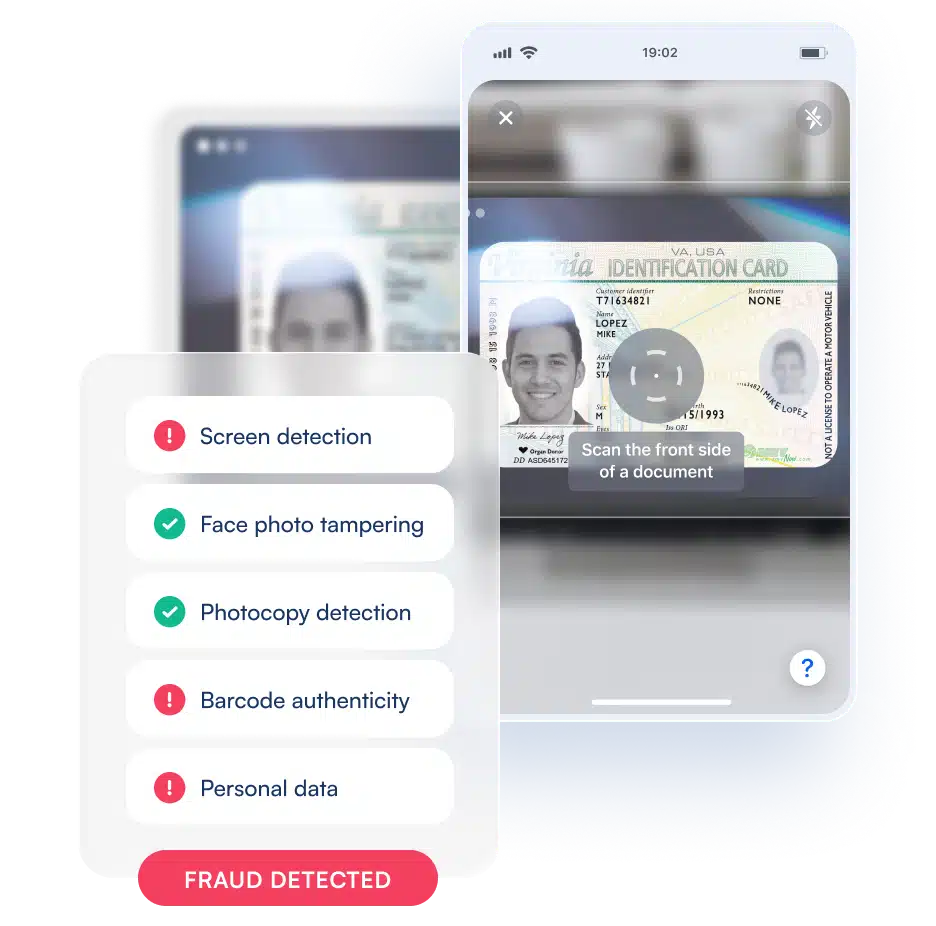
Microblink’s identity verification solutions include advanced ID document liveness detection to help organizations verify not just what’s on the screen, but whether the document is genuine and physically present. Using computer vision and AI, our technology detects signs of tampering, reproduction, or spoofing—such as glare inconsistencies, edge mismatches, and unnatural texture artifacts—before approving a document. Whether embedded in onboarding flows or used for ongoing authentication, our ID document liveness features dramatically reduce the risk of deepfake and document-based fraud while keeping the user experience fast and frictionless.
Payment Card Liveness with BlinkCard
With BlinkCard, we’ve reimagined card scanning as not just a speed enhancer, but a powerful fraud prevention layer through robust payment card liveness detection that evaluates whether a credit, debit, or prepaid card is physically present in real time. By leveraging AI to detect photocopies, screenshots, and other non-live artifacts, BlinkCard reduces false acceptance and rejection rates by roughly 50%, while maintaining a 97% accuracy rate. This means safer transactions, fewer chargebacks, and greater trust—without sacrificing UX.