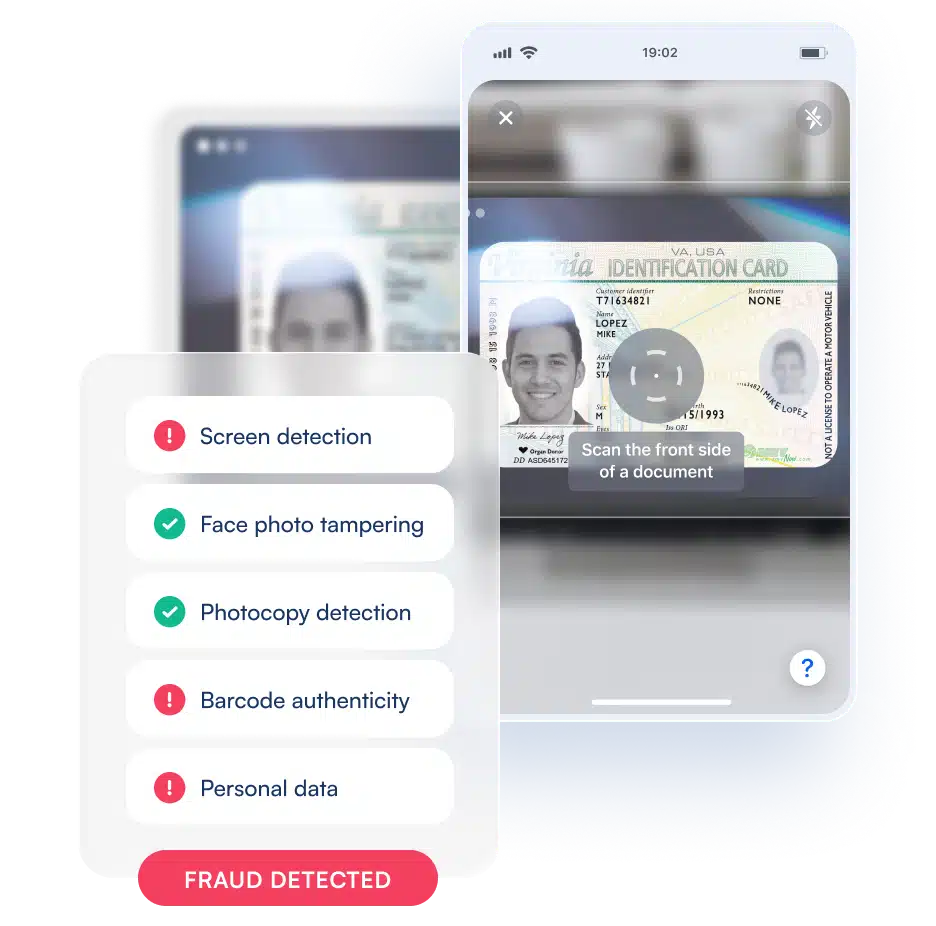

Top 5 Best eIDV Software & AI Verification Tools

In an era where synthetic identity fraud and sophisticated deepfakes are on the rise, traditional background checks are no longer enough. Electronic Identity Verification (eIDV) has evolved from simple database « pings » into a complex ecosystem of AI-driven biometrics, document forensics, and real-time risk scoring.
For modern enterprises, the challenge is twofold: maintaining rigorous KYC (Know Your Customer) and AML (Anti-Money Laundering) compliance while ensuring the onboarding process is frictionless enough to prevent user drop-off. The right eIDV software doesn’t just verify a person; it builds a foundation of trust that scales globally.
In this guide, we analyze the top five eIDV and AI verification tools on the market, evaluating them on their technical capabilities, speed of processing, and ability to detect even the most subtle fraudulent patterns.
eIDV Software Comparison Table
| Tool | Compliance Features | Industry Focus | AI Capabilities | User Experience | Developer Experience |
|---|---|---|---|---|---|
| Microblink | On-device AI processing, Document liveness detection | Mobile onboarding, Gig economy, Age verification | BlinkID AI scanning, On-device processing | Superior UX, Instant feedback, Seamless sign-up | Requires dedicated development effort, Granular control |
| Veriff | Biometric authentication, Cross-link analysis | Fintech account opening, Cryptocurrency compliance, Gaming | AI-driven biometric authentication, Assisted image capture | Rapid 6-second verification, High accuracy, Assisted capture | Heavy mobile SDK, Manual review fallback |
| Trulioo | Global Gateway API, KYB capabilities | Cross-border payments, International marketplaces, Remittance | Modular workflows, Access to 450 data sources | Extensive coverage, Unified API, Customizable workflows | Steep learning curve, Internet dependency |
| Klippa DocHorizon | EXIF data analysis, Copy-move fraud detection | Expense management, Proof of address, Accounts payable | Automated anonymization, Pixel-level analysis | Strong forensic detection, Versatile data extraction | Limited customization for complex flows, Document focus |
| Equifax Identity Verification | Credit file linkage, Knowledge-based authentication | Loan origination, Telco contracts, Credit card issuance | Risk scoring models, Credit data access | Unmatched credit data access, Effective for high-compliance sectors | Complex data mapping, High integration effort |
Recent Updates
- Microblink: Expanded support for Arabic and Cyrillic script extraction.
- Veriff: Enhanced fraud intelligence to detect deepfake attacks.
- Trulioo: Expanded ‘Workflow Studio’ for more granular, no-code customization.
- Klippa DocHorizon: Improved OCR engine for better handling of low-quality images.
- Equifax Identity Verification: Integrated alternative data sources for better verification rates.
1. Microblink

Platform Summary
Microblink is a global leader in AI-powered computer vision, engineered to streamline identity verification through high-speed, on-device data extraction. For Fraud Decision-Makers, Microblink’s edge computing approach enables instant document scanning and processing directly on the user’s device, enhancing privacy and conversion rates while minimizing data exposure.
Key Benefits
- Privacy-first architecture: On-device processing keeps sensitive data local, reducing regulatory risk.
- Superior user experience: Instant feedback and seamless onboarding reduce drop-off rates. For example, Latin ID achieves 98% identity verification success rate with Microblink.
- Global document coverage: Supports 2,500+ document types across 140+ countries.
- Flexible deployment: Choose from cloud, on-premise, or on-device to fit your IT and compliance needs.
Core Features
- AI Scanning: Proprietary machine learning for real-time, accurate data extraction from thousands of global IDs.
- On-Device Processing: Edge computing minimizes latency and enhances privacy.
- Document Liveness Detection: Advanced checks for holograms, reflections, and material texture to prevent spoofing.
- Customizable Workflows: Dynamic configuration for risk thresholds, escalation logic, and compliance requirements.
Primary Use Cases
- Customer Onboarding: Frictionless registration for banks, fintechs, and gig platforms.
- KYC/AML Compliance: Automated, multi-layered verification for regulated industries.
- Fraud Prevention: Detects deepfakes, synthetic identities, and presentation attacks at onboarding.
Recent Updates
- Expanded support for Arabic and Cyrillic script extraction.
- Optimized on-device AI models for lower battery consumption.
- Rebranded BlinkReceipt product as Actual.
Limitations
- Visual focus: Primarily verifies physical documents, not credit history.
- Integration effort: Requires developer resources for full customization.
- No native credit database checks: Best paired with credit bureaus for financial risk assessment.
2. Veriff

Platform Summary
Veriff delivers a highly automated, video-first identity verification platform optimized for both security and user conversion. Its AI-driven biometrics and real-time assisted capture make it a top choice for high-velocity fintech, crypto, and gaming platforms.
Core Features
- AI-Driven Biometric Authentication: Live selfie-to-ID photo matching with 3D liveness detection.
- Assisted Image Capture: Real-time user guidance to improve first-time pass rates.
- Cross-Link Analysis: Detects fraud patterns across devices and networks.
Primary Use Cases
- Fintech Account Opening: Fast, compliant onboarding for financial institutions.
- Cryptocurrency Compliance: Global KYC/AML for exchanges and wallets.
- Gaming Age Validation: Ensures regulatory compliance and fair play.
Recent Updates
- Enhanced fraud intelligence to better detect deepfake attacks.
- Improved neural networks for micro-expression and skin texture analysis.
Limitations
- Mobile SDK size: Can increase app size, impacting low-storage devices.
- Manual review fallback: Complex cases may require human intervention, slowing decisions.
Cost scaling: Pricing can be steep for high-growth or small-volume users.
3. Trulioo

Platform Summary
Trulioo is a global identity platform offering access to 450+ data sources for verifying billions of consumers and businesses. Its modular, API-first approach is ideal for enterprises expanding internationally and needing both KYC and KYB capabilities.
Core Features
- Global Gateway API: Single integration for worldwide coverage.
- Business Verification (KYB): Validates corporate entities and UBOs.
- Modular Workflows: Customizable logic for regional compliance.
Primary Use Cases
- Cross-Border Payments: Instant sender/recipient verification for payment processors.
- International Marketplace Onboarding: Seller verification for global platforms.
- Remittance Services: Verifies unbanked populations in emerging markets.
Recent Updates
- Expanded ‘Workflow Studio’ for more granular, no-code customization.
- Enhanced self-service for compliance teams.
Limitations
- Learning curve: Complex setup for new users.
- Internet dependency: No offline processing.
- Data match rates: Vary by region and data source quality.
4. Klippa DocHorizon

Platform Summary
Klippa DocHorizon specializes in intelligent document processing and forensic fraud detection, focusing on metadata and pixel-level analysis. It is particularly valuable for verifying non-identity documents such as invoices, bank statements, and proof of address.
Core Features
- EXIF Data Analysis: Detects image manipulation and editing.
- Copy-Move Fraud Detection: Pixel-level analysis for spotting forgeries.
- Automated Anonymization: Masks sensitive fields for GDPR compliance.
Primary Use Cases
- Expense Management: Automated receipt and invoice verification.
- Proof of Address Verification: Parses utility bills and bank statements.
- Accounts Payable Automation: Data extraction and reconciliation for finance teams.
Recent Updates
- Improved OCR engine for low-quality and rotated images.
- New AI models for complex, multi-page financial contracts.
Limitations
- Rotated image handling: Still improving on skewed images.
- Workflow customization: Limited for complex enterprise flows.
- Identity focus: Best used alongside biometric/KYC tools.
5. Equifax Identity Verification
Platform Summary
Equifax leverages its vast credit bureau data to provide identity proofing rooted in financial history. It is a cornerstone solution for high-compliance sectors where identity and credit risk are inseparable.
Core Features
- Credit File Linkage: Verifies identities against proprietary credit records.
- Knowledge-Based Authentication (KBA): Dynamic, credit-based security questions.
- Risk Scoring Models: Combines identity and creditworthiness for holistic risk assessment.
Primary Use Cases
- Loan Origination: Simultaneous identity and credit risk checks.
- Telco Contract Approval: Prevents subscription fraud and device theft.
- Credit Card Issuance: Validates applicants for high-limit credit lines.
Recent Updates
- Integrated alternative data sources (utility, rental payments) for better ‘thin-file’ verification.
- Enhanced support for younger demographics and recent immigrants.
Limitations
- Thin credit files: Struggles with users lacking credit history.
- Data mapping complexity: Requires significant integration effort.
- User friction: KBA can cause drop-offs and is vulnerable to social engineering.
Choosing the Right eIDV Solution
Selecting the best eIDV platform depends on your organization’s risk profile, regulatory requirements, and user experience priorities. For privacy-first, mobile-centric onboarding, Microblink offers unmatched speed and compliance. For global reach and business verification, Trulioo stands out. If your focus is on document forensics, Klippa DocHorizon is a strong contender, while Veriff and Equifax offer best-in-class biometric and credit-based verification, respectively.
For more on how to integrate eIDV into your compliance stack, explore our KYC/AML automation solutions or see how AI-powered onboarding can future-proof your fraud prevention strategy.
What is eIDV Software?
Electronic Identity Verification (eIDV) software is a digital solution that enables businesses to confirm an individual’s identity remotely and in real-time. Instead of relying on manual, in-person checks, eIDV leverages technology to cross-reference personal information against a vast network of authoritative and independent data sources, such as credit bureaus, government records, and utility databases. Modern eIDV platforms often incorporate advanced document verification to authenticate government-issued IDs (like passports and driver’s licenses) and biometric verification, including facial recognition and liveness detection, to ensure the person presenting the ID is its legitimate owner.
Why is eIDV Important for Your Business?
In today’s digital-first economy, robust eIDV is no longer a luxury but a critical business necessity. Its primary importance lies in regulatory compliance, helping organizations meet stringent Anti-Money Laundering (AML) and Know Your Customer (KYC) obligations to prevent financial crime. Beyond compliance, eIDV is a powerful first line of defense against sophisticated fraud, from identity theft to account takeovers. Implementing an effective eIDV solution also dramatically improves the customer experience by replacing slow, cumbersome onboarding processes with a fast, seamless, and secure digital journey, ultimately reducing customer drop-off and increasing conversion rates.
How to Choose the Best eIDV Software Provider
Selecting the right eIDV provider requires a strategic evaluation of your specific business needs against a provider’s capabilities. Key criteria to consider include the breadth and quality of their data sources—ensure they offer comprehensive coverage in your target markets. Assess the sophistication of their technology, including the accuracy of their document and biometric verification and their use of AI to detect deepfakes and other advanced fraud tactics. Furthermore, evaluate the platform’s flexibility and ease of integration via APIs into your existing workflows. Finally, prioritize providers who offer a frictionless user experience to maximize customer conversion and who demonstrate a clear commitment to global data privacy and security standards.
What is eIDV software and how does it differ from traditional identity verification methods?
eIDV (Electronic Identity Verification) software uses digital technologies—such as AI-driven biometrics, document forensics, and real-time data checks—to verify a person’s identity online. Unlike traditional methods that rely on manual document reviews or static database checks, eIDV platforms automate the process, often using live selfies, liveness detection, and cross-referencing multiple data sources. This makes them more effective at detecting sophisticated fraud tactics like deepfakes and synthetic identities, while also streamlining the onboarding process for legitimate users.
How do eIDV tools help with KYC and AML compliance?
eIDV tools automate the collection, verification, and risk assessment of customer information, which are core requirements for KYC (Know Your Customer) and AML (Anti-Money Laundering) regulations. They can instantly validate government-issued IDs, match user selfies to ID photos, screen applicants against global watchlists, and flag suspicious patterns. This not only reduces manual workload for compliance teams but also ensures that organizations meet regulatory standards and can provide audit trails for regulators.
What are the main factors to consider when choosing an eIDV solution for my organization?
Key factors include:
– Regulatory coverage: Ensure the tool supports the specific KYC/AML requirements of your industry and regions of operation.
– Fraud detection capabilities: Look for advanced AI features such as liveness detection, deepfake prevention, and document forensics.
– User experience: The verification process should be fast and intuitive to minimize user drop-off.
– Integration flexibility: Consider whether the platform offers APIs, SDKs, or on-premise options that fit your IT environment.
– Global document support: If you operate internationally, ensure the solution can verify IDs from all relevant countries.
– Scalability and support: Assess the vendor’s ability to scale with your business and provide responsive support.
Can eIDV software detect deepfakes and synthetic identities?
Yes, leading eIDV platforms incorporate AI models specifically designed to detect deepfakes and synthetic identities. These tools analyze facial biometrics, micro-expressions, and document security features to spot inconsistencies that may indicate a fake or manipulated identity. Some solutions also use cross-link analysis to detect patterns of fraudulent activity across devices and networks, further reducing the risk of onboarding bad actors.
How do eIDV tools balance security with user experience during onboarding?
Modern eIDV solutions use real-time AI and on-device processing to make identity verification as seamless as possible. Features like instant feedback, assisted image capture, and mobile-first workflows help users complete verification quickly and accurately. At the same time, robust fraud detection and compliance checks run in the background, ensuring that security is not compromised. The best platforms allow for customizable workflows, so organizations can adjust verification steps based on risk profiles and regulatory needs, striking the right balance between security and convenience.