
Top Deepfake Detection Software & AI Fraud Solutions for 2026
The rapid evolution of generative AI has ushered in an era where seeing is no longer believing. As synthetic media becomes indistinguishable from reality, businesses face a new frontier of risk—from « CEO fraud » voice clones to sophisticated deepfake videos used to bypass biometric security. In 2026, protecting your organization’s integrity requires more than just a watchful eye; it demands enterprise-grade AI fraud solutions.
Deepfake detection software has transitioned from a niche forensic tool to a critical layer of the modern security tech stack. These platforms leverage advanced computer vision, multi-modal analysis, and liveness detection to verify identity in real-time. Whether you are securing a high-stakes KYC (Know Your Customer) workflow, protecting digital onboarding, or conducting forensic investigations, the right tool is your primary defense against the growing « reality gap. »
In this guide, we analyze the top deepfake detection and AI fraud solutions currently leading the market. We’ve evaluated these tools based on their detection accuracy, deployment flexibility, and their ability to stay ahead of the latest generative adversarial networks (GANs).
Deepfake Detection Software Comparison Table
| Product | Compliance Features | Industry Focus | AI Capabilities | User Experience | Developer Experience |
|---|---|---|---|---|---|
| Microblink | On-device processing enhances privacy compliance | Identity verification, KYC | AI-driven document verification, liveness detection | Fast, privacy-first processing, requires good camera hardware | Requires developer integration for SDK/API |
| Sensity AI | Court-ready reports for legal compliance | Forensic investigations, government | Multilayer forensic analysis, cross-modal detection | Detailed forensic reporting, resource-intensive | Complex interface, suitable for professional investigators |
| BioID | Meets AML regulations through biometric verification | Pension administration, remote work | Virtual camera injection detection, liveness detection | Active user challenges may reduce conversion rates | Integration complexity for camera control |
| Reality Defender | Broad compliance through real-time detection of AI threats | Disinformation defense, enterprise | Multi-modal media detection across text, audio, video | Real-time scanning, potential false positives | Enterprise-grade API for large-scale integration |
| Facia | Complies with global privacy regulations | Crypto, fintech, online gambling | Iris recognition, instantaneous liveness detection | Fast liveness checks, requires high-resolution cameras | Options for both cloud and on-premise integrations |
This chart provides a quick overview of how each product stands out in terms of compliance, industry focus, AI capabilities, user experience, and developer experience.
1. Microblink

Platform Summary
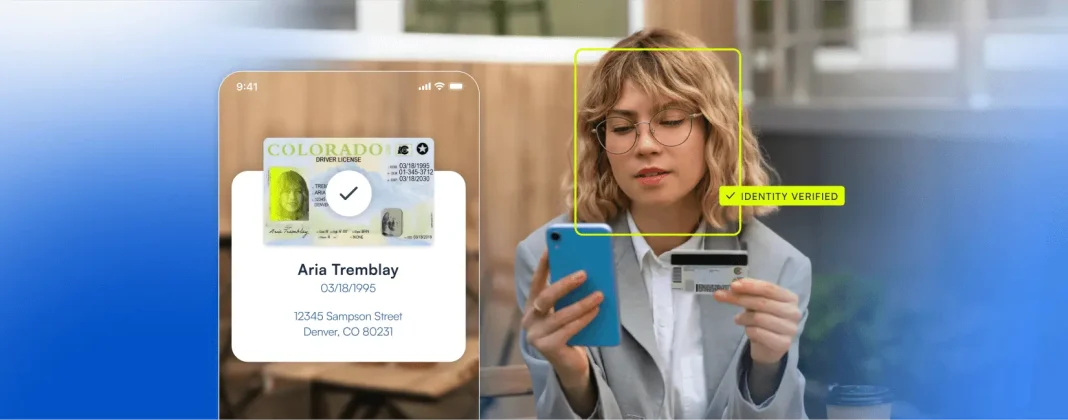
Microblink provides a sophisticated identity verification (IDV) platform that prioritizes both user experience and data privacy through advanced edge computing. By processing sensitive biometric and document data directly on the end-user’s device, the software eliminates the latency and security vulnerabilities often associated with cloud-based alternatives, making it a preferred choice for high-stakes enterprise environments.
The solution is engineered to handle the complexities of global identity documents while maintaining a frictionless flow for legitimate users. For Fraud Decision-Makers, this means a significant reduction in abandonment rates during onboarding without sacrificing the rigorous security standards required for modern compliance and fraud prevention.
Key Benefits
- Proprietary synthetic data training for unmatched fraud detection accuracy
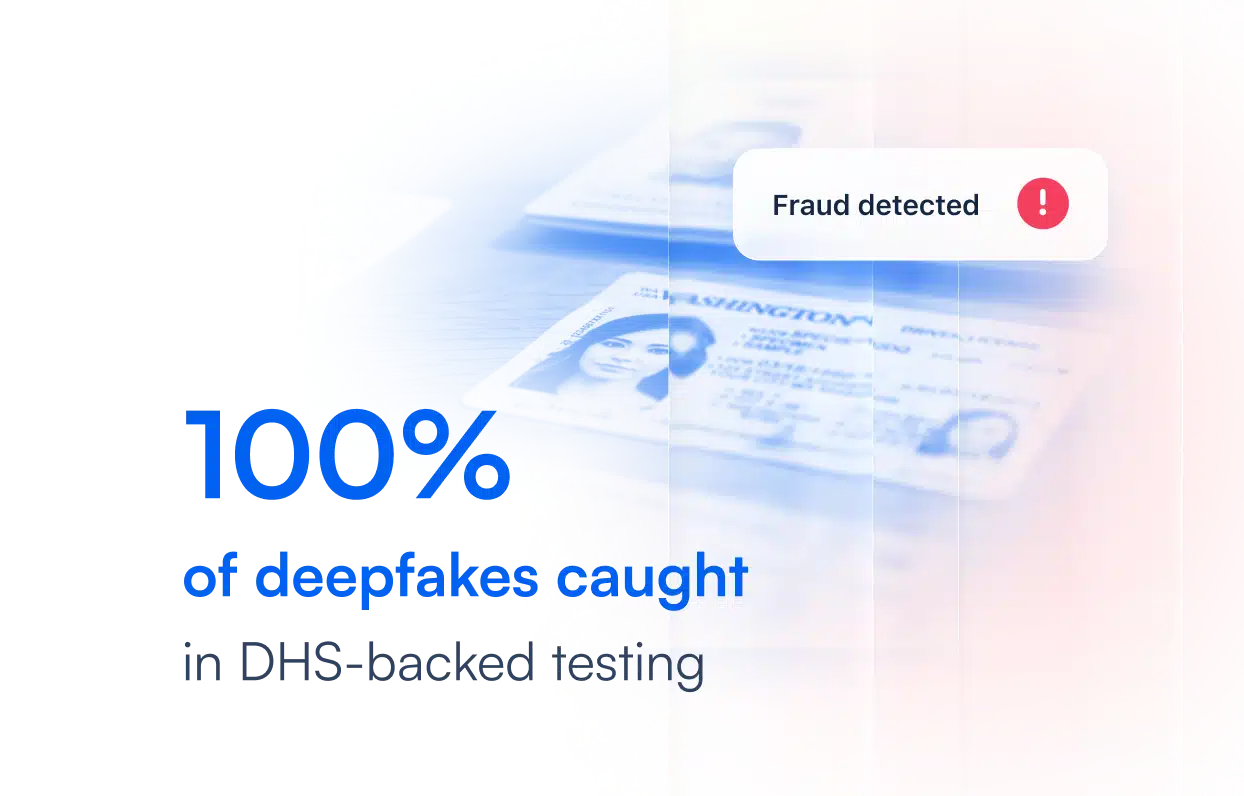
- Perfect benchmark performance (100% deepfake detection, 0% false accepts)
- Adaptive, multi-layered defense against evolving GenAI threats
- Certified AI-powered liveness detection for robust anti-spoofing
Core Features
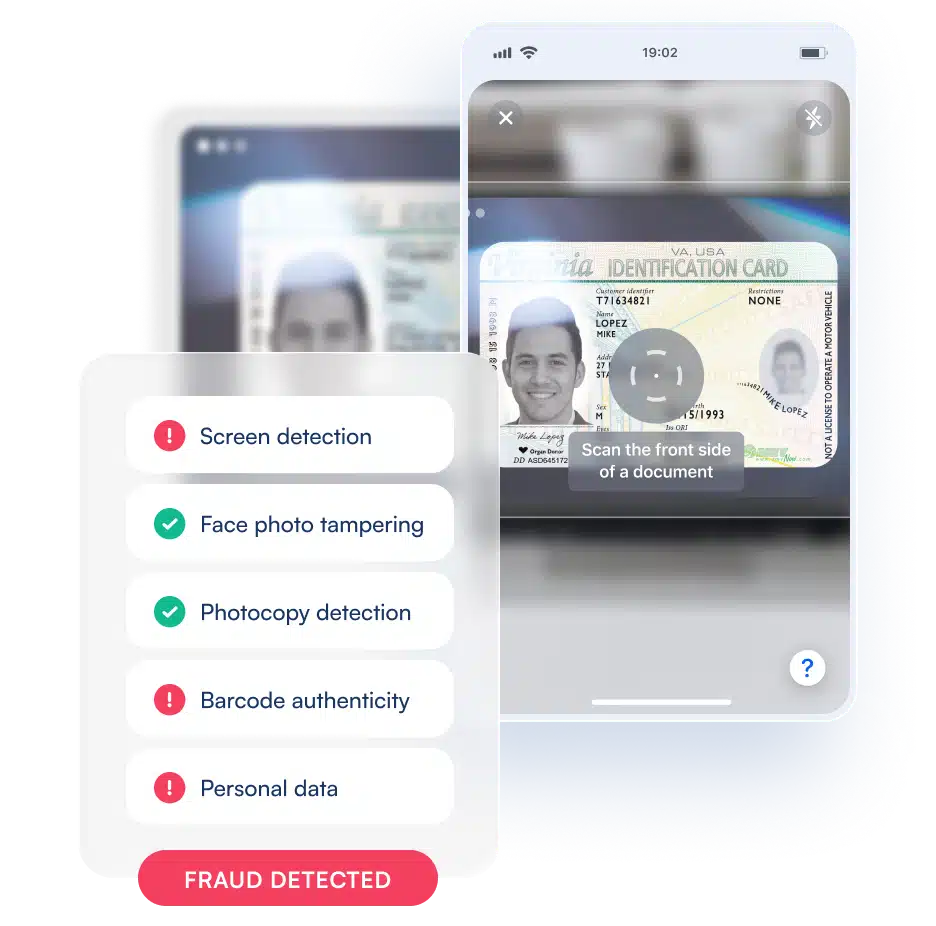
- AI-Driven Document Verification: Advanced neural networks extract and verify data from thousands of global identity documents, ensuring authenticity and integrity.
- Active and Passive Liveness Detection: Real-time analysis distinguishes live users from spoofing attempts, blocking photos, videos, and screen replays.
- On-Device Processing: All sensitive data is processed on the user’s device, maximizing privacy and minimizing latency.
- Flexible Integration: Enterprise-grade SDKs and APIs for seamless deployment into existing workflows.
Primary Use Cases
- Secure Customer Onboarding: Prevent fraudulent account creation with real-time ID and biometric verification.
- KYC/AML Compliance: Meet and exceed regulatory requirements with audit-ready, multi-factor verification.
- Account Takeover Prevention: Protect existing accounts with biometric authentication and deepfake detection.
Recent Updates
- Expanded global ID document support and refined AI models for detecting screen replay attacks.
- Ongoing « red hat » training to stay ahead of new GenAI and agentic fraud capture tactics.
- Enhanced developer resources for faster, more flexible integration.
Limitations
- Verification accuracy can be influenced by end-user camera quality.
- Specialized for ID and liveness verification, not broad media analysis.
- Requires developer resources for full SDK/API integration.
2. Sensity AI

Platform Summary
Sensity AI is a specialized deepfake detection platform focused on forensic-grade analysis of synthetic media. Designed for organizations requiring deep technical explainability and legally defensible evidence, Sensity is ideal for legal professionals, security heads, and government agencies investigating potential media manipulation or identity fraud.
Core Features
- Multilayer Forensic Analysis: Stacks visual, metadata, and audio signals for high-certainty deepfake detection.
- Court-Ready Reporting: Generates detailed, explainable forensic reports with confidence scores for legal and corporate proceedings.
- Cross-Modal Detection: Identifies inconsistencies between audio and video, such as lip-sync deepfakes.
Primary Use Cases
- Criminal investigations and digital evidence analysis
- Securing video calls and real-time communications against AI-generated impostors
- Government verification of digital content to combat disinformation
Recent Updates
- Achieved 98% accuracy on public datasets, identifying over 900,000 deepfake incidents in 2025.
- Automated reporting enhancements reduce manual forensic review time by 35 minutes per case.
Limitations
- Deep forensic analysis can lead to longer processing times.
- Enterprise and legal-focused pricing may be prohibitive for smaller firms.
- Detailed reports require security or forensics expertise to interpret.
3. BioID

Platform Summary
BioID is a German-engineered service provider specializing in anti-spoofing and biometric verification, with a unique focus on defending against « virtual camera injection » attacks. This makes BioID a critical partner for government and financial institutions needing robust identity verification across unmanaged or remote devices.
Core Features
- Virtual Camera Injection Detection: Identifies software-injected video streams, blocking sophisticated deepfake attempts.
- Challenge-Response Mechanism: Prompts users to perform randomized movements, preventing static photo or pre-recorded deepfake attacks.
- Liveness Detection: Rejects 3D masks, silicon overlays, and high-resolution photo replays.
Primary Use Cases
- Pension administration and « proof of life » verification for welfare programs
- Secure remote work authentication for sensitive internal systems
- AML compliance and high-risk transaction verification in financial services
Recent Updates
- Deepened collaboration with the FAKE-ID consortium for generative AI detection.
- Integrated new research for improved real-time detection of AI-generated facial textures.
Limitations
- Active challenge-response can add user friction and reduce conversion rates.
- Requires deep integration for camera control and virtual driver detection.
- Performance may be impacted by extreme lighting conditions.
4. Reality Defender

Platform Summary
Reality Defender offers a comprehensive, multi-modal defense system to identify AI-generated content across text, audio, images, and video. Built for large-scale enterprises, it is ideal for organizations needing to monitor diverse communication channels for synthetic threats, disinformation, and brand impersonation.
Core Features
- Multi-Modal Media Detection: Detects AI manipulation across all media types, including text-based phishing.
- Real-Time Scanning: Provides immediate feedback on media authenticity during uploads or live streams.
- Enterprise-Grade API: Scalable integration for high-volume automation and security stack compatibility.
Primary Use Cases
- Disinformation defense and brand reputation protection
- Enterprise communication security against deepfake audio/video impersonations
- Media integrity verification for content platforms
Recent Updates
- Expanded detection to include text-based generative AI and LLM-generated phishing.
- Redesigned web interface for clearer multi-modal threat visualization.
Limitations
- Generalist tool may lack specialized KYC workflow features.
- Detecting AI in text can lead to higher false positive rates.
- Enterprise-first pricing and architecture may not suit small startups.
5. Facia

Platform Summary
Facia is a high-speed biometric verification provider specializing in sub-second liveness detection and advanced iris recognition. Targeting high-risk, high-volume sectors like crypto and online gambling, Facia enables rapid, secure onboarding without sacrificing security.
Core Features
- Iris Recognition: Dual-biometric security combining iris and facial analysis.
- Instantaneous Liveness Detection: Delivers liveness results in under a second, minimizing user friction.
- Face Matching & Search: Rapid comparison against watchlists or internal databases to identify serial fraudsters.
Primary Use Cases
- Rapid onboarding for crypto exchanges and fintech platforms
- Online gambling verification for age and physical presence
- Age verification for compliance with regional laws
Recent Updates
- Enhanced compliance with global privacy regulations (GDPR, CCPA).
- New on-premise deployment options for enterprises with strict data residency requirements.
Limitations
- Effective iris recognition may require high-resolution cameras.
- Collecting iris data may face stricter regulatory scrutiny.
- Heavily tailored toward high-speed sectors, less suited for traditional industries.
Next Steps for Fraud Decision-Makers
Selecting the right deepfake detection solution is critical for maintaining compliance, reducing fraud risk, and protecting your organization’s reputation. For a deeper dive into how Microblink’s privacy-first, on-device verification can future-proof your onboarding and compliance workflows, explore our platform or contact our team for a personalized demo.
For more on related topics, see our guides on best deepfake detection software and liveness detection software.
Frequently Asked Questions
What is deepfake detection software and how does it work?
Deepfake detection software uses advanced artificial intelligence (AI) and machine learning algorithms to analyze digital media—such as images, videos, and audio—for signs of manipulation or synthetic generation. These platforms typically leverage computer vision, biometric analysis, and multi-modal data comparison to identify inconsistencies, artifacts, or unnatural patterns that are characteristic of deepfakes. Some solutions also incorporate liveness detection, which verifies that the subject is a real, live person rather than a spoofed or pre-recorded entity. The most robust tools can operate in real-time and integrate seamlessly into enterprise security workflows.
Why is deepfake detection important for enterprises and compliance teams?
Deepfake technology poses significant risks to organizations, including identity fraud, financial scams (such as CEO voice impersonation), and reputational damage from disinformation campaigns. For compliance teams and fraud decision-makers, deepfake detection is essential for meeting regulatory requirements (such as KYC/AML), safeguarding onboarding processes, and ensuring the integrity of digital transactions. Implementing deepfake detection helps prevent unauthorized access, account takeovers, and fraudulent activities that could lead to legal liabilities and financial losses.
How do I choose the right deepfake detection solution for my organization?
When selecting a deepfake detection platform, consider the following factors:
– Detection Accuracy: Look for solutions with proven benchmarks and low false acceptance rates.
– Compliance Features: Ensure the tool meets relevant regulations (e.g., GDPR, AML, CCPA) and provides audit-ready reporting.
– Integration Flexibility: Evaluate whether the software offers SDKs, APIs, and deployment options (cloud, on-premise, or on-device) that fit your existing tech stack.
– Industry Focus: Some platforms are optimized for specific sectors (e.g., fintech, government, remote work), so choose one aligned with your primary use cases.
– User Experience: Consider the impact on end-users, such as onboarding speed and friction, especially if active liveness checks are required.
– Scalability and Support: Assess the vendor’s ability to support enterprise-scale deployments and provide timely updates against evolving threats.
Can deepfake detection software be integrated into existing KYC or onboarding workflows?
Yes, most enterprise-grade deepfake detection solutions offer integration options such as APIs and SDKs that allow seamless embedding into existing KYC, onboarding, and authentication workflows. These integrations enable real-time identity verification and liveness checks during account creation, transaction approval, or access control processes. Some platforms also support on-device processing for enhanced privacy and reduced latency, making them suitable for high-security environments.
What are the main limitations or challenges of current deepfake detection technologies?
While deepfake detection software has advanced rapidly, several challenges remain:
– Evolving Threats: Generative AI techniques are constantly improving, requiring detection tools to be regularly updated.
– False Positives/Negatives: Some solutions may flag legitimate users as threats or miss sophisticated deepfakes, impacting user experience and security.
– Hardware Requirements: High-accuracy detection, especially for biometric and liveness checks, may require high-resolution cameras or specific device capabilities.
– Integration Complexity: Deploying and maintaining these solutions can require significant developer resources, particularly for enterprise-scale implementations.
– User Friction: Active liveness detection methods (like challenge-response) may reduce conversion rates or frustrate users if not well-designed.