
Best Deepfake Detection Software: Top AI Solutions for Fraud & Compliance
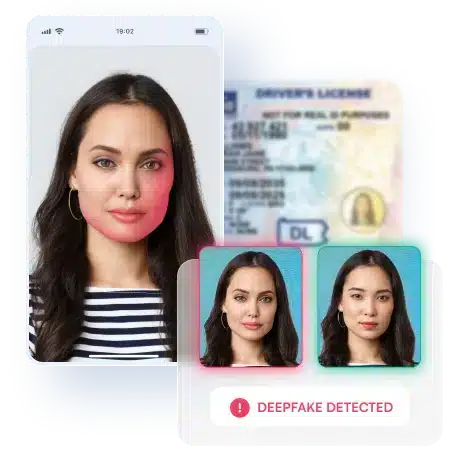
Deepfake detection tools are advanced software solutions designed to identify and analyze manipulated or synthetic media, such as videos, images, and audio generated using artificial intelligence. These tools utilize machine learning, computer vision, and biometric analysis to verify media integrity and protect organizations from misinformation, reputational damage, and identity fraud. By integrating with enterprise security systems and content platforms, these solutions support compliance teams and security analysts in deploying top fraud prevention solutions to safeguard digital ecosystems against increasingly sophisticated AI-generated forgeries.
Deepfake Detection Software Comparison
| Category | Microblink | Sensity AI | Reality Defender | Facia.ai | Deep Media (DeepID) |
|---|---|---|---|---|---|
| Compliance Features | Strong focus on KYC/AML compliance with document verification. | Provides court-ready forensic reporting, suitable for legal contexts. | Offers real-time API integration for compliance with content moderation. | Supports global privacy laws with on-premise options. | Ethical AI framework ensures unbiased analysis. |
| Industry Focus | Identity verification and fraud prevention for financial services. | Forensic investigations and government use. | Enterprise security and content moderation. | Biometrics for fintech and crypto industries. | Media platforms and social media security. |
| AI Capabilities | AI-driven document and liveness detection. | Multi-layer forensic analysis with high accuracy. | Multi-modal detection across audio, video, images, and text. | Sub-second liveness and iris recognition. | Media intelligence with generative AI misuse detection. |
| User Experience | Seamless UX with high-security verification. | Detailed explainability in reports for professional use. | User-friendly web app for non-developers. | Fast processing speed, minimizing user friction. | Good for platform-wide analysis and media ethics. |
| Developer Experience | Requires developer resources for SDK integration. | High technical complexity suited for security professionals. | Offers both API and web app options. | New SDKs support varied hardware; easy integration. | Less documentation available; direct engagement needed. |
1. Microblink

Platform Summary:
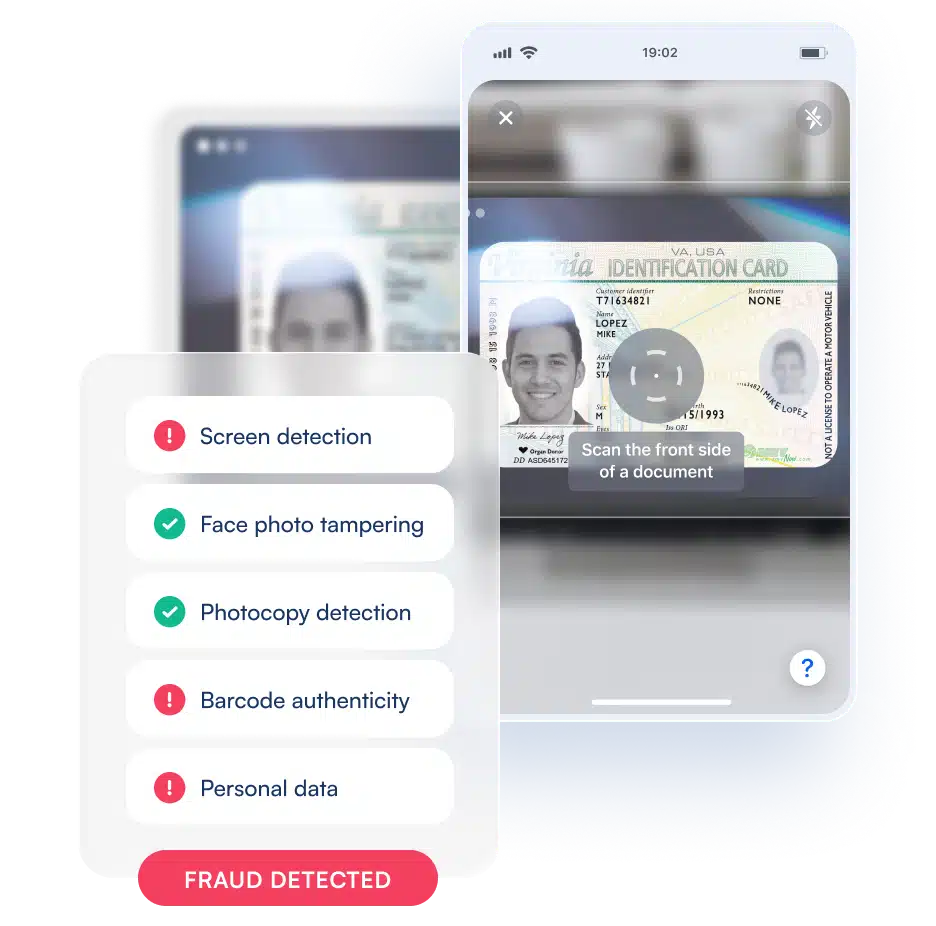
Microblink is a leading provider of AI-powered identity verification software that prioritizes the user experience at the point of entry. By utilizing on-device processing, the software ensures high-speed document scanning and biometric verification without the latency typically associated with cloud-only alternatives. For Fraud Decision-Makers, Microblink offers a proactive defense against synthetic identity fraud by securing the onboarding pipeline. Microblink’s ability to run locally on a user’s device enhances data privacy while providing forensic-grade security against sophisticated presentation attacks and deepfake injections.
Key Benefits
- Battle-tested AI for deepfake defense: Microblink leverages proprietary synthetic data generation and adaptive machine learning to detect and prevent synthetic identity fraud before it enters your ecosystem.
- Independently verified accuracy: Achieved 100% deepfake detection with 0% false acceptance on the largest public deepfake dataset, setting a new industry benchmark.
- Universal, multi-layered protection: Combines document verification, biometric authentication, and dynamic liveness detection for resilient, future-proof defense.
- Seamless onboarding experience: High-speed, on-device processing ensures minimal user friction and maximizes conversion rates.
Core Features
- AI-Driven Document Verification: Utilizing a robust document fraud detection API, the system scans and extracts data from global identity documents with high precision, running locally for enhanced security.
- Active and Passive Liveness Detection: Sophisticated algorithms confirm the presence of a live user, blocking deepfakes and presentation attacks.
- Global Identity Coverage: Supports a vast array of international documents, streamlining verification for global enterprises.
- Developer-Centric Integration: Lightweight SDKs and flexible ID verification APIs allow seamless integration into existing mobile and web applications.
Primary Use Cases
- Secure Digital Onboarding & KYC Compliance: Instantly verify new users and meet stringent requirements common among top KYC solution providers while blocking synthetic identities.
- Preventing Account Takeover (ATO) Fraud: Ensure only legitimate, live users can access accounts, protecting against deepfake-driven impersonation.
- Mitigating Synthetic Identity Fraud: Detect subtle inconsistencies in documents and biometrics to stop complex, AI-driven fraud attempts.
Recent Updates
- Expanded script support: BlinkID engine now supports a wider range of alphabet scripts, improving accuracy for non-Latin characters.
- Enhanced scanning algorithms: Improved blur detection and glare reduction to extract data with higher success rates in challenging lighting.
- Lightweight SDK integration: New capabilities for lighter, faster implementation without bloating host applications.
Limitations
- Focus on Document-Based Identity: Primarily specialized in document-centric identity verification; less suited for general media deepfake detection (e.g., viral videos).
- Mobile-First Optimization: Optimized for mobile camera experiences; desktop webcam support may not fully leverage high-definition scanning.
- Integration Complexity: Requires developer resources for deep integration and custom UI/UX flows.
2. Sensity AI

Platform Summary:
Sensity AI is a specialized deepfake detection platform that focuses on forensic-grade analysis of digital media. It is designed for high-stakes environments where proving the authenticity of a video, image, or audio file is critical for legal or investigative purposes. The platform provides security professionals with a comprehensive toolkit to identify AI-generated manipulations that are invisible to the naked eye, empowering Fraud Decision-Makers to make evidence-based decisions that stand up to scrutiny in corporate and judicial settings.
Core Features
- Multilayer Forensic Analysis: Simultaneously analyzes visuals, file structure, metadata, and audio for a comprehensive view of manipulation.
- Automated Detection Engine: Processes videos, images, and audio via API or web interface for high-volume, automated analysis.
- Court-Ready Reporting: Generates detailed, explainable forensic reports suitable for legal and corporate investigations.
Primary Use Cases
- Criminal Investigations: Analyze digital evidence for tampering in law enforcement and legal contexts.
- Corporate KYC Workflows: Strengthen video-call security and real-time KYC with face and voice authenticity checks.
- Government Evidence Verification: Verify digital content authenticity to prevent political disinformation.
Recent Updates
- Enhanced pixel-level analysis: Targets artifacts from the latest diffusion-based AI models.
- Deepfake Detection Hub: Improved collaboration tools for large-scale investigations.
- New API endpoints: Easier integration with third-party identity management and content moderation platforms.
Limitations
- High Technical Complexity: Output can be complex and may require training for full interpretation.
- Cost for Casual Users: Enterprise-focused pricing may be prohibitive for small businesses or occasional use.
- Processing Time for Deep Analysis: Deep forensic analysis can be time-consuming for large files.
3. Reality Defender

Platform Summary:
Reality Defender is an enterprise-grade detection platform designed to protect organizations from the full spectrum of synthetic media. It offers a multi-modal approach, detecting AI-generated content across text, audio, images, and video within a single interface. This solution is particularly valuable for Fraud Decision-Makers who need to protect corporate reputations and prevent social engineering attacks, with both high-throughput API and user-friendly web application options.
Core Features
- Multi-Modal Detection Platform: Detects manipulation across audio, video, images, and text for comprehensive media security.
- Real-Time Enterprise API: Integrates into content moderation pipelines for instant deepfake scanning.
- Web-Based Analysis Application: Drag-and-drop interface for non-technical teams to analyze files without coding.
Primary Use Cases
- Executive Protection: Detect and respond to deepfake threats targeting executives.
- Content Moderation: Automatically flag and label AI-generated content on social and media platforms.
- Financial Fraud Prevention: Prevent voice cloning and social engineering attacks, a critical component of modern fintech fraud prevention.
Recent Updates
- Expanded TTS artifact detection: Improved models for identifying synthetic voice attacks.
- Dashboard analytics: Track and visualize threat trends and attack volumes.
- Lower latency audio detection: Enhanced real-time detection for telecommunications clients.
Limitations
- Dependency on Known Attack Vectors: May not immediately detect novel or zero-day generative techniques.
- False Positive Management: High-volume moderation can create manual review workloads.
- Resource Intensive: Multi-modal analysis, especially for video, requires significant computational resources.
4. Facia.ai

Platform Summary:
Facia.ai is a specialized biometric security firm focused on high-speed liveness detection and facial recognition. Their technology provides near-instantaneous verification, making it ideal for industries where user friction directly impacts revenue. For Fraud Decision-Makers in fintech and gambling, Facia offers robust defense against spoofing, with advanced iris recognition and 3D face matching for multi-layered biometric security.
Core Features
- Sub-Second Liveness Detection: Verifies user presence in less than a second for frictionless onboarding.
- Iris Recognition Technology: Adds an extra layer of security beyond standard facial recognition.
- 3D Face Matching: Depth-sensing technology distinguishes real users from flat screen spoofs.
Primary Use Cases
- Crypto & Fintech Onboarding: Fast, compliant onboarding for high-frequency trading and exchanges.
- Online Gambling Verification: Prevent fraud and underage gambling with real-time liveness checks.
- Access Control Systems: Secure entry management for physical security environments.
Recent Updates
- Algorithmic bias reduction: Improved accuracy across diverse demographics.
- On-premise deployment: Meets strict data sovereignty and privacy requirements.
- Broadened hardware support: New SDKs for older mobile hardware and webcams.
Limitations
- Niche Focus on Biometrics: Limited to face and iris biometrics; does not cover broader media threats.
- Hardware Dependency for Iris: High-accuracy iris recognition may require specific hardware.
- Market Brand Recognition: Newer entrant with less enterprise brand awareness.
5. Deep Media (DeepID)

Platform Summary:
Deep Media is a media intelligence company providing tools for detecting synthetic content at scale, with a strong emphasis on ethical AI. Their DeepID solution helps platforms and news organizations navigate the flood of generative AI content while maintaining digital trust. For Fraud Decision-Makers, Deep Media focuses on media safety, identifying coordinated disinformation campaigns and generative AI misuse.
Core Features
- Ethical AI Framework: Ensures unbiased, responsible analysis and minimizes AI misuse.
- Cross-Platform Media Intelligence: Analyzes media across platforms to identify coordinated deepfake campaigns.
- Generative AI Misuse Detection: Specialized in detecting content from new synthesis tools and open-source models.
Primary Use Cases
- Social Media Platform Security: Detect and label AI-generated content to maintain user trust.
- News & Media Verification: Verify citizen journalism and user-submitted footage before broadcast.
- Ethical AI Compliance: Audit content for responsible AI use and support CSR initiatives.
Recent Updates
- Expanded model coverage: Detects content from the latest open-source generators.
- Upstream CDN integration: Detection technology integrated directly into content distribution networks.
- Granular manipulation reporting: Enhanced dashboard provides detailed breakdowns of AI manipulation types.
Limitations
- Focus on Media Intelligence: Not designed for individual identity verification or KYC.
- Less Documentation Available: Fewer public resources; direct engagement with sales often required.
- Niche Market Positioning: Emphasis on ethical AI and media safety may not align with standard fraud prevention needs.
Looking for more on digital onboarding, KYC/AML, and fraud prevention?
Explore our comprehensive guide to identity verification and learn how to future-proof your compliance workflows against emerging AI threats.
Frequently Asked Questions
What is deepfake detection software and why is it important for enterprises?
Deepfake detection software uses advanced AI, machine learning, and computer vision techniques to identify manipulated or synthetic media, such as altered videos, images, or audio. For enterprises, this technology is crucial to protect against identity fraud, reputational damage, and regulatory non-compliance. By verifying the authenticity of digital content, organizations can prevent social engineering attacks, ensure the integrity of onboarding and KYC processes, and maintain trust in digital interactions.
How do deepfake detection tools integrate with existing compliance and security workflows?
Most leading deepfake detection solutions offer APIs, SDKs, or web-based platforms that can be integrated into existing enterprise security systems, onboarding pipelines, and content moderation workflows. This allows compliance teams and security analysts to automate the verification of user-submitted documents, biometric data, and media files, ensuring real-time protection against synthetic fraud while maintaining regulatory compliance (including AML for banks and KYC requirements).
What are the main differences between document-centric and media-centric deepfake detection solutions?
Document-centric solutions, like Microblink, focus primarily on verifying the authenticity of identity documents and live user biometrics during onboarding or account access. Media-centric solutions, such as Sensity AI and Deep Media, are designed to analyze a broader range of media (videos, images, audio, and text) for manipulations, making them suitable for content moderation, forensic investigations, and media platform security. The choice depends on whether your primary risk is identity fraud or the spread of manipulated media.
What are the typical limitations or challenges of using deepfake detection software?
Common limitations include the need for developer resources for integration, potential false positives or negatives, high computational requirements for large-scale or multi-modal analysis, and the challenge of keeping up with rapidly evolving generative AI techniques. Some solutions may also be specialized for certain use cases (e.g., biometric verification vs. media forensics) or require specific hardware for optimal performance. It’s important to match the tool’s capabilities with your organization’s specific risk profile and compliance needs.
How do deepfake detection platforms help organizations stay compliant with KYC/AML and data privacy regulations?
Deepfake detection platforms enhance compliance by ensuring that only genuine users and authentic documents are accepted during digital onboarding and transaction processes, reducing the risk of synthetic identity fraud. Many solutions offer features tailored for regulatory requirements, such as audit trails, forensic reporting, and support for global privacy laws (e.g., GDPR). On-device processing and on-premise deployment options can further help organizations maintain data sovereignty and minimize exposure of sensitive information.