
KYC Address Verification: Prevent Fraud While Meeting Compliance Requirements

Regulatory actions in recent years have made it clear that incomplete KYC and Proof of Address (PoA) processes are compliance red flags. When crypto platforms fail to verify a customer’s address properly, it undermines Anti-Money Laundering (AML) controls and invites costly scrutiny from agencies like FinCEN, FATF, and the European Securities and Markets Authority (ESMA) under MiCA.
For compliance leaders, address verification is a linchpin of KYC integrity. Done right, it proves customer legitimacy, reduces fraud risk, and ensures audit readiness across jurisdictions.
What Is KYC Address Verification?
KYC address verification is the process of confirming that a customer resides at a legitimate, verifiable address. It’s typically a core element of customer due diligence, serving as both a regulatory and operational safeguard.
Key functions include:
- Ensuring the customer’s claimed residence matches a valid physical location.
- Detecting synthetic or fake identities created with random address data.
- Supporting jurisdictional screening and AML risk categorization.
Common proofs of address include:
- Utility bills or bank statements
- Government-issued documents (tax notices, residence permits)
- Rental agreements or property records
How Does KYC Address Verification Work?
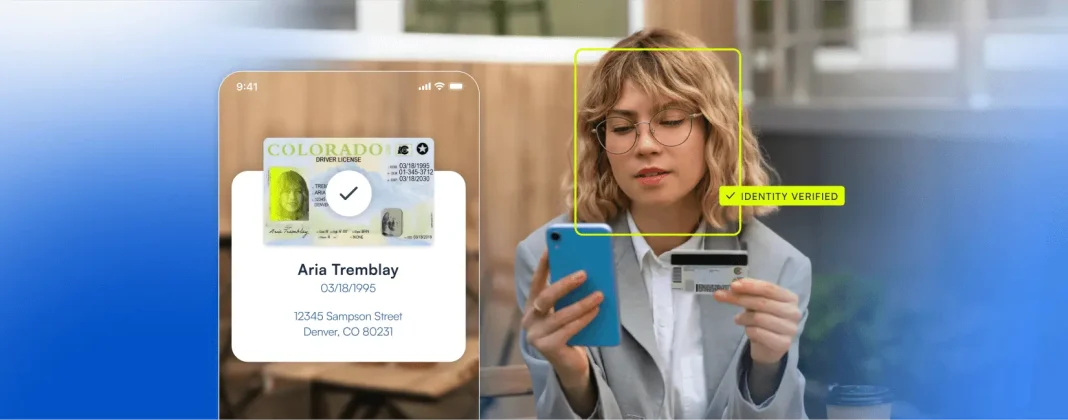
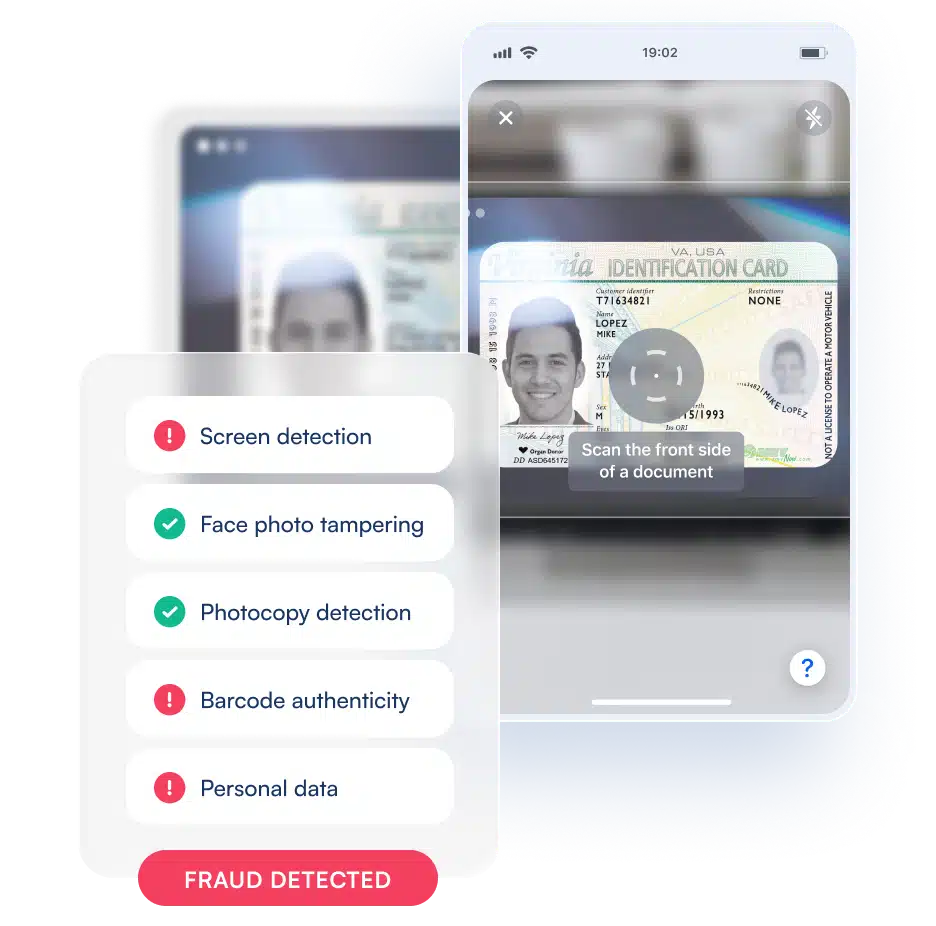
At a high level, KYC address verification combines document validation, data extraction, and database checks. Here’s how it typically works:
| Step | Action | Purpose |
| 1. Data Collection | Customer submits proof of address document during onboarding (e.g., utility bill). | Captures official proof tied to a residential address. |
| 2. Document Verification | OCR and AI tools extract and verify text, structure, and authenticity of the document. | Detects forged or altered PoA documents. |
| 3. Address Validation | The address is cross-referenced with postal databases or third-party data sources. | Confirms that the address actually exists and matches the region. |
| 4. Consistency Check | Compares PoA address to ID document or submitted data. | Flags mismatched information for review. |
| 5. Risk Scoring and Audit Logging | Automated systems log results for audit trails and regulatory proof. | Ensures AML audit readiness and accountability. |
Why Address Verification Is a Compliance Flashpoint in Crypto
Address verification has emerged as one of the most scrutinized elements of KYC compliance in the crypto industry. Exchanges and wallets must often verify users from more than 200 jurisdictions, each with distinct documentation standards and data formats. On top of that, crypto users frequently rely on VPNs or anonymity tools, complicating efforts to confirm where transactions are truly originating. For high-volume platforms, even a small error rate can result in thousands of unverifiable accounts—an open invitation for regulators to investigate potential AML lapses.
Regulators like FinCEN and FATF have been explicit that Proof of Address is essential for satisfying Travel Rule and VASP licensing obligations. When firms skip this step or rely on outdated manual review processes, they risk more than inefficiency; they risk enforcement actions. Several recent settlements show how inadequate address verification has led directly to multi-million dollar penalties and increased monitoring requirements. In short, address verification has become a compliance flashpoint because it directly connects customer identity to geography, a critical input for both risk scoring and jurisdictional controls.
Beyond Compliance: Operational Benefits of Automated Address Verification
While the primary driver for PoA verification is regulatory compliance, the operational upside of automation is equally compelling. Automated address verification can dramatically reduce manual workload and review time, freeing compliance teams to focus on higher-value investigations. Organizations that adopt AI-driven PoA checks typically see faster onboarding and fewer user drop-offs, as the verification step becomes seamless rather than cumbersome.
Moreover, automation improves data accuracy by standardizing address formats and instantly flagging inconsistencies, leading to fewer false positives and unnecessary Suspicious Activity Reports (SARs). From an audit perspective, systems that automatically log verification events create a continuous compliance record. Over time, this translates to measurable gains in efficiency, consistency, and audit readiness, strengthening both compliance posture and customer experience.
User Experience Tips for Address Verification
Compliance shouldn’t come at the expense of customer satisfaction. To minimize drop-offs during address verification:
- Design mobile-first upload flows with instant document feedback.
- Offer progress indicators (e.g., “90% verified”) to reassure users.
- Pre-fill fields using OCR to reduce typing and errors.
- Communicate clearly why PoA is required to reduce user confusion.
A streamlined, transparent experience reinforces trust—and reduces abandonment rates during onboarding.
Regional Compliance Considerations
Different markets impose distinct address verification requirements.
| Region | Key Regulations | Verification Expectation |
| European Union | MiCA, AMLD6 | PoA required for all VASP onboarding; retention of audit logs. |
| United States | FinCEN, State Money Transmitter Laws | Address validation required for CTR/SAR thresholds. |
| Singapore | Payment Services Act (PSA) | Enhanced due diligence for non-resident users. |
| Hong Kong | VASP Licensing Regime | Must verify address against reliable independent sources. |
A single verification framework that adapts to these regional demands ensures consistent global compliance.
Build Trust, Reduce Fraud, and Stay Audit-Ready with Microblink
Microblink’s AI-powered KYC platform streamlines address verification across jurisdictions, delivering unmatched accuracy and transparency.
With automated document parsing, real-time address validation, and auditable verification logs, Microblink helps compliance professionals stay ahead of fraud, satisfy regulatory requirements, and onboard customers faster, all without sacrificing accuracy. Get in touch to learn more today.