
While generic character recognition converts images to text, Microblink takes it a step further, translating confusing receipt abbreviations and internal codes into full products – regardless of retailer or receipt format. Extract purchase data from physical and digital receipts to power loyalty rewards programs, deliver CPG promotions, drive market research, and more.
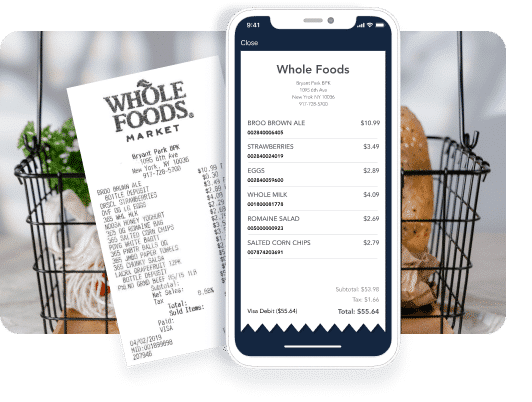
Receipt OCR (optical character recognition, or optical character reader in some instances) involves taking digital images of receipts and transcribing the information into characters of text. In other words, receipt OCR goes character-by-character to take unstructured data (captured through the image) and turn it into structured data (i.e., the specific product information contained on the receipt). Organizations of all kinds seek these tools so they can extract valuable data around consumer preferences, spending habits, and more (e.g., how much someone paid for a box of cereal or what else was purchased alongside a specific item on promotion).
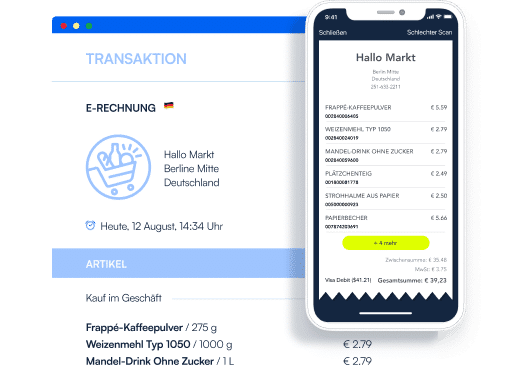
Perhaps the old adage about another person’s trash is true; the information contained on receipts can provide businesses with an in-depth look at their users, which can be used to inform product strategy, marketing, merchandising plans, promotions, and more. Even organizations that have taken steps toward more sustainable business operations in the form of paperless receipts can still glean invaluable insights from first-party purchase data by way of digital receipt scanning technology.
Receipts provide customers with proof-of-purchase, but they provide brands, retailers and market research firms with much more.
However, not all OCR solutions are created equal.
Receipts, whether physical or digital, are complex, diverse documents that vary in format and image quality. There is no global receipt standard across retailers or geographies that states what information must be included on a receipt, in what order, and in what format (i.e., product codes or abbreviations).
When you think about the number of retailers around the globe, as well as the sheer number of products that stores contain, the ability to automatically and accurately know which exact items were purchased — and where — begins to feel overwhelming. Roughly half of the receipts in the US have product numbers on them, which are generally derivations of a UPC or “Universal Product Code.” (For more on product codes, check out this blog.)

Microblink goes beyond receipt OCR and character recognition, utilizing what we call “product intelligence” to deliver UPC-level purchase data at scale. While OCR converts images to text, Microblink takes it a step further, translating confusing descriptions and codes into fully descriptive products.

Our clients own the receipts and the end-user data they collect through them. Our tech is embedded in these apps in the form of mobile SDKs for iOS & Android.

For organizations looking to unlock first-party purchase data at scale — whether it’s to validate purchases and promotions, support market research, or inform media & advertising strategies — Microblink utilizes a variety of technologies, including artificial intelligence (AI), to automate this process.
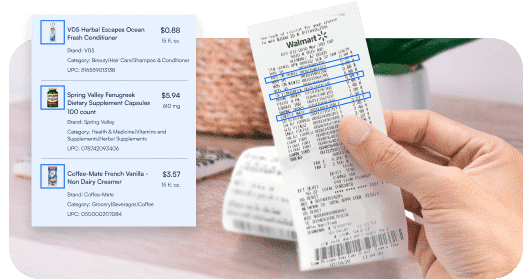
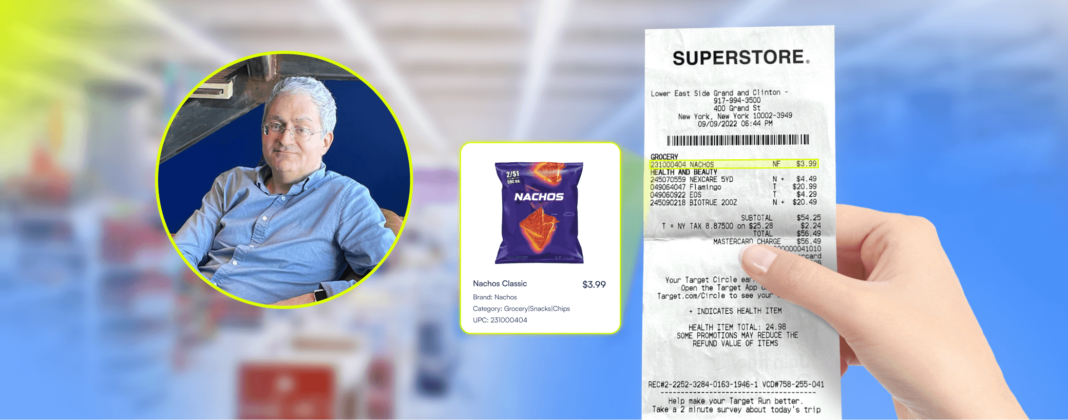
Microblink is the leading solution for grocery receipt scanning, with an unparalleled catalog of more than 15 million consumer products and counting. Our product intelligence takes the information found on a receipt (e.g., an SKU code) and attempts to translate it into a specific product, thus providing its full name, UPC, and category. This is essential for clients who need to know exactly which products consumers are buying, in order to issue rewards. For example, our technology will map “GV SLIDERS” to the product name “Great Value Sliders” and brand name “Great Value.”
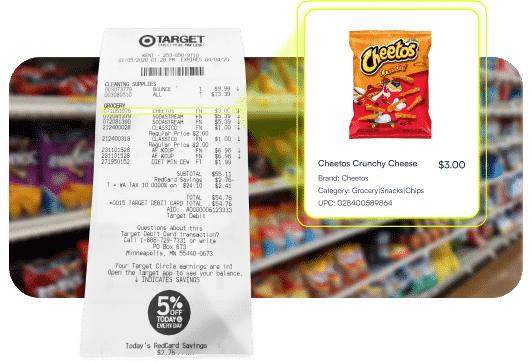
We utilize various mechanisms to analyze the diverse text descriptions contained in receipts, including what we call “brand expansion” — for example, learning that “GV” often means “Great Value.” It then queries our product catalog to match relevant products. Our catalog is currently around 15 million products and constantly growing. As part of the ingestion process, we map the brand name and category to align with our proprietary taxonomy of: sector, department, major category.
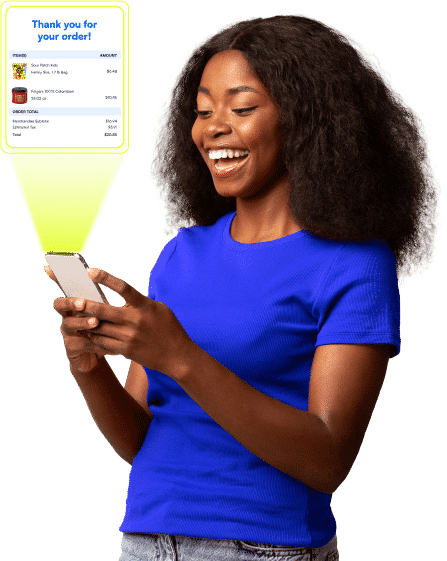
Whether you’re dealing primarily in paper receipts or if your customers are opting for e-receipts, sophisticated receipt data extraction technology like Microblink can provide a continuous stream of accurate first-party purchase data across retailers and brands.
For any company looking to get closer to their consumers, sophisticated, AI-powered receipt OCR technology can serve as the alchemy — turning receipts into a wealth of opportunities to deliver CPG promotions, power loyalty rewards, drive consumer insights, and beyond.
Here’s how our AI expertise translates into real-world consumer impact:


As shoppers continue to shift online, the brands and ecosystem that support them need better, more reliable access to first-p...

To date, Attain has collected over 75,000,000 product line items across their consumer apps, leveraging our receipt scanning...
Our team has always been passionate about the intersection of AI and the real world, sharing a bold vision to bring the benef...

Among all participating vendors, Microblink was the only provider to meet RIVR “high performing” system benchmarks across every measured accuracy metric.
Continue Reading