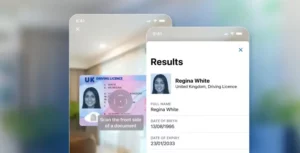

Biometric Verification
What is Biometric Verification?
Biometric verification is a security process that confirms a person’s identity by analyzing their unique biological or behavioral characteristics. Unlike traditional authentication methods that rely on something you know (passwords) or something you have (tokens), biometric verification uses something you are—making it more secure and convenient for identity confirmation.
How Biometric Verification Works
Biometric verification confirms that a person is who they claim to be by comparing their live biometric data against a previously stored template. This technology uses the fact that certain human characteristics are unique to each individual and remain stable over time.
The verification process works in two main phases:
- Enrollment: The system captures and stores a person’s biometric data as a reference template
- Verification: When authentication is needed, the system captures new biometric data and compares it against the stored template to confirm identity
Verification vs. Identification
Biometric verification and identification serve different purposes:
- Verification answers “Is this person who they claim to be?” by performing a one-to-one comparison
- Identification answers “Who is this person?” by performing a one-to-many comparison against a database
What Makes Biometrics Reliable Identifiers
Biometric characteristics work as reliable identifiers because they are:
- Unique: No two individuals share identical biometric traits
- Permanent: These characteristics don’t change significantly over time
- Inherent: They cannot be forgotten, lost, or easily replicated
- Measurable: They can be captured and digitized for comparison
How Biometrics Compare to Traditional Authentication
The following table illustrates how biometric verification compares to traditional authentication approaches:
| Authentication Method | What You Need | Security Level | User Convenience | Vulnerability to Theft/Loss | Reset/Recovery Process
|
|---|---|---|---|---|---|
| Passwords | Remember complex strings | Low-Medium | Low | High (easily shared/stolen) | Simple password reset |
| PINs | Remember numeric codes | Low | Medium | High (easily observed/guessed) | PIN reset required |
| Physical Tokens | Carry hardware device | Medium | Low | High (can be lost/stolen) | Device replacement needed |
| Smart Cards | Carry card + remember PIN | Medium-High | Medium | Medium (card can be stolen) | Card reissuance required |
| Biometric Verification | Present yourself | High | High | Very Low (cannot be lost) | Re-enrollment may be needed |
Different Types of Biometric Verification
Biometric verification systems use various biological and behavioral traits to confirm identity. Each method captures different types of data and offers distinct advantages depending on the application requirements.
The following table provides a comprehensive overview of the most common biometric verification methods:
| Biometric Type | What It Measures | Accuracy Level | Speed of Verification | Common Applications | Special Considerations
|
|---|---|---|---|---|---|
| Fingerprint | Ridge patterns and minutiae points | High | Fast | Smartphones, laptops, door locks | Affected by cuts, dirt, or worn fingertips |
| Facial Recognition | Facial geometry and features | Medium-High | Fast | Security cameras, phone unlocking | Lighting conditions and aging can impact accuracy |
| Voice Recognition | Speech patterns and vocal characteristics | Medium | Medium | Phone banking, smart speakers | Background noise and illness can affect performance |
| Iris Scanning | Unique patterns in the colored eye ring | Very High | Fast | High-security facilities, airports | Requires close proximity and good lighting |
| Retinal Scanning | Blood vessel patterns in the eye | Very High | Medium | Military installations, research facilities | Invasive process, requires direct eye contact |
| Palm Print | Palm surface patterns and geometry | High | Fast | Time attendance, access control | Less common than fingerprints but more hygienic |
| Hand Geometry | Hand shape and finger dimensions | Medium | Fast | Industrial environments | Lower accuracy but works with gloves |
| Keystroke Dynamics | Typing rhythm and patterns | Low-Medium | Continuous | Computer authentication | Behavioral trait that can change over time |
How Biometric Systems Process Data
Each biometric system follows a similar data processing approach:
- Capture: Sensors collect raw biometric data (image, sound, or measurement)
- Feature Extraction: Algorithms identify unique characteristics from the raw data
- Template Creation: Distinctive features are converted into a digital template
- Matching: New samples are compared against stored templates using mathematical algorithms
Where Biometric Verification Is Used Today
Biometric verification has become common across numerous industries and everyday scenarios. Organizations implement these systems to improve security, improve user experience, and simplify authentication processes.
The following table shows how biometric verification is deployed across different sectors:
| Industry/Context | Primary Biometric Methods Used | Specific Use Cases | Key Benefits | User Experience
|
|---|---|---|---|---|
| Consumer Devices | Fingerprint, facial recognition | Smartphone unlocking, laptop login | Convenience, speed | Touch sensor or camera glance |
| Banking/Finance | Fingerprint, voice, facial recognition | ATM access, mobile banking, fraud prevention | Enhanced security, reduced fraud | Biometric authentication for transactions |
| Travel/Border Control | Facial recognition, iris scanning, fingerprint | Airport security, passport control, customs | Faster processing, improved security | Automated gates and checkpoints |
| Workplace Security | Fingerprint, facial recognition, palm print | Building access, time attendance, computer login | Eliminate key cards, accurate tracking | Badge-free entry systems |
| Healthcare | Fingerprint, palm print, iris scanning | Patient identification, medical records access | Prevent medical errors, HIPAA compliance | Quick patient verification |
| Government Services | Fingerprint, facial recognition, iris scanning | Voter registration, benefits distribution, ID cards | Prevent identity fraud, ensure eligibility | Streamlined service delivery |
| Retail/Payments | Fingerprint, facial recognition | Point-of-sale payments, loyalty programs | Faster checkout, personalized service | Touch-to-pay or look-to-pay systems |
| Education | Fingerprint, facial recognition | Campus access, exam authentication, library services | Prevent unauthorized access, track attendance | Student ID replacement |
| Law Enforcement | Fingerprint, facial recognition, DNA | Criminal identification, forensic analysis | Accurate suspect identification | Database matching systems |
| Building Access | Fingerprint, facial recognition, hand geometry | Office buildings, residential complexes | Eliminate physical keys, audit trails | Contactless or touch-based entry |
New Applications for Biometric Verification
Several new applications are expanding the reach of biometric verification:
- Automotive: Biometric car access and personalized driving settings
- IoT Devices: Smart home systems with biometric controls
- Wearable Technology: Fitness trackers and smartwatches with biometric authentication
- Remote Work: Secure access to corporate systems from home offices
Final Thoughts
Biometric verification represents a fundamental shift in how we approach identity authentication, offering enhanced security through unique biological and behavioral characteristics. The technology spans multiple verification methods—from fingerprints and facial recognition to iris scanning and voice patterns—each suited to different applications and security requirements. As organizations across industries adopt these systems for everything from smartphone unlocking to border security, biometric verification continues to balance the need for robust security with user convenience.
For organizations implementing biometric verification systems, comprehensive platforms that integrate multiple verification methods have become essential for addressing diverse security and compliance requirements. Companies such as Microblink have developed sophisticated identity verification solutions that combine biometric verification with document authentication and fraud prevention, drawing on over 12 years of computer vision R&D expertise. These integrated approaches address practical implementation challenges by incorporating anti-fraud measures that detect deepfakes and synthetic identities, ensuring that biometric verification systems remain secure against evolving threats while maintaining the user experience benefits that make this technology increasingly valuable across industries.