
Best Detection Tools for Card-Not-Present Fraud

As digital payments become the standard for B2B merchants and SaaS platforms, the threat of card-not-present (CNP) fraud has evolved from a simple nuisance into a sophisticated, multi-billion-dollar challenge. For modern enterprises, basic security protocols are no longer sufficient to stop coordinated attacks that leverage synthetic identities and automated scripts. To maintain operational efficiency and protect the bottom line, businesses must transition from reactive “block-lists” to proactive, AI-driven ecosystems.
Today’s leading CNP fraud detection software offers more than just a “pass/fail” grade on transactions. They provide real-time monitoring, deep behavioral analytics, and seamless data orchestration that allows legitimate customers to breeze through checkout while stopping bad actors in their tracks. By leveraging machine learning and global intelligence networks, these tools help merchants stay ahead of emerging fraud tactics without introducing the friction that leads to cart abandonment.
In this guide, we analyze the top-tier software designed to safeguard revenue and streamline compliance. Whether you are looking for advanced identity verification, a full financial chargeback guarantee, or a native integration for your existing payment stack, these are the best tools to defend your business against CNP fraud in 2024.
Comparison Table: CNP Fraud Detection Platforms
| Product | Compliance Features | Industry Focus | AI Capabilities | User Experience | Developer Experience |
|---|---|---|---|---|---|
| Microblink | On-device processing for GDPR compliance, KYC automation | Fintech, Mobile Commerce | AI-powered document scanning, refined detection models | Superior UX with automated data extraction | Requires SDK/API integration, performance depends on device hardware |
| Fraud.net | Entity Screening, Policy Monitoring | B2B, SaaS, Travel | Real-time scoring with deep learning, explainable AI models | Comprehensive platform with no-code environment | Complex setup, requires orchestration layer configuration |
| Stripe Radar | Seamless integration within Stripe ecosystem | SaaS, Global Ecommerce | Global network intelligence, improved behavioral analytics | Zero setup required, instant activation | Platform lock-in, limited flexibility with custom logic |
| Sift | API endpoints for real-time decisioning, focus on trust and safety | Digital Goods, Online Communities | Dynamic risk scoring, expanded device intelligence | Holistic approach covering account and content integrity | In-depth integration needed, ongoing model tuning |
| Signifyd | Automated decisioning with global identity graph | High-Volume Retail, Cross-Border | Identity graph for instant user recognition, fully automated decisioning | Eliminates manual review, 100% chargeback guarantee | Requires data sharing, less control over decision logic |
1. Microblink

Platform Summary
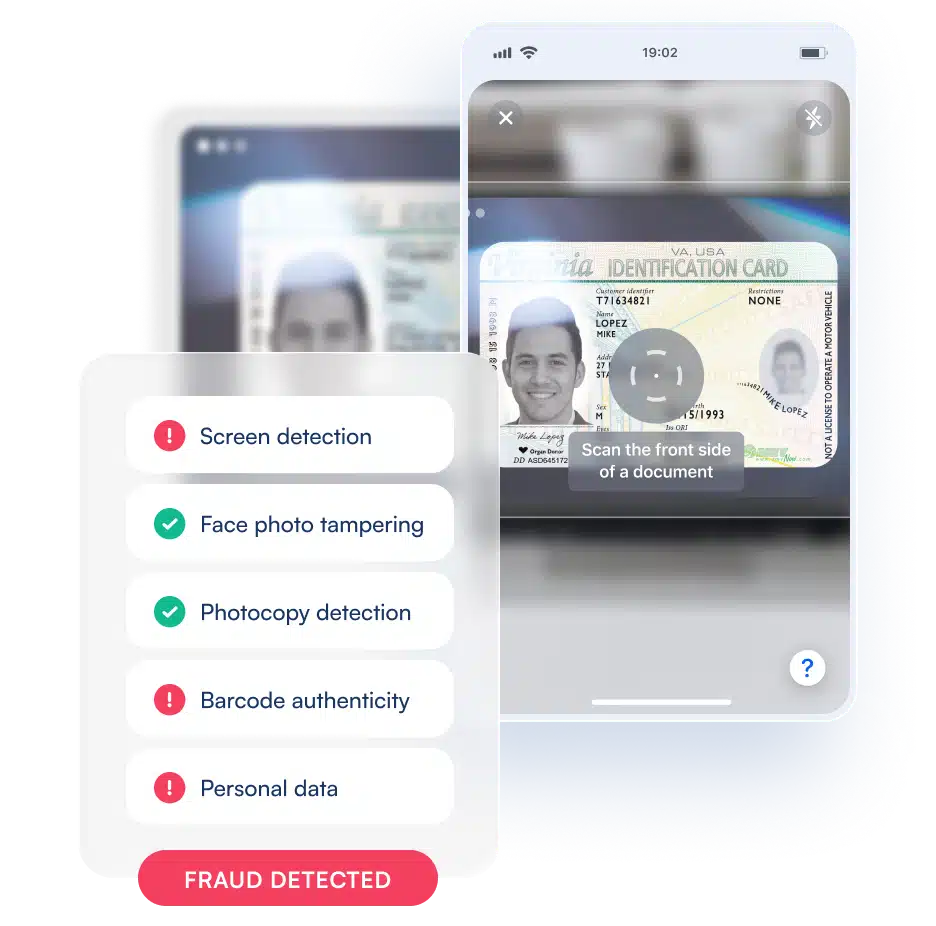
Microblink provides a sophisticated layer of defense by focusing on the point of entry, specifically verifying the identity of the person behind the transaction. For Fraud Decision-Makers, this tool bridges the gap between user experience and security by using AI to verify physical documents and payment cards in real-time. By ensuring the cardholder is who they claim to be during onboarding or checkout, it significantly reduces the risk of synthetic identity fraud and stolen card usage in card-not-present environments.
Microblink’s standout feature is its commitment to privacy and speed via on-device processing. Unlike solutions that require cloud-roundtrips for every scan, Microblink handles sensitive data locally on the user’s device. This approach not only secures the data but also removes the friction that often leads to cart abandonment in high-stakes B2B or SaaS environments, making it a favorite for Compliance Officers concerned with GDPR and data sovereignty.
Key Benefits
- Privacy-First, On-Device Processing: Ensures GDPR compliance and minimizes data breach risks by processing sensitive information locally.
- Instant Card & ID Verification: Combines BlinkCard and BlinkID Verify for real-time authentication of both payment cards and government-issued IDs.
- Biometric Liveness Detection: Confirms the physical presence of the user, blocking deepfakes and presentation attacks.
- Seamless User Experience: Reduces friction at checkout and onboarding, driving higher conversion rates and lower abandonment.
Core Features
- AI-Powered Document Verification: Advanced machine learning scans and verifies identity documents in real-time, preventing identity-based fraud.
- Secure Payment Data Extraction: BlinkCard technology extracts payment card data with high precision, reducing manual entry errors and validating card presence.
- Biometric Liveness Verification: Automated liveness checks and facial matching to prevent spoofing and ensure the user is present.
- Flexible SDK & API Integration: Rapid deployment into existing mobile apps, web platforms, and payment flows.
Primary Use Cases
- Digital Onboarding: Prevents synthetic identity fraud for fintechs and banks during account creation.
- Mobile Checkout: Reduces cart abandonment and fraud by enabling card scanning and real-time verification in mobile commerce apps.
- KYC Compliance: Automates ID verification for regulated industries, reducing manual review costs and accelerating AML for banks and compliance workflows.
Recent Updates
- Enhanced support for a wider range of global identity documents.
- Refined AI models for superior detection of screen-replay attacks and forged documents.
- Expanded developer resources and sandbox environments for faster integration.
Limitations
- Primarily focuses on ID and card scanning; best used alongside broader transaction monitoring.
- Requires SDK/API integration, which may need development resources.
- Performance depends on the quality of the end-user’s device camera.
2. Fraud.net

Platform Summary
Fraud.net is an enterprise-grade platform designed to break down data silos and provide a unified view of risk across complex organizations. It is particularly effective for B2B merchants and SaaS platforms that deal with high-value transactions and require more than just a simple binary decision. The platform uses deep learning to provide explainable risk scores, allowing Risk Managers to understand the logic behind every flagged transaction, which is critical for maintaining transparency in compliance workflows.
Beyond simple transaction monitoring, Fraud.net excels at data orchestration, allowing businesses to ingest data from various sources like CRMs and ERPs to enrich their fraud detection capabilities. This modular approach allows teams to build a custom defense stack that scales with their growth. Its no-code decisioning engine is a significant benefit for teams that need to adapt to emerging fraud trends quickly without waiting for a developer’s intervention.
Core Features
- Real-time Scoring Engine with deep learning for explainable, instant decisions.
- Data Orchestration across payment gateways, CRMs, and ERPs.
- No-Code Risk Decisioning for agile rule creation and workflow automation.
Primary Use Cases
- Protecting B2B SaaS platforms from unauthorized card usage and suspicious sign-ups.
- Monitoring online marketplaces to prevent fraudulent onboarding.
- Detecting unusual booking activity in the travel industry to reduce false declines.
Recent Updates
- Rollout of a new Entity Screening module for automated business verification.
- Policy Monitoring solution for managing merchant compliance at scale.
Limitations
- Initial setup and integration can be complex for smaller teams.
- Potential for feature overlap if modules are not configured carefully.
- Requires a steady stream of data for optimal performance; less effective for low transaction volumes.
3. Stripe Radar

Platform Summary
Stripe Radar is a natively integrated fraud detection solution that leverages the massive data network of the Stripe payment ecosystem. For Fraud Decision-Makers already using Stripe, it offers a zero-setup defense mechanism that learns from millions of global businesses simultaneously. This collective intelligence allows it to identify fraudulent patterns that a single merchant would likely miss, providing a significant advantage in the fight against card-not-present fraud.
The tool is designed for speed and ease of use, making it ideal for fast-growing SaaS and e-commerce businesses. While it offers powerful automated machine learning, it also provides the flexibility for Risk Managers to write custom rules. This allows businesses to balance the automated ‘global’ protection with ‘local’ rules tailored to their specific industry or customer base, all within the existing payment dashboard.
Core Features
- Global Network Intelligence for identifying suspicious transactions.
- Native Ecosystem Integration for instant activation and zero added latency.
- Custom Rule Logic for tailored automation workflows.
Primary Use Cases
- Blocking unauthorized card usage and testing attacks on SaaS signup pages.
- Supporting global ecommerce with multi-currency compatibility.
- Screening risky buyers and sellers in digital marketplaces.
Recent Updates
- Enhanced machine learning with upgraded device fingerprinting and behavioral analytics.
Limitations
- Only available to businesses using Stripe as their payment processor.
- Limited flexibility and transparency in underlying ML models.
- Advanced fraud tools may incur additional costs.
4. Sift

Platform Summary
Sift takes a holistic approach to fraud prevention by viewing it as a ‘Digital Trust & Safety’ issue rather than just a payment problem. For Fraud Decision-Makers, this means protecting the entire user journey—from account creation and content generation to the final checkout. By analyzing behavioral signals and user intent, Sift helps businesses eliminate not only card-not-present fraud but also account takeovers and promotional abuse.
The platform is highly dynamic, using real-time risk scoring that learns from a vast global network of events. This makes it particularly strong for digital goods and community-driven platforms where traditional fraud signals like shipping addresses are absent. Sift’s ability to automate dispute management also provides a significant operational boost, helping teams recover lost revenue without the heavy administrative burden of manual chargeback evidence submission.
Core Features
- Dynamic Risk Scoring based on user behavior and transaction context.
- Content Integrity tools to prevent fake accounts and spam.
- Automated Dispute Management for streamlined chargeback evidence submission.
Primary Use Cases
- Defending digital goods businesses against account takeovers.
- Preventing fake account creation and malicious content in online communities.
- Blocking promo abuse and protecting marketing budgets.
Recent Updates
- New high-velocity API endpoints for real-time decisioning.
- Expanded device intelligence suite for faster mobile fraud detection.
Limitations
- Custom pricing models can be opaque for smaller businesses.
- Requires ongoing model tuning for optimal results.
- Integration can be involved and requires developer resources.
5. Signifyd

Platform Summary
Signifyd is best known for its innovative ‘Chargeback Guarantee’ model, which effectively removes the financial risk of fraud from the merchant’s shoulders. For CFOs and Risk Managers, this provides total predictability in fraud costs; if Signifyd approves a transaction that later turns out to be fraudulent, they cover the cost. This allows businesses to focus entirely on growth and fulfillment rather than the fear of chargebacks.
The platform relies on a massive Global Identity Graph to recognize legitimate customers even if they have never shopped with a specific merchant before. This ‘recognition’ allows for instant approvals and a frictionless experience for good customers. By automating the decisioning process entirely, Signifyd eliminates the need for expensive manual review teams, making it an ideal choice for high-volume retailers and businesses expanding into risky cross-border markets.
Core Features
- Chargeback Guarantee that shifts liability for fraud away from the merchant.
- Global Identity Graph for instant customer recognition.
- Automated Decisioning for real-time approve/decline decisions.
Primary Use Cases
- Eliminating manual fraud review for high-volume retailers.
- Facilitating cross-border ecommerce by taking on financial risk.
- Managing high-velocity transactions during flash sales.
Recent Updates
- Expanded identity graph to cover more emerging markets.
- Upgraded analytics dashboards for deeper operational insights.
Limitations
- Cost structure (percentage of transactions) can be prohibitive for low-margin businesses.
- Requires significant transaction data sharing.
- Less flexibility and transparency in decision logic compared to other platforms.
Looking for more on digital onboarding, KYC compliance, or advanced AI fraud detection? Explore our deep dive on Microblink’s AI-powered verification solutions or see how these tools integrate with your existing compliance stack.
Frequently Asked Questions
What is card-not-present (CNP) fraud and why is it a growing concern for businesses?
Card-not-present (CNP) fraud occurs when a transaction is made without the physical card being present, typically in online, phone, or mail order purchases. This type of fraud is increasing as digital payments become more common, especially for B2B merchants and SaaS platforms. Fraudsters exploit stolen card data, synthetic identities, and automated scripts to bypass traditional security measures, making advanced detection tools essential for protecting revenue and maintaining compliance.
How do AI-driven fraud detection tools improve security compared to traditional methods?
AI-driven fraud detection tools leverage machine learning, behavioral analytics, and global intelligence networks to identify suspicious patterns in real time. Unlike traditional block-lists or static rules, these systems adapt to new fraud tactics, analyze vast data sets, and provide explainable risk scores. This proactive approach reduces false positives, minimizes manual reviews, and allows legitimate customers to complete transactions with less friction.
What factors should businesses consider when choosing a CNP fraud detection platform?
When selecting a CNP fraud detection solution, businesses should evaluate compliance features (such as GDPR and KYC support), industry focus, integration capabilities, user and developer experience, scalability, and the transparency of AI decisioning. It’s also important to consider the platform’s ability to handle high transaction volumes, support for global payments, and whether it offers features like chargeback guarantees or automated dispute management.
Can these fraud detection tools be integrated with existing payment and compliance systems?
Yes, most leading CNP fraud detection tools offer flexible integration options, including APIs and SDKs, to work seamlessly with existing payment gateways, CRMs, ERPs, and compliance stacks. Some platforms, like Stripe Radar, provide native integration within their own ecosystem, while others, such as Microblink and Fraud.net, offer modular solutions that can be tailored to specific business needs and workflows.
What are the main limitations or challenges when implementing CNP fraud detection solutions?
Common challenges include the need for technical resources to integrate APIs or SDKs, potential complexity in configuring advanced features, and the requirement for continuous data input to maintain optimal performance. Some platforms may have opaque pricing models, require significant data sharing, or offer less flexibility in customizing decision logic. Additionally, businesses must balance security with user experience to avoid introducing unnecessary friction that could lead to cart abandonment.