
Deepfake Attack Prevention: Protect Your Identity Verification Systems
Deepfake attacks have become a frontline threat for financial institutions, fintechs, and risk teams. By using AI to generate highly realistic video and audio impersonations, fraudsters can bypass identity verification systems, create synthetic accounts, and even trick employees into authorizing high-value transactions. The rise of agentic commerce makes this problem even more pressing for businesses.
For risk management specialists, detecting and stopping these attacks becomes more difficult by the day. In this blog, we will discuss the best practices for combatting these sophisticated attacks.
The Rise of Deepfake Cyber Attacks in Fraud
Deepfake cyber attacks are no longer the domain of advanced cybercriminals. The rise of deepfake-as-a-service platforms has democratized access to AI-powered impersonation tools. This means that even low-skill fraudsters can now mount sophisticated schemes against enterprise authentication and onboarding processes.
Common use cases include:
- Synthetic identity creation during new account openings.
- Video KYC manipulation, where fraudsters pass off faked identities in onboarding.
- CEO impersonation in wire transfers or payment approvals.
- Social engineering attacks, leveraging deepfakes of trusted voices or faces.
With such attacks already appearing in real-world fraud cases, financial institutions face a new and scalable threat vector.
How Deepfake Attacks Compromise Identity Verification
Fraudsters target weak spots in the customer lifecycle, with deepfake attacks, including account creation to payment authorization.
- Onboarding: Deepfake injection attacks feed manipulated video into verification systems, bypassing live capture. This makes it possible to open synthetic accounts that pass KYC checks.
- Authentication: Attackers impersonate legitimate users during login or re-verification steps, exploiting biometric weaknesses.
- Payments: Deepfake impersonations of executives or account holders can trigger fraudulent transactions.
- Brand Trust: Criminals can even impersonate company representatives in scams, damaging reputations and customer confidence.
The danger is amplified by compliance risk: in markets with strict KYC/AML requirements, undetected deepfakes could expose institutions to regulatory penalties and audit failures.
Why Deepfake Attacks Are Hard to Detect
The challenge with deepfake detection lies in the sheer sophistication of modern AI. Early deepfakes were easy to spot due to issues such as blurred edges, robotic blinking, or audio that didn’t sync with the mouth. But today’s tools generate hyper-realistic video and audio that can fool even trained human reviewers. Fraudsters can inject manipulated media directly into verification systems, bypassing live capture prompts like blinking or head-turning. Standard defenses such as document checks, liveness prompts, or human review are increasingly ineffective because they rely on surface-level cues that advanced deepfakes can replicate.
Compounding the problem is speed. Deepfake attacks happen in real time, during account onboarding or payment authorization, leaving very little room for manual review or secondary verification. Fraudsters may only need a few seconds of convincing video to open an account or authorize a transfer. And since most organizations have limited resources to review thousands of verification attempts per day, relying on manual processes is no longer feasible.
Another major issue is not having the proper technology in place to fight these sophisticated attacks. For example, without advanced biometric technology capable of analyzing micro-expressions, texture inconsistencies, and other AI-generated artifacts, organizations are effectively blind to these threats. The result is a dangerous gap where fraudsters exploit weaknesses while businesses assume they’re protected.
Framework for Deepfake Attack Defense
Defending against deepfakes requires more than patchwork tools. It demands a structured, repeatable framework that organizations can deploy across the customer lifecycle. By combining technology, training, and process design, risk teams can move from reactive to proactive defense.
| Defense Layer | Key Action | Impact |
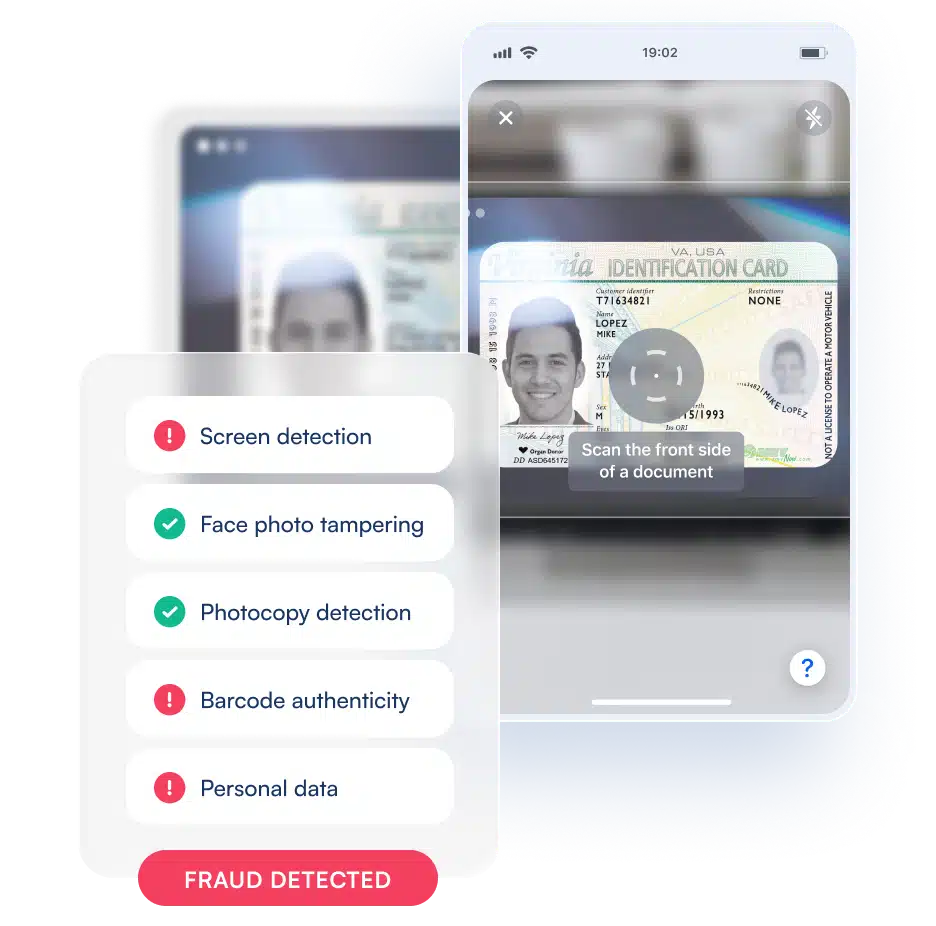
| AI-Based Detection | Deploy biometric verification with advanced Presentation Attack Detection (PAD) to spot injected or manipulated media. | Catches deepfakes that bypass traditional liveness prompts. |
| Lifecycle Risk Assessment | Map vulnerabilities across onboarding, authentication, payments, and brand channels. | Identifies weak points where deepfakes are most likely to succeed. |
| Simulation Training | Use realistic deepfake scenarios to train employees on fraud recognition and escalation. | Increases awareness and reduces human error in high-stakes interactions. |
| Incident Response Protocols | Establish clear detection, escalation, and remediation workflows across departments. | Ensures consistent, fast action when deepfakes are detected. |
| Integration with Broader Security | Align deepfake defense with cybersecurity and compliance initiatives. | Positions detection as part of a holistic fraud prevention strategy. |
Balancing Detection Accuracy with Customer Experience
One of the biggest challenges in combating deepfake attacks is walking the fine line between airtight security and a smooth customer journey. Fraud teams know that every additional verification step can reduce fraud risk, but it also adds friction that frustrates legitimate users. Too much friction, and customers abandon the process; too little, and fraudsters slip through undetected. The key is implementing intelligent, adaptive defenses that scale in intensity based on the risk profile of the transaction.
Modern identity platforms are increasingly capable of dynamic risk scoring, which involves analyzing hundreds of data points in real time, from device signals and geolocation to behavioral biometrics. This allows low-risk users to pass seamlessly with minimal steps, while higher-risk cases trigger more rigorous checks like biometric matching, liveness verification, or document resubmission. By tailoring defenses to the situation, businesses protect themselves without alienating trusted customers.
Equally important is the user experience design of fraud defenses. When verification feels natural—such as a quick selfie, or confirmation delivered through an app customers already use—it becomes less of an interruption and more of a routine step. Clear communication also plays a critical role: customers are more willing to comply with added checks when they understand that those steps exist to protect their accounts.
Why Microblink
Microblink helps financial institutions and fintechs stay one step ahead of deepfake-enabled fraud. Our identity verification platform delivers:
- iBeta Level 2 Presentation Attack Detection: A globally recognized benchmark for biometric anti-spoofing, capable of detecting even advanced deepfake injection attempts.
- AI-powered face biometrics: Identifies anomalies beyond human perception, flagging manipulated identities in real time.
- Seamless integration: Designed to fit into existing KYC/AML workflows without disrupting customer onboarding.
- Optimized user experience: Robust defense with minimal friction, ensuring institutions can fight fraud without sacrificing growth.
By combining compliance-grade accuracy with operational efficiency, Microblink transforms deepfake detection from a reactive defense into a competitive advantage. Get in touch today to learn more about how we can help your business fight deepfake attacks.