
Payment Fraud Trends Every Risk Manager Must Track in 2026

Payment fraud isn’t just increasing. It’s evolving.
What used to be isolated attacks are now coordinated, automated, and increasingly powered by AI. Fraudsters are no longer targeting single vulnerabilities. They are exploiting gaps across the entire customer lifecycle, from onboarding to transaction execution.
For fraud and risk leaders, understanding payment fraud trends is no longer optional. It’s critical to protecting revenue, maintaining compliance, and preserving customer trust.
The Most Common Types of Payment Fraud Today
Fraud hasn’t disappeared. It has diversified.
Here are the core fraud types every organization should be actively monitoring:
1. Synthetic Identity Fraud
Fraudsters combine real and fabricated information to create new identities that pass basic verification checks. These accounts often behave normally before being used for large-scale fraud.
2. Account Takeover (ATO)
Attackers gain access to legitimate user accounts through stolen credentials or social engineering, then initiate fraudulent transactions.
3. Card-Not-Present (CNP) Fraud
With the rise of digital commerce, fraud has shifted heavily toward transactions where physical cards are not required.
4. Authorized Push Payment (APP) Scams
Victims are manipulated into authorizing payments themselves, making these scams difficult to detect using traditional fraud rules.
5. Friendly Fraud and Chargeback Abuse
Customers dispute legitimate transactions, creating operational and financial strain on businesses.
Each of these fraud types is becoming more sophisticated, often combining multiple attack methods into a single fraud strategy.
How Payment Fraud Trends Are Changing
Fraud is no longer static. It behaves more like a living system.
From one-time attacks to continuous exploitation
Fraudsters now target multiple stages of the customer journey, not just onboarding or transactions.
From human attackers to automated systems
AI-driven fraud tools allow attackers to scale operations dramatically, launching thousands of attempts simultaneously.
From obvious signals to subtle anomalies
Modern fraud often mimics legitimate user behavior, making detection significantly harder.
From isolated fraud events to coordinated campaigns
Fraud rings operate across channels, devices, and geographies, making traditional detection methods less effective.
The result is a shift from transaction-based fraud detection to identity-based risk management.
Where New Payment Fraud Exposure Is Emerging
Fraud is expanding into new areas as digital ecosystems evolve.
Embedded payments and marketplaces
Multiple parties interacting within a single platform increase complexity and risk.
Real-time payments
Instant settlement reduces the window for fraud detection and recovery.
Mobile-first onboarding
Faster onboarding flows can introduce vulnerabilities if identity verification is weak.
AI-generated identities and deepfakes
Fraudsters can now simulate realistic users during onboarding and authentication.
These trends are increasing pressure on organizations to detect fraud earlier and faster.
The Hidden Risk: Weak Identity Verification
Many organizations focus heavily on transaction monitoring while underinvesting in onboarding.
This creates a critical gap.
If a fraudulent identity is successfully onboarded, every transaction that follows appears legitimate.
Weak identity verification leads to:
- Increased synthetic identity fraud
- Higher account takeover risk
- Greater exposure to KYC and AML compliance failures
- Increased false positives during transaction monitoring
In short, bad identity data at the start creates ongoing fraud risk downstream.
How to Reduce False Positives Without Adding Friction
Fraud prevention often creates a tradeoff between security and user experience.
But that tradeoff is increasingly unnecessary.
Modern approaches allow organizations to reduce false positives while maintaining seamless onboarding:
- Risk-based authentication
Only trigger step-up verification when risk signals justify it. - Behavioral analytics
Analyze how users interact with systems, not just what data they provide. - Multi-signal identity verification
Combine document verification, biometrics, and device intelligence. - Continuous identity assessment
Evaluate identity throughout the customer lifecycle, not just at onboarding.
These strategies allow businesses to protect against fraud without frustrating legitimate users.
What a Modern Payment Fraud Prevention Strategy Looks Like
To stay ahead of evolving payment fraud trends, organizations need to move beyond fragmented tools and adopt a unified approach.
Core components of a modern strategy
- Document verification
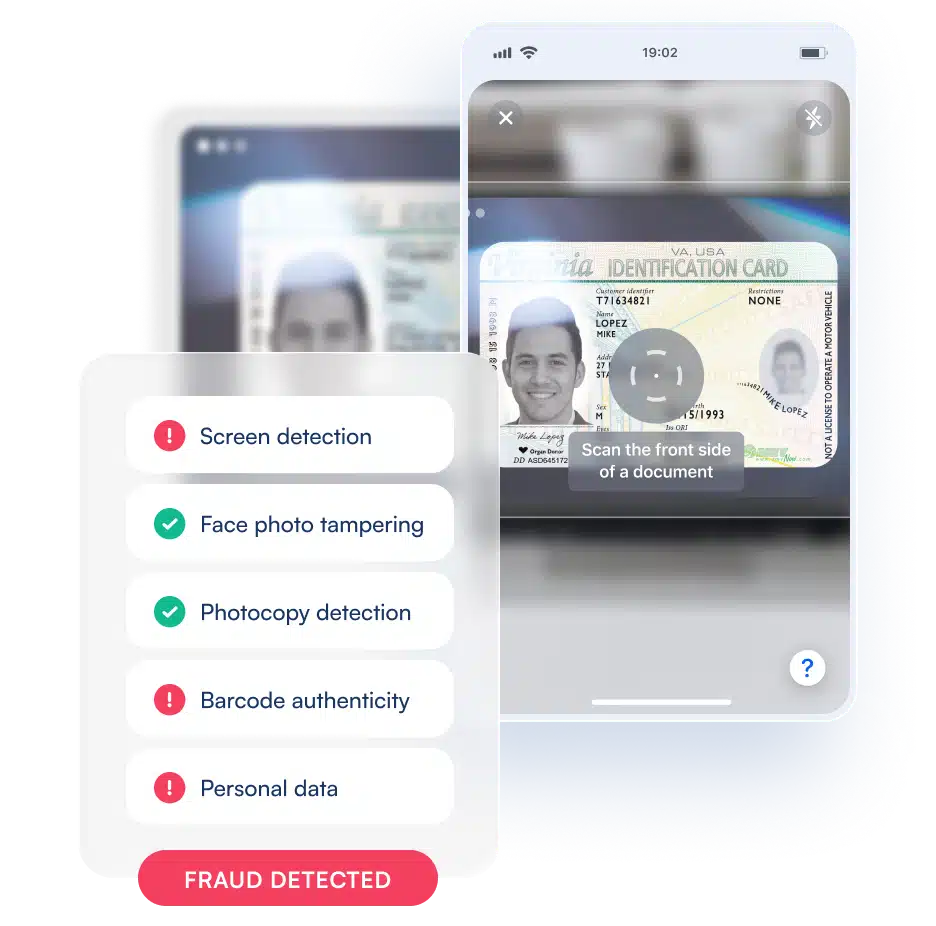
Ensure identity documents are authentic and unaltered. - Biometric identity verification
Confirm that the user is the legitimate owner of the identity. - Liveness detection
Prevent spoofing attempts using photos, videos, or deepfakes. - Behavioral and device intelligence
Detect anomalies in user behavior and device usage. - Real-time risk scoring
Assess risk dynamically at onboarding and during transactions. - Continuous monitoring
Track identity risk across the entire customer lifecycle.
This approach shifts fraud prevention from reactive to proactive.
Why Identity Is the New Control Point
Payment fraud is no longer just a transaction problem.
It is an identity problem.
Fraudsters succeed when they can convincingly present themselves as legitimate users. Once that happens, traditional fraud controls struggle to distinguish real from fake.
This is why leading organizations are shifting toward continuous identity intelligence, where identity is verified, monitored, and reassessed at every interaction.
How Microblink Helps Prevent Payment Fraud
Microblink provides an AI-powered identity intelligence solution that enables organizations to verify identities and detect fraud in real time.
By combining:
- advanced document verification
- biometric authentication
- liveness detection
- machine learning-based fraud signals
Microblink helps organizations:
- prevent synthetic and stolen identity fraud
- reduce false positives
- improve onboarding conversion
- meet KYC and AML requirements
- detect fraud earlier in the customer lifecycle
Rather than relying on isolated tools, Microblink enables continuous identity control across onboarding and transactions.
Staying Ahead of Payment Fraud Trends
Payment fraud will continue to evolve.
Organizations that rely on outdated, fragmented systems will struggle to keep up. Those that adopt modern identity-driven approaches will be better positioned to detect fraud, reduce risk, and deliver seamless customer experiences.
The future of fraud prevention is not just about stopping bad transactions. It’s about understanding who or what is behind every transaction.