
Top 5 Agentic Commerce Fraud Prevention Tools for Fraud Decision-Makers

Agentic commerce is rapidly transforming the digital landscape, shifting purchasing power from humans to autonomous AI agents and creating complex new challenges for fraud prevention. As these intelligent agents execute transactions on behalf of consumers, traditional behavioral signals like mouse movements and device fingerprints become obsolete, forcing merchants to adopt advanced solutions that can verify intent and identity without friction. The following analysis reviews the top tools addressing this shift, focusing on identity verification, post-purchase intelligence, and network-level protocols designed to secure the future of automated commerce.
Comparison Table: Agentic Commerce Fraud Prevention Platforms
| Theme | Microblink | Chargeflow | Mastercard | Visa | Stripe |
|---|---|---|---|---|---|
| Compliance Features | AI-powered ID scanning, document verification | Post-purchase intent analysis | Tokenization, biometric authentication | Trusted Agent Protocol, threat intelligence | Smart disputes, integrated fraud protection |
| Industry Focus | Identity verification for agentic commerce | Chargeback automation for Stripe/Shopify merchants | Payment network security for issuers and large merchants | Fraud and threat intelligence for global financial institutions | Payment processing for SMBs and platform users |
| AI Capabilities | Superior document scanning technology | Automated chargeback recovery, intent analysis | AI-driven security standards | AI security to combat fraud tools | ML-enhanced fraud detection |
| User Experience | Seamless UX integration, real-time feedback | Fully automated workflow, aligns support data with dispute resolution | Industry standards for payment security | Consumer protection via zero-liability guarantee | User-friendly dashboard, integrated payment flow |
| Developer Experience | Requires mobile/web SDK integration | Relies on ecosystem integrations for maximum effectiveness | Complex, enterprise-focused implementation | High complexity for direct integration by smaller entities | Zero integration effort for existing Stripe merchants |
Recent Product Updates
Microblink has continued to refine its BlinkID and BlinkID Verify solutions, enhancing their ability to detect sophisticated document forgeries generated by AI. Recent updates focus on improving global document coverage and reducing friction during the capture process, ensuring that verifying the human behind an AI agent remains fast and secure.
Chargeflow recently launched ‘Chargeflow Prevent’, a module specifically designed to score transactions post-purchase to predict disputes before they happen. They also introduced new integrations for customer service platforms like Zendesk and Gorgias to align support data with dispute resolution.
Mastercard has introduced ‘Mastercard Agent Pay’ and ‘Mastercard Agentic Tokens’, a new framework designed to secure payments made by AI agents. These updates focus on binding payment credentials to specific agent identities, ensuring transparency and control throughout the transaction lifecycle.
Visa has rolled out the ‘Trusted Agent Protocol’, a standards-based framework to verify agent identity and intent in real-time. Additionally, they have invested heavily in AI security to combat the 450% rise in dark web discussions regarding AI agents and fraud tools.
Stripe continues to update its Radar and Smart Disputes functionality, leveraging machine learning across its vast merchant network to flag high-risk payments. Recent enhancements focus on giving merchants more granular control over payout holds and dispute evidence submission.
1. Microblink

Platform Summary
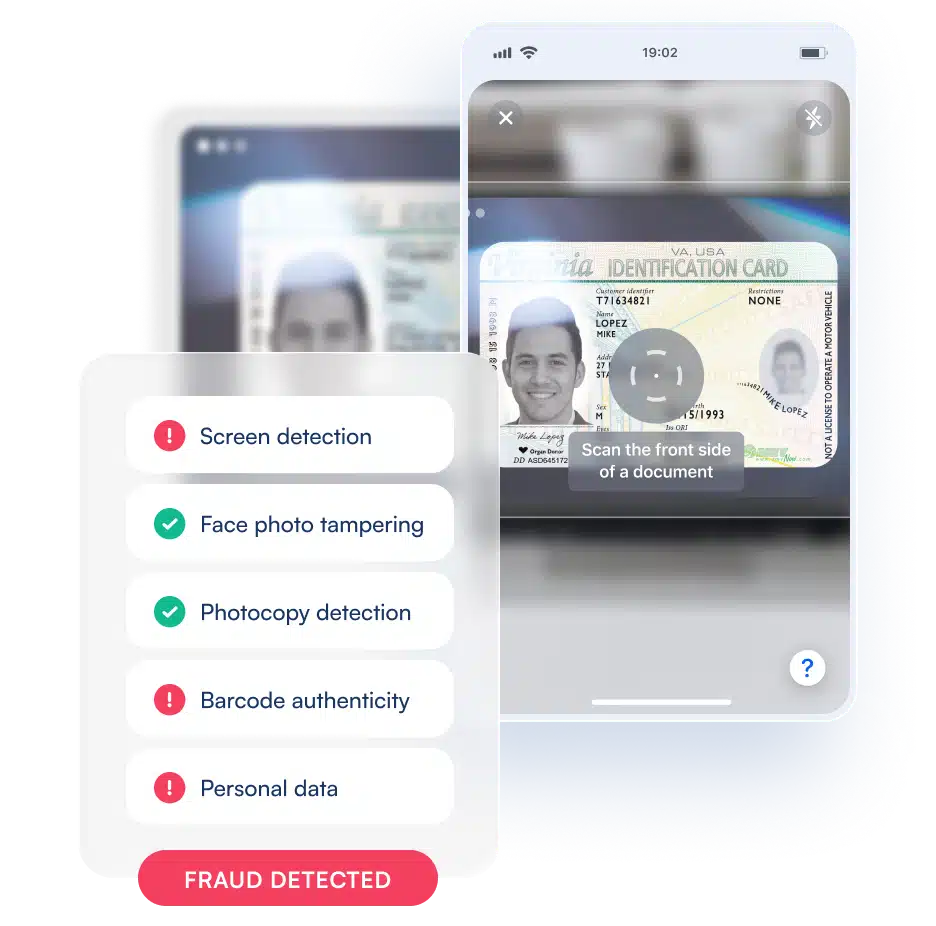
Microblink serves as the critical “human anchor” in the evolving landscape of agentic commerce. As AI agents begin to handle transactions autonomously, traditional behavioral signals like mouse movements or keystrokes disappear, making it essential to verify the human identity behind the agent. Microblink’s technology ensures that the delegation of power from a person to an AI agent is rooted in a verified, real-world identity document, preventing synthetic identity fraud before the agent ever hits the “buy” button.
Microblink is designed for Fraud Decision-Makers at medium and large enterprises who need to maintain compliance, reduce fraud, and streamline onboarding in the era of autonomous commerce.
Key Benefits
- Industry-leading accuracy in scanning and verifying global identity documents
- Strong defense against synthetic identity and deepfake fraud
- Seamless, real-time user experience that reduces onboarding friction
- Flexible deployment options for compliance with PCI DSS and GDPR
Core Features
- BlinkID Verify & BlinkCard: Simultaneous verification of government-issued ID and payment card, confirming legitimate user presence and combating CNP fraud.
- AI-Powered Liveness & Deepfake Detection: Advanced biometric analysis ensures a real person is present, preventing spoofing and account takeovers.
- Synthetic Identity Fraud Detection: Proprietary AI models flag accounts created from a mix of real and fabricated data.
- On-Device & Self-Hosted Processing: Sensitive data is processed securely within your environment, supporting strict regulatory requirements.
Primary Use Cases
- Real-time CNP fraud prevention at checkout
- Accelerated mobile wallet onboarding with instant KYC
- High-volume self-service and kiosk payments with PCI compliance
Recent Updates
- Enhanced BlinkID and BlinkID Verify to detect sophisticated AI-generated document forgeries
- Expanded global document coverage and optimized capture for lower-end devices
- Reduced onboarding abandonment rates and improved real-time feedback
Limitations
- Focused on identity verification, not full-stack transaction monitoring
- Requires developer integration of SDKs into mobile or web flows
- May need complementary tools for end-to-end chargeback management
2. Chargeflow

Platform Summary
Chargeflow addresses the unique challenges of “intent” in agentic commerce through its specialized post-purchase intelligence platform. When an AI agent makes a purchase, there is often a higher risk of “friendly fraud” if the human user does not recognize the transaction or if the agent makes an error. Chargeflow’s automated system analyzes these transactions after they occur to provide a layer of protection that bridges the gap between automated shopping and human oversight. It is especially valuable for merchants on Shopify or Stripe.
Core Features
- Post-purchase intelligence for dispute prediction and prevention
- Chargeflow Prevent module for real-time post-purchase scoring
- Automated dispute evidence compilation and submission
- Integrations with customer service platforms (Zendesk, Gorgias)
Primary Use Cases
- Recovering “friendly fraud” from AI agent errors
- Analyzing agent-driven order patterns for optimization
- Automating evidence submission to reduce manual workload
Recent Updates
- Launched Chargeflow Prevent for proactive dispute prediction
- New integrations with Zendesk and Gorgias for holistic dispute management
- Enhanced AI-driven analysis for agentic commerce transactions
Limitations
- Focused on post-transaction phase, not pre-auth blocking
- Most effective with Shopify/Stripe integrations
- Automated recovery may not suit merchants preferring manual review
3. Mastercard

Platform Summary
Mastercard is building foundational infrastructure for agentic commerce through network-level security and tokenization. Their approach creates a secure environment where AI agents can operate without exposing user credentials. By introducing standards like “Agent Pay,” Mastercard ensures that the entire payments ecosystem can recognize and trust transactions initiated by autonomous entities. This is ideal for large enterprises and issuers seeking systemic security and future-proofing.
Core Features
- Agentic Tokens binding transactions to specific AI agents
- Agent Pay framework for secure agent-merchant interactions
- Biometric authentication standards for agent delegation
- Network-level fraud blocking leveraging global data
Primary Use Cases
- Securing AI agent transactions without exposing PANs
- Tokenizing payment credentials for autonomous apps
- Platform-level security for issuers and acquirers
Recent Updates
- Launched Agent Pay and Agentic Tokens for agent-specific credential binding
- Standardized agent-merchant “handshake” for transparency and control
- Collaborating with partners on biometric standards for agentic delegation
Limitations
- Requires issuer/acquirer adoption for full effectiveness
- Complex, enterprise-focused implementation
- Less visibility into merchant-side “friendly fraud” compared to SaaS tools
4. Visa

Platform Summary
Visa is tackling agentic commerce fraud through deep threat intelligence and new communication protocols between agents and merchants. The “Trusted Agent Protocol” creates a verifiable identity for AI agents, allowing merchants to distinguish between legitimate shopping assistants and malicious bots. Visa’s approach is informed by PERC intelligence, monitoring emerging attack vectors and providing network-level defense.
Core Features
- Trusted Agent Protocol for agent identity and authority verification
- Visa PERC Threat Intelligence for monitoring new attack vectors
- Time-based transaction challenges to disrupt bots
- Zero-liability guarantee for agentic transactions
Primary Use Cases
- Detecting synthetic agent content and fraudulent reviews
- Blocking bot-initiated attacks at the network edge
- Real-time agent identity verification for merchants
Recent Updates
- Rolled out Trusted Agent Protocol for real-time agent verification
- Increased AI-driven security investment to counter rising agentic fraud
- Standardizing agent-merchant interactions globally
Limitations
- Ecosystem-wide adoption required for full effectiveness
- Focused on threat blocking, not intent dispute resolution
- High complexity for smaller merchants without platform support
5. Stripe

Platform Summary
Stripe provides the most accessible entry point for fraud prevention in agentic commerce, integrating risk management directly into the payment flow. Stripe Radar leverages data from millions of global companies to flag suspicious automated activity, making it ideal for SMBs and platforms starting to see agent-driven transactions.
Core Features
- Stripe Radar ML-powered fraud detection
- Smart Disputes for automated chargeback management
- Integrated checkout protection with 3D Secure support
- Custom risk rules for agentic traffic
Primary Use Cases
- SMB fraud management without dedicated teams
- Platform-based payments with agentic workflows
- Basic dispute resolution for agent-driven chargebacks
Recent Updates
- Enhanced Radar and Smart Disputes for agentic transaction patterns
- More granular payout hold and dispute evidence controls
- Improved risk scoring for cloud-based automated services
Limitations
- Dispute tools are more reactive and basic than specialized services
- Generic fraud models may miss niche agentic patterns
- Support can feel impersonal for complex or high-value fraud issues
Next Steps for Fraud Decision-Makers
As agentic commerce continues to evolve, Fraud Decision-Makers must adapt their fraud prevention strategies to address new risks and regulatory requirements. For a deeper dive into how advanced identity verification and AI-driven fraud prevention can future-proof your business, explore Microblink’s solutions for agentic commerce or compare additional fraud prevention tools for enterprises.
Related Reading:
– How to Prevent Synthetic Identity Fraud in Agentic Commerce
– Best Practices for AI-Driven KYC in Financial Services
– The Future of Payment Security: Tokenization and Beyond
For tailored recommendations or a demo of Microblink’s agentic commerce fraud prevention platform, contact our team
Frequently Asked Questions
What is agentic commerce, and how does it impact fraud prevention strategies?
Agentic commerce refers to a new era of digital transactions where autonomous AI agents act on behalf of consumers to make purchases, manage subscriptions, or interact with online services. This shift fundamentally changes fraud prevention because traditional signals—like mouse movements, device fingerprints, or manual user input—are no longer present. Fraud prevention strategies must now focus on verifying the intent and identity behind these AI agents, using advanced identity verification, network-level protocols, and AI-driven analytics to detect and block synthetic identities, deepfakes, and unauthorized agent activity.
How do identity verification tools like Microblink help prevent fraud in agentic commerce?
Identity verification tools such as Microblink anchor the delegation of purchasing power from a human to an AI agent in a verified, real-world identity. By scanning government-issued IDs and payment cards and using biometric liveness detection, these tools ensure that only legitimate users can create or authorize AI agents. This prevents synthetic identity fraud, account takeovers, and deepfake attacks before an agent is allowed to transact, providing a critical layer of security as traditional behavioral signals become obsolete.
What are the main differences between pre-transaction and post-transaction fraud prevention tools?
Pre-transaction tools, like Microblink, focus on verifying user identity and intent before a transaction occurs, blocking fraudulent activity at the point of onboarding or checkout. These tools are essential for preventing synthetic identity fraud and unauthorized agent creation. Post-transaction tools, such as Chargeflow, analyze transactions after they happen to detect and resolve issues like friendly fraud, chargebacks, or disputes that may arise from agentic errors or misunderstandings. Both approaches are complementary and necessary for a holistic agentic commerce fraud prevention strategy.
What challenges do merchants face when adopting agentic commerce fraud prevention solutions?
Merchants face several challenges, including the need to integrate new SDKs or APIs, adapt to evolving regulatory requirements, and manage the complexity of distinguishing between legitimate AI agents and malicious bots. Additionally, ecosystem-wide adoption of protocols (like those from Visa and Mastercard) is often required for full effectiveness, and smaller merchants may struggle with the technical and operational demands of enterprise-grade solutions. Choosing the right mix of tools—balancing ease of integration, regulatory compliance, and coverage across the transaction lifecycle—is critical for success.
How can Fraud Decision-Makers future-proof their fraud prevention strategies for agentic commerce?
Fraud Decision-Makers should prioritize solutions that offer robust identity verification, AI-driven threat detection, and flexible integration options. Staying informed about emerging standards (such as agentic tokens and trusted agent protocols), collaborating with payment networks, and layering both pre- and post-transaction tools will help organizations adapt to the evolving risks of agentic commerce. Regularly reviewing and updating fraud prevention frameworks, investing in staff training, and leveraging threat intelligence will further ensure resilience against new attack vectors introduced by autonomous AI agents.