
ConfirmID Identity Verification: How It Works and Better Alternatives

ConfirmID is an identity verification solution designed to help organizations confirm that a user is who they claim to be during onboarding and high-risk transactions. It typically combines document verification, biometric checks, and database validation to support fraud prevention and regulatory compliance requirements such as KYC and AML.



In practice, ConfirmID is used by financial institutions, fintechs, and other regulated businesses to reduce identity-related risk while maintaining a digital-first customer experience. As fraud becomes more sophisticated, solutions like ConfirmID aim to balance speed, security, and compliance, but that balance is not always easy to achieve.
How ConfirmID Works in Practice
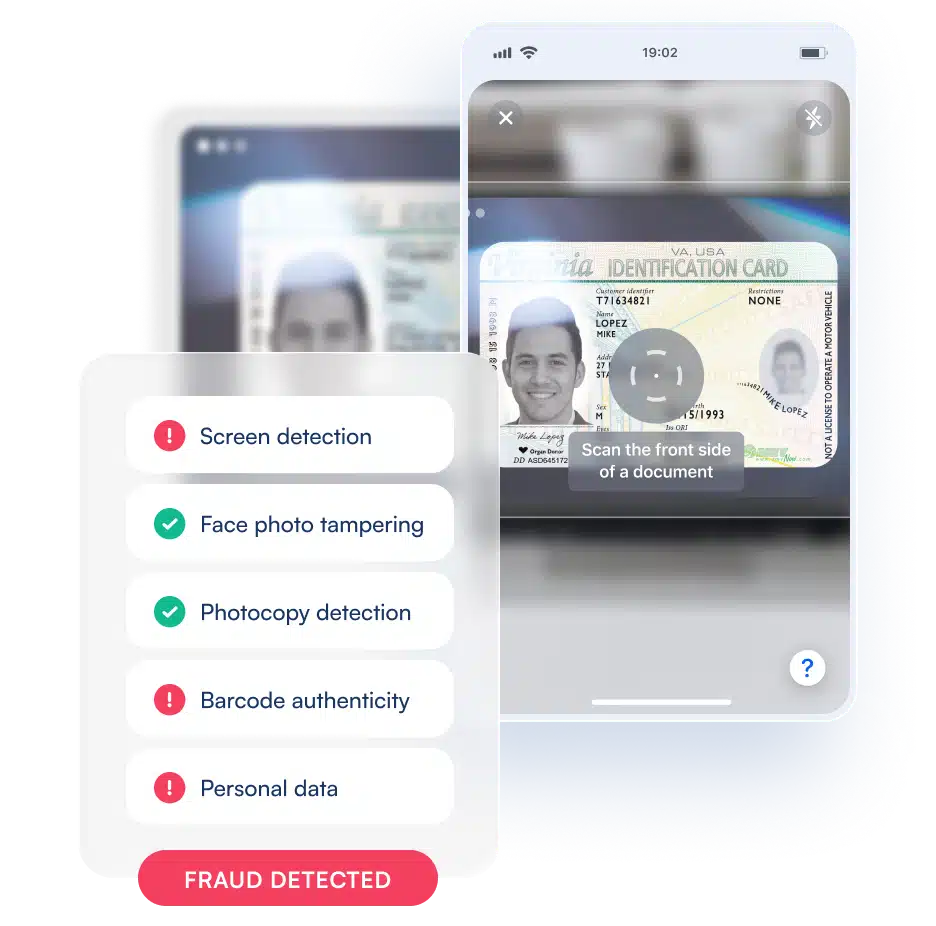
At a high level, ConfirmID follows a standard identity verification flow that combines multiple layers of validation:
- A user submits a government-issued ID (e.g., driver’s license or passport)
- The system captures and analyzes the document for authenticity
- Biometric verification (such as a selfie or liveness check) confirms the user matches the ID
- Data is cross-referenced against trusted databases or internal systems
- A risk decision is generated based on verification results
This multi-step approach is designed to detect fraudulent documents, prevent account takeover, and ensure that only legitimate users are onboarded.
However, like many traditional identity verification systems, ConfirmID is often built around a point-in-time verification model, focusing on a single moment of trust rather than continuous identity assessment throughout the user lifecycle.
How ConfirmID Helps Prevent Fraud and Protect Data
ConfirmID plays a role in defending against common identity fraud threats, including:
- Synthetic identity fraud, where attackers combine real and fake information
- Stolen identity usage during account creation
- Basic document forgery and tampering attempts
By validating documents and matching them to a real individual, ConfirmID helps organizations filter out fraudulent applicants before they enter the system.
From a data protection standpoint, ConfirmID also supports secure handling of sensitive personal information, which is critical in industries subject to strict privacy and security regulations.
That said, as fraud tactics evolve—particularly with the rise of AI-generated identities and deepfakes—static verification approaches can struggle to keep pace with increasingly sophisticated attacks.
How ConfirmID Supports KYC and AML Compliance
For compliance teams, ConfirmID provides foundational capabilities needed to meet regulatory obligations, including:
- Identity verification during onboarding (KYC)
- Record-keeping and audit trails
- Basic fraud screening and risk scoring
- Support for AML workflows through identity validation
These capabilities help organizations demonstrate that they have taken reasonable steps to verify customer identities and prevent financial crime.
Where ConfirmID Can Create Friction
While ConfirmID delivers core identity verification capabilities, teams often encounter challenges when trying to scale or optimize user experience.
Common limitations include:
- False rejections (FRR): Legitimate users may fail verification due to image quality, edge-case documents, or strict thresholds
- Onboarding delays: Multi-step flows can slow down conversion, especially on mobile
- Limited flexibility: Rigid workflows can make it difficult to tailor verification to different user segments or risk levels
- Manual review dependency: Exceptions often require human intervention, increasing operational costs
These issues create a familiar tradeoff: improve security, but risk hurting conversion and user satisfaction.
ConfirmID vs. Modern Identity Intelligence Approaches
As commerce and digital onboarding evolve, identity verification is shifting from a single checkpoint to a continuous, adaptive process.
Here’s how traditional approaches like ConfirmID compare to newer models:
| Capability | ConfirmID (Traditional Model) | Modern Identity Intelligence (e.g., Microblink) |
|---|---|---|
| Verification Timing | One-time onboarding check | Continuous across the user journey |
| Fraud Detection | Document + basic identity checks | Advanced fraud detection (synthetic, deepfake, behavioral) |
| Flexibility | Fixed workflows | Fully customizable workflows and decisioning |
| User Experience | Can introduce friction | Optimized for speed and low friction |
| Automation | Partial, often manual fallback | High automation with minimal manual review |
| Adaptability | Slower to adjust to new threats | Continuously evolving models and signals |
Why Microblink Is a Simpler, Stronger Alternative
Modern identity challenges require more than point solutions. Microblink approaches identity verification as part of a broader Identity Intelligence layer, one that continuously evaluates trust across onboarding, authentication, and transactions.
Key advantages include:
- Customizable workflows: Tailor verification flows based on risk, geography, or use case
- Advanced fraud detection: Detect synthetic identities, deepfakes, and document tampering at a granular level
- On-device intelligence: Faster processing, improved privacy, and better performance in low-connectivity environments
- High automation rates: Reduce reliance on manual review while maintaining accuracy
- Continuous identity assessment: Move beyond one-time checks to ongoing trust evaluation
Get in touch today to learn more about how Microblink can help your organization succeed in the new world of identity.