
The Top KYC API Providers: Features, Differentiators, and Use Cases

Choosing a Know Your Customer (KYC) API is a mission-critical decision for fintechs, crypto exchanges, banks, and any digital business that onboards users under regulatory scrutiny. The right KYC API can automate identity verification, improve conversion rates, minimize fraud, and streamline compliance operations—while the wrong one can lead to user drop-off, manual bottlenecks, and regulatory risk.
To help you quickly compare the leading KYC API providers, this guide presents a concise overview and competitive analysis of Microblink, Plaid Identity Verification, and LexisNexis Nexis Data+. We summarize their technical strengths, unique selling points, and ideal use cases, giving engineering, product, and compliance teams the clarity needed to shortlist the best fit.
KYC API Providers at a Glance
| Provider | Primary Strength | Core Features | Ideal For | Pricing |
| Microblink | High‑accuracy document + biometric verification | Real‑time ID capture & data extraction; liveness checks; global ID‑type coverage | Banks/fintechs needing fast, accurate onboarding | Quote‑based, usage‑driven |
| Alloy | Decisioning engine + orchestration across KYC/KYB | Unified identity decisioning, API/low‑code platform, rule builder | Fintechs and banks needing flexible orchestration | Custom / usage‑based |
| ComplyCube | Scalable all‑in‑one KYC+AML screening platform | Document verification, biometric checks, AML/KYC screening, API‑first design | Banks/fintechs seeking global coverage + layered checks | Quote‑based |
| Fourthline | Global identity verification for fintechs & banks | KYC/AML automation, global jurisdiction support, customer due‑diligence workflows | Fintechs scaling internationally | Quote‑based |
1. Microblink
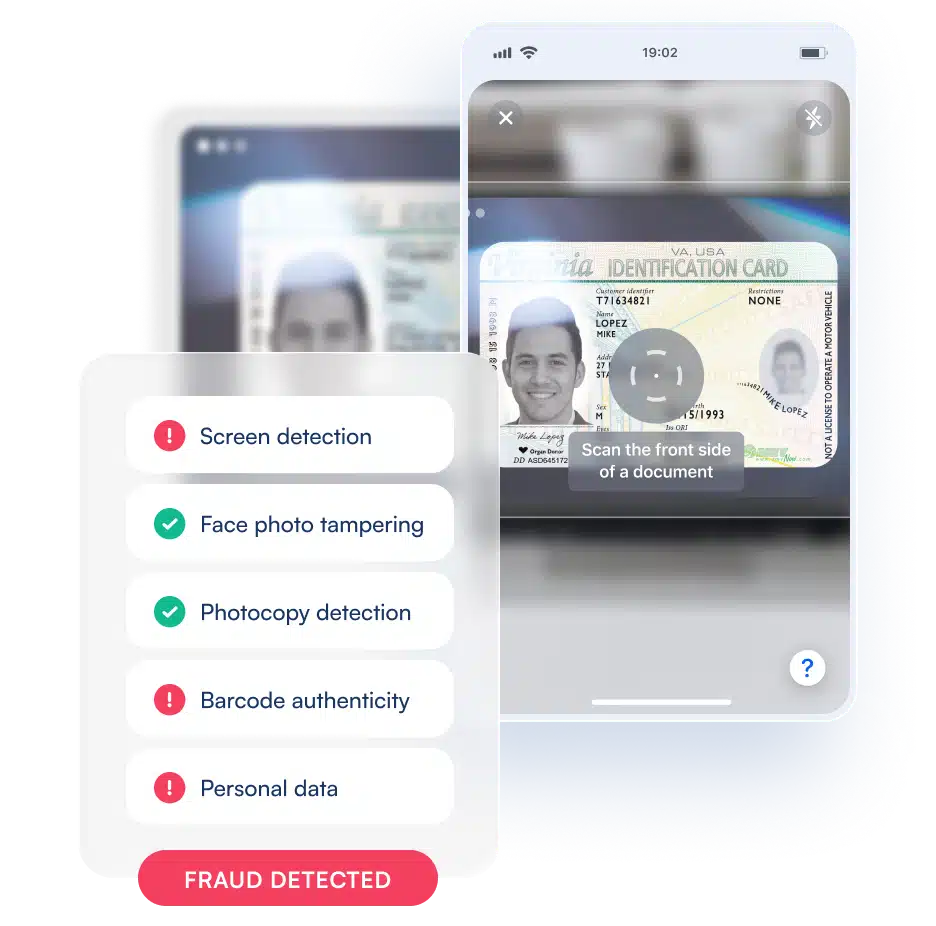
Microblink’s KYC API is designed for fast, secure, and scalable identity verification across global digital platforms, especially in high-stakes sectors like crypto, fintech, and financial services. Powered by advanced AI-driven document scanning and real-time data extraction, the solution helps businesses onboard users rapidly while maintaining rigorous fraud prevention, data privacy, and regulatory compliance.
Unlike many traditional KYC vendors, Microblink combines enterprise-grade security with a no-code orchestration layer, allowing teams to easily configure workflows, decision logic, and risk thresholds without engineering support. Its hands-on implementation team ensures seamless integration, optimizing every stage of the customer journey for both compliance and conversion.
Trusted by global leaders such as Binance and Bitget, Microblink’s KYC API delivers frictionless document capture across 160+ countries and territories, complete with adaptive UI, on-device liveness, and anti-spoofing checks.
Key Features
- AI-Powered Document Scanning: Instantly extracts and verifies data from government-issued IDs across 160+ countries, reducing manual review queues from days to seconds.
- On-Device Liveness and Anti-Spoofing: Real-time liveness detection prevents synthetic ID fraud and ensures the person behind the document is genuine, all without unnecessary sensitive data uploads.
- Adaptive Image Capture: Guides users to capture high-quality images in real-world conditions, boosting successful verification and lowering abandonment.
- Cross-Platform Support: Compatible with iOS, Android, and web
- Integrated PEPs, AML, and Adverse Media Checks: Combines identity verification with essential compliance screening.
Pricing
- Not publicly listed; pricing is customized based on volume, integration, and compliance needs. Contact Microblink for a tailored quote.
Pros
- Global coverage (65 million+ scans monthly)
- Lightning-fast processing
- Adaptive UI and high image-capture success
- No-Code Orchestration
- Trusted by major brands (e.g., Binance, Bitget)
Cons
- Platform launched 2025, newer orchestration on the market compared to legacy technology
- No manual reviewers
- Not suitable for IAM use cases
Practical Use Cases
- Crypto Exchange Onboarding: Rapidly process surging registrations while maintaining compliance and low drop-off.
- Financial Services Account Opening: Streamline digital account creation and automate PEPs/AML flagging.
- Peer-to-Peer and DeFi Platforms: Verify users for fiat onramps or payouts, minimizing fraud risk in decentralized environments.
For deeper insights into document verification and best practices, see Microblink’s detailed KYC ID verification blog.
2. Alloy
Best for banks & fintechs needing flexible, API‑centric decisioning across KYC/KYB.
Alloy’s platform is a “decision engine” that ties together multiple data sources, identity verification providers, rules, and workflow logic. It gives banks more control over who is onboarded, how risk is assessed, and how exceptions are managed.
Key Features
- Unified decisioning engine for identity, business (KYB), fraud, and ongoing monitoring
- Rule builder & workflow engine for compliance teams
- Easy integration via APIs and various data source connectors
- Good for orchestrating multiple KYC providers and data feeds into one logic layer
Pricing
- Custom; usage‑based or tier‑based depending on volume of decisions/workflows.
Pros
- Great flexibility: you can configure logic, mix data sources, adjust risk thresholds
- Works well for embedded finance, fintechs, progressive banks
- Helps centralize decision logic rather than patching many point solutions
Cons
- Requires internal resources to configure and manage rules and workflows
- Not strictly a “document verification provider” — you still need ID/data sources
- Mid‑tier banks may find setup overhead higher compared to plug‑and‑play solutions
Use Cases
- Onboarding platform for fintechs with varied product lines (consumer, SMB, embedded finance)
- Banks wanting to standardize KYC/KYB workflow logic across products
- Ongoing monitoring and review workflows post‑onboarding
3. ComplyCube
Best for scalable, global KYC APIs that include document verification + compliance screening.
ComplyCube is a RegTech platform that supports KYC, document verification, biometric checks, and also AML screening – making it a more comprehensive choice for banks that want one stack for onboarding and compliance.
Key Features
- Document verification, biometric liveness & face match
- KYC/KYB screening, sanctions and PEP checks
- API‑first design with global coverage, UK/MENA expansion noted
- ISO / biometric standards certifications, making it robust for regulated use
Pricing
- Quote‑based; depends on geographies, volume, features.
Pros
- Comprehensive — covers both ID verification and ongoing compliance screening
- Strong global coverage, good for banks expanding internationally
- Developer/API‑friendly, suitable for fintech use cases
Cons
- Pricing transparency limited
- For very advanced analytics or massive volumes, may need to integrate upstream with other tools
- Some banks may prefer a specialist in one area rather than “all‑in‑one”
Use Cases
- Banks onboarding customers globally looking for KYC + sanctions/PEP screening in one API
- Fintechs launching in multiple territories and needing scalable verification
- Institutions with simpler fraud/risk operations wanting a leaner stack
4. Fourthline
Best for banks/fintechs with global onboarding needs and complex regulatory/Due‑Diligence workflows.
Fourthline is a Dutch‑based identity compliance platform that automates KYC, AML screening, and CDD workflows at scale. Useful for banks expanding cross‑border or fintechs scaling rapidly in varying regulatory regimes.
Key Features
- Automated identity verification workflows including document checks, biometric verification
- Due‑diligence and ongoing monitoring support for banks and fintechs
- Global jurisdiction support, partnerships with large institutions
- Designed to support complex onboarding and regulatory regimes
Pricing
- Custom, quote‑based.
Pros
- Excellent for international onboarding and banks scaling globally
- Built with regulatory complexity in mind — useful for banks operating in many jurisdictions
- Focus beyond just ID capture: covers workflow, monitoring, compliance
Cons
- Might be overkill for smaller regional banks or single‑country deployments
- Integration may require more time and data‑feed readiness
- Pricing likely higher than simpler providers
Use Cases
- Large banks expanding into new regions, needing consistent verification across many countries
- Fintechs scaling globally and wanting one platform for onboarding + KYC workflows
- Institutions with complex due‑diligence/regulatory obligations
How to Choose the Right KYC API Provider
When evaluating KYC APIs for your bank or fintech initiative, consider the following:
- Global documents/ID coverage: Do you need support for many countries, many ID types?
- Fraud prevention capabilities: Beyond capture, does the provider include liveness, spoof detection, device intelligence?
- Integration model & developer tooling: APIs, SDKs, no‑code editors — how quickly can you go live?
- Workflow flexibility & decisioning: Can you define rules, exceptions, review flows, and ongoing monitoring?
- Compliance and regulatory fit: Does it cover sanctions/PEP, AML screening, KYB if needed?
- Scalability & pricing transparency: Are you prepared for growth, global scale, higher volumes?
- User experience / friction: Minimizing drop‑off in onboarding matters just as much as compliance.
In many cases, banks will use a hybrid approach: a high‑accuracy verification provider (like Microblink) combined with a decisioning/orchestration layer (like Alloy) or full‑stack provider (like ComplyCube or Fourthline) depending on scale and complexity.
Frequently Asked Questions
What is a KYC API?
A KYC API is a set of programmable interfaces that let applications perform Know‑Your‑Customer operations: verify identity documents, match faces, run watch‑list/sanctions checks, and capture risk data — all integrated into digital workflows.
How do I choose the right provider?
Focus on your onboarding volume, geographies, required document types, fraud risk level, regulatory obligations, and integration readiness. Compare providers on accuracy, speed, scalability, developer integration, global reach and pricing.
Is integration secure?
Yes — top providers use secure channels, encryption, data protection, and compliance with standards such as ISO 27001, GDPR, etc. Always check the provider’s security certifications.
Why isn’t pricing usually public?
Because pricing depends heavily on volume of verifications, complexity (many jurisdictions, many ID types), features (fraud detection, analytics), and support/integration services. Hence many providers require custom quotes.
Which industries benefit most?
Fintech, digital banking, marketplaces, crypto, embedded finance, and any digital business needing to verify identity, comply with regulation, or prevent fraud. Banks specifically benefit from scale, integration with core banking & compliance systems.