
Best Fraud APIs: Compare Features, Differentiators, and Use Cases

Choosing the best fraud API is a critical decision for fintechs, banks, marketplaces, and digital platforms operating at scale. A strong fraud API should integrate easily into existing systems, detect threats in real time, minimize false positives, and adapt to evolving fraud tactics such as synthetic identities, account takeovers, and payment fraud.
This guide compares leading fraud API providers, breaking down their technical strengths, differentiators, pricing models, and ideal use cases to help engineering, product, and risk teams shortlist the right solution.
Fraud API Providers at a Glance
| Provider | Primary Strength | Core Features | Ideal For | Pricing |
| Microblink | Identity-centric fraud prevention APIs | ID verification, biometric checks, deepfake detection, AML/KYC APIs | Fintechs & banks focused on onboarding fraud | Quote-based |
| Alloy Fraud | Fraud decisioning & orchestration | Risk scoring, workflow engine, identity & transaction signals | Banks & fintechs needing flexible orchestration | Usage-based |
| Fraugster | AI-driven payment fraud APIs | Transaction monitoring, ML risk scoring, chargeback prevention | Fintechs handling card payments | Custom |
| Forter | Real-time transaction fraud APIs | Behavioral analytics, payment decisioning, automated approvals | Marketplaces & fintechs | Custom |
| Ravelin | Multi-layer fraud APIs | Payment monitoring, device fingerprinting, risk scoring | Neobanks & marketplaces | Custom |
| Salv Bridge | Collaborative fraud intelligence APIs | Real-time alerts, fraud scenario sharing, fund recovery | Banks & financial institutions | Membership-based |
1. Microblink
Best for identity-focused fraud prevention APIs with deepfake and synthetic fraud detection.
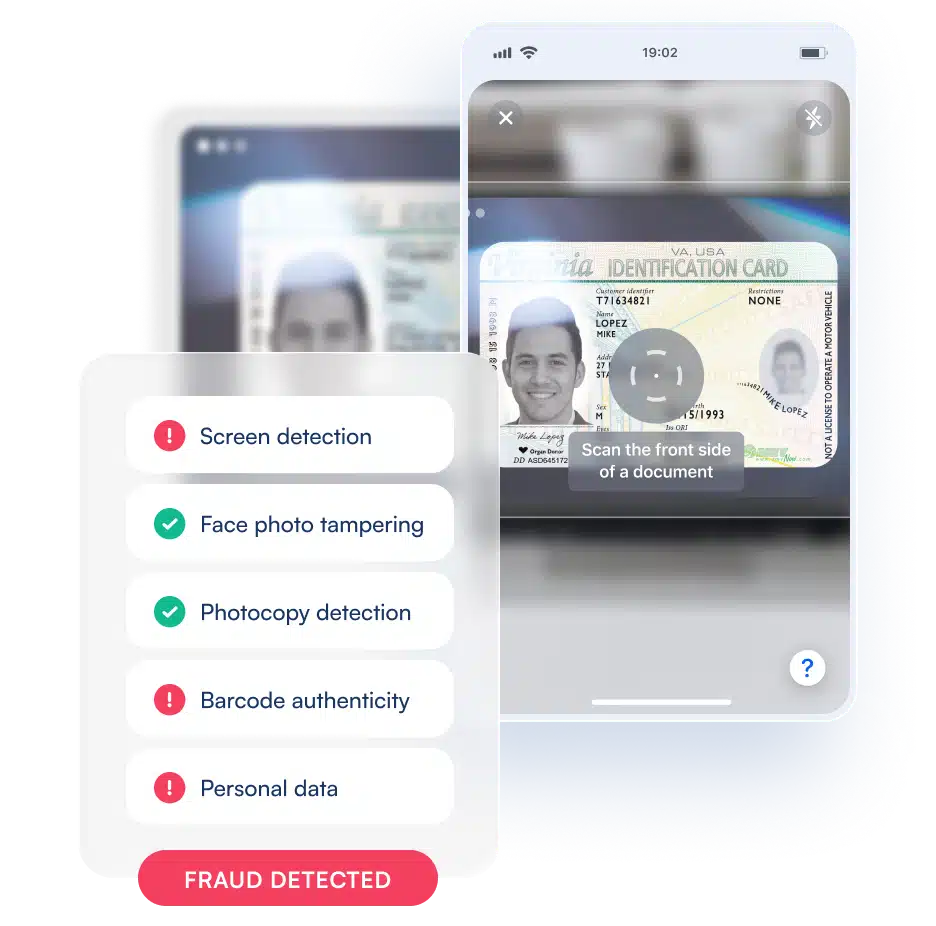
Microblink provides fraud APIs designed to stop identity-based fraud at the earliest point in the customer journey. Its platform focuses on high-accuracy document verification, biometric checks, and advanced AI detection to prevent synthetic identities, impersonation, and manipulated media before fraud reaches transactions.
The APIs are built for speed, global scale, and seamless integration across web and mobile environments, making Microblink especially effective for fintech onboarding, digital banking, and regulated industries.
Key Features
- AI-Powered Identity Verification APIs: Real-time extraction and verification of government-issued IDs across global markets
- Deepfake & Synthetic Fraud Detection: Detects manipulated images and biometric spoofing attempts
- On-Device Biometric Checks: Liveness and face matching without unnecessary data exposure
- AML & KYC APIs: Integrated compliance screening alongside fraud prevention
- Developer-Friendly SDKs: Designed for fast deployment across platforms
Pricing
Quote-based; pricing depends on volume, geographies, and compliance requirements.
Pros
- Extremely fast and accurate identity fraud detection
- Strong protection against synthetic identity and deepfake attacks
- Scales well for fintechs, banks, and crypto platforms
Cons
- Platform launched 2025, newer orchestration on the market compared to legacy technology
- No manual reviewers
- Not suitable for IAM use cases
Practical Use Cases
- Fintech Onboarding: Stop identity fraud before accounts are created
- Digital Banking: Reduce account takeovers and impersonation attempts
- Crypto Platforms: Verify users securely while maintaining low friction
2. Alloy Fraud
Best for teams needing a centralized fraud decisioning and orchestration API.
Alloy Fraud acts as a control layer that connects multiple fraud, identity, and compliance signals into a single decisioning engine. Rather than focusing on one fraud vector, Alloy allows teams to build customized logic and workflows across identity verification, transaction risk, and ongoing monitoring.
Key Features
- Unified fraud and risk scoring APIs
- Workflow and rule builder for real-time decisions
- Identity and transaction signal orchestration
- API-first architecture for flexible integration
Pricing
Usage-based; pricing varies by workflow complexity and volume.
Pros
- Highly flexible and configurable
- Centralizes fraud logic across products
- Ideal for complex risk environments
Cons
- Requires internal resources to configure and maintain
- Relies on third-party data sources for some signals
Use Cases
- Banks standardizing fraud logic across products
- Fintechs combining multiple fraud APIs under one engine
- Ongoing monitoring and exception handling
3. Fraugster
Best for AI-powered payment fraud APIs.
Fraugster specializes in transaction-level fraud detection using machine learning models trained on payment behavior. Its APIs focus on reducing chargebacks and false positives while adapting to new fraud patterns in real time.
Key Features
- Real-time transaction monitoring APIs
- Machine learning-based fraud scoring
- Chargeback prevention tools
- Payment-focused fraud analytics
Pricing
Custom, volume-based pricing.
Pros
- Strong performance in card payment fraud
- AI models adapt to evolving threats
- Effective for high-volume environments
Cons
- Limited coverage outside payments
- Not designed for identity onboarding fraud
Use Cases
- Card payment fraud prevention
- Reducing chargebacks for fintechs
- Monitoring high-risk transactions
4. Forter
Best for real-time transaction decisioning APIs with minimal customer friction.
Forter provides fraud APIs that focus on instant approvals and declines using behavioral and transaction data. Its approach prioritizes user experience while maintaining strong fraud controls.
Key Features
- Behavioral analytics APIs
- Real-time payment decisioning
- Automated fraud approvals
- API-first integration
Pricing
Custom, usage-based pricing.
Pros
- Low-latency decisions
- Minimal impact on conversion rates
- Scales for global platforms
Cons
- Primarily focused on transaction fraud
- Limited onboarding fraud coverage
Use Cases
- Marketplaces processing large transaction volumes
- Fintechs optimizing approval rates
- Digital platforms fighting payment fraud
5. Ravelin
Best for layered fraud APIs across accounts and payments.
Ravelin offers APIs that combine behavioral analytics, device fingerprinting, and transaction monitoring. It provides a balanced approach to fraud prevention across multiple touchpoints.
Key Features
- Payment and account monitoring APIs
- Device fingerprinting
- Risk scoring and alerts
- Integration with payment systems
Pricing
Custom pricing based on usage.
Pros
- Multi-layer protection
- Effective against account takeovers
- Flexible API design
Cons
- Limited identity verification capabilities
- Custom workflows may require tuning
Use Cases
- Neobanks monitoring payments and accounts
- Marketplaces detecting multi-account abuse
- Fintechs reducing fraud without added friction
6. Salv Bridge
Best for collaborative fraud intelligence and fund-recovery APIs.
Salv Bridge enables financial institutions to share fraud intelligence in real time. Its APIs focus on alerts, scenario sharing, and coordinated recovery rather than standalone fraud detection.
Key Features
- Real-time inter-institution fraud alerts
- Scenario libraries for known fraud patterns
- Secure data-sharing APIs
- Fund recovery workflows
Pricing
Membership-based enterprise pricing.
Pros
- Improves fraud recovery rates
- Encourages industry collaboration
- Strong security controls
Cons
- Effectiveness depends on network participation
- Not a standalone fraud detection engine
Use Cases
- APP fraud response
- Bank-to-bank fraud recovery
- Regulatory investigations
How to Choose the Best Fraud API
When evaluating fraud APIs, consider:
- Fraud coverage: identity, account, transaction, or all three
- API flexibility and ease of integration
- Real-time vs post-transaction detection
- False-positive management
- Compliance and regulatory alignment
- Scalability and pricing predictability
Many organizations use a layered approach, combining identity-focused fraud APIs with transaction monitoring and orchestration platforms.
Frequently Asked Questions
What is a fraud API?
A fraud API enables applications to detect, score, and prevent fraudulent activity in real time using identity, behavioral, and transaction data.
Who should use fraud APIs?
Fintechs, banks, marketplaces, crypto platforms, and any digital business exposed to fraud risk.
Can fraud APIs reduce false positives?
Yes. Modern AI-driven APIs are designed to improve accuracy while minimizing friction for legitimate users.
Are fraud APIs secure?
Leading providers use encryption, secure APIs, and compliance with data protection standards.