
Best AML Solutions for Banks: Top Tools for Modern Compliance

In today’s high-risk financial environment, banks are under increasing pressure to combat money laundering, terrorism financing, and financial crime — all while delivering fast, seamless digital services. From customer onboarding to transaction monitoring and regulatory reporting, modern AML solutions must be agile, intelligent, and scalable.
This guide reviews the top AML platforms for banks in 2025, comparing real, market-proven vendors across identity verification, transaction monitoring, sanctions screening, and crypto risk intelligence.
AML Solutions for Banks: Comparison Table
| Provider | Core Focus | Ideal For | Key Differentiator | Integration Considerations |
| Microblink | AI-powered ID verification | Banks modernizing KYC for AML onboarding | On-device ID verification with global coverage | Pre-KYC layer; structured output for AML systems |
| ComplyAdvantage | Sanctions/PEP screening & transaction risk | Mid-sized banks, fintechs, AML teams focused on agility | Real-time, API-first platform with global coverage | Fast integration; strong developer documentation |
| NICE Actimize | Full AML suite (monitoring, case management) | Large banks with complex AML needs | Enterprise-grade compliance and fraud analytics | Requires strong data infrastructure |
| SAS Institute | Advanced AML analytics & anomaly detection | Banks investing in predictive models and data science | Powerful AI/ML modeling for suspicious behavior | Integration via data lake/core systems |
| ThetaRay | AI-powered transaction monitoring | Banks handling high-volume payments or cross-border risk | Detects unknown laundering typologies | API/Cloud-native; suited for complex data sets |
1. Microblink
Best for fast, scalable ID verification to support AML compliance.
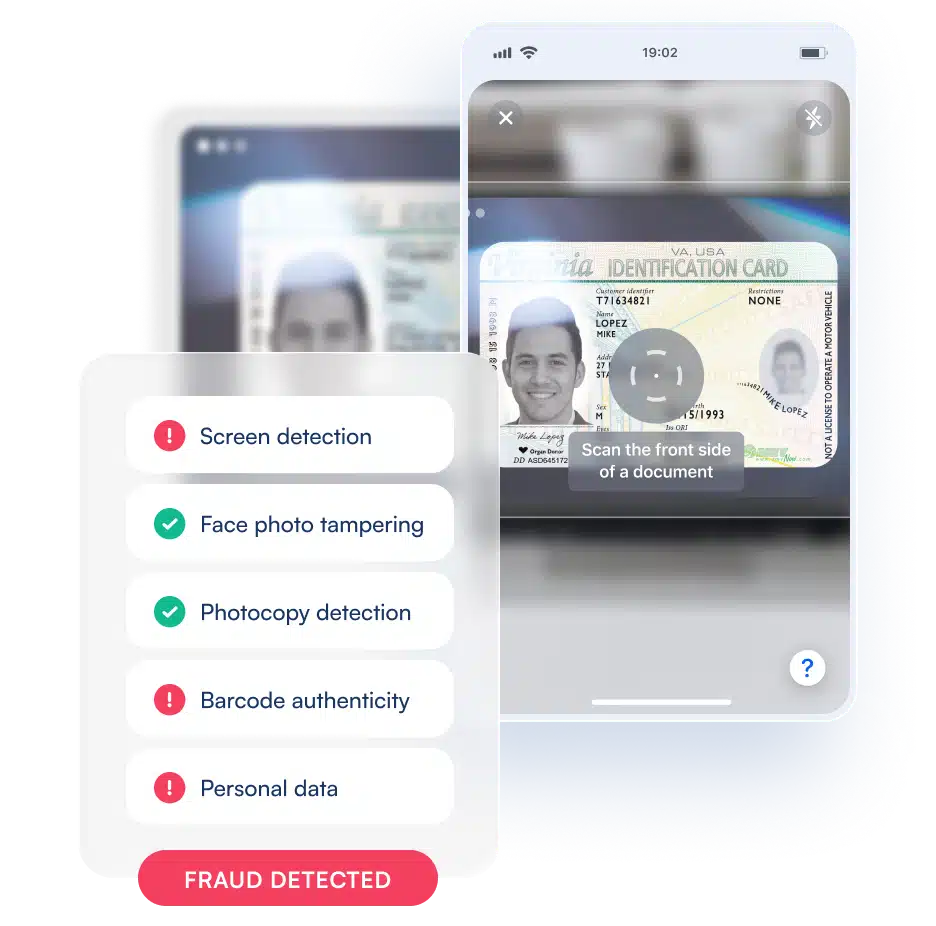
Microblink is an AI-powered identity verification solution that enhances AML efforts by streamlining KYC during digital onboarding. Its real-time ID capture and liveness detection reduce fraud risk and improve data quality, making it a strong pre-KYC layer for broader AML programs.
Key Features
- Real-time OCR and data extraction from 140+ countries’ government-issued IDs
- On-device verification with biometric liveness detection
- Adaptive image capture to reduce onboarding friction and false negatives
- Lightweight SDKs for iOS, Android, and web platforms
- Output structured identity data for downstream AML processing
Pricing
Quote-based; pricing depends on verification volume and SDK usage.
Pros
- Rapid onboarding with high verification accuracy
- Privacy-forward (on-device processing)
- Global ID support; reduces need for manual KYC review
- Developer-friendly SDKs enable fast deployment
Cons
- Platform launched 2025, newer orchestration on the market compared to legacy technology
- No manual reviewers
- Not suitable for IAM use cases
Use Cases
- AML-compliant digital onboarding
- Identity verification for high-risk account openings
- Ongoing due diligence refresh cycles
2. ComplyAdvantage
Best for real-time sanctions screening and AML risk management.
ComplyAdvantage provides dynamic AML tools including global sanctions and watchlist screening, transaction monitoring, and adverse media analysis. Built with an API-first approach, it’s ideal for banks needing flexible, modern compliance architecture.
Key Features
- Sanctions, PEP, and watchlist screening with configurable logic
- Adverse media monitoring across global sources
- Transaction risk scoring and behavioral monitoring
- Real-time alerts with audit-friendly case management
- API integration with core banking and KYC systems
Pricing
Subscription-based; pricing scales with volume and features selected.
Pros
- Real-time screening with global coverage
- Strong support for regulatory audits and reporting
- Easy to integrate with existing tech stack
- Built for agile compliance teams
Cons
- May lack some advanced analytics available in legacy platforms
- May require manual tuning early on to minimize false positives
Use Cases
- Real-time sanctions/PEP screening
- Adverse media and transaction monitoring
- Screening during onboarding and periodic CDD reviews
3. NICE Actimize
Best for banks seeking an enterprise-wide AML compliance platform.
NICE Actimize is one of the most widely adopted AML suites globally, offering transaction monitoring, case management, sanctions screening, and investigative tools in one integrated system. Built for large-scale operations, it supports model governance and regulatory readiness.
Key Features
- End-to-end AML workflow: alerts, investigations, and SAR filing
- Advanced transaction monitoring with rule- and AI-based logic
- Sanctions and watchlist screening across jurisdictions
- Case management with audit trails and regulatory reporting
- Real-time data ingestion and suspicious activity detection
Pricing
Enterprise quote-based; tailored to institution size and deployment model.
Pros
- Proven at scale with global banks and regulators
- Flexible rule engine and AI-based alert scoring
- Comprehensive audit and governance controls
- Ongoing support and regulatory updates
Cons
- Complex to deploy and manage — requires strong IT/data support
- Higher total cost of ownership compared to API-native tools
Use Cases
- Large-scale transaction monitoring
- Centralized AML case management
- Regulator-ready SAR/CTR reporting workflows
4. SAS Institute
Best for banks prioritizing data science and advanced risk modeling.
SAS delivers robust AML and fraud detection solutions powered by decades of experience in data analytics. It’s best suited for banks looking to build custom, predictive AML workflows with high volumes of transactional data.
Key Features
- AI/ML-based behavioral modeling for transaction anomalies
- Entity resolution and network risk detection
- Scenario-based monitoring with flexible tuning
- Case management and SAR filing support
- Powerful visualization and model validation tools
Pricing
License and subscription models available; enterprise-level pricing.
Pros
- Advanced analytics and ML capabilities
- Highly customizable for specific typologies
- Strong visualization and auditability for regulators
- Integrates with large data lakes and core banking platforms
Cons
- Requires in-house analytics expertise
- Slower to deploy compared to plug-and-play SaaS options
Use Cases
- Custom transaction monitoring models
- Predictive risk scoring and network analysis
- Advanced analytics for regulator engagement
5. ThetaRay
Best for detecting unknown money laundering typologies and hidden networks.
ThetaRay offers AI-driven transaction monitoring that detects suspicious behavior even without pre-defined rules. Its unsupervised learning approach is ideal for identifying novel typologies and hidden relationships—especially in high-risk or cross-border banking.
Key Features
- AI engine to detect previously unseen patterns
- Network behavior analysis and peer comparison
- Risk scoring without needing historical labeled data
- Case clustering and risk explanation tools
- Built for real-time and batch transaction ingestion
Pricing
Custom enterprise agreements based on transaction volume and deployment needs.
Pros
- Effective against unknown laundering behaviors
- Ideal for correspondent banking and high-volume institutions
- Reduces false positives while increasing detection accuracy
- Cloud-native with flexible integration
Cons
- May require organizational change to move beyond rules-based systems
- Needs high-quality input data for best results
Use Cases
- Real-time transaction monitoring for cross-border payments
- High-risk account surveillance
- Risk scoring for novel fraud and laundering schemes
How to Choose the Right AML Platform for Your Bank
When selecting AML solutions, banks should assess:
- Scope: Do you need full AML coverage or modular tools (e.g., ID verification, sanctions screening)?
- Scale: Can the solution grow with your transaction volumes and risk profile?
- Integration: Will it integrate smoothly with your existing core systems, data lakes, and CRM?
- Compliance Alignment: Does it support your jurisdiction’s regulatory frameworks (e.g., FinCEN, FATF, GDPR)?
- Analytics & Alerting: Can it reduce false positives and accelerate investigations?
Often, a hybrid AML tech stack—combining a KYC/IDV provider like Microblink with transaction monitoring platforms like NICE Actimize or ThetaRay—delivers the most effective compliance architecture.
Frequently Asked Questions
What is AML and why is it important for banks?
AML (Anti-Money Laundering) refers to the regulations and practices used by banks to prevent the laundering of illicit funds. It’s essential to comply with national and global regulations and prevent financial crime.
Is Microblink a full AML platform?
No — Microblink focuses on identity verification and KYC automation, which supports AML compliance but must be paired with monitoring and reporting tools for full coverage.
Can these solutions integrate with legacy banking systems?
Yes. Most vendors offer APIs, SDKs, and cloud connectors, though deeper integration (especially with older systems) may require custom development or middleware.
Do banks need one AML tool or multiple?
Most institutions use a stack of tools for AML — combining IDV, transaction monitoring, sanctions screening, and analytics — to ensure end-to-end compliance across the customer lifecycle