
Best Address Verification Software for Fraud Decision-Makers
In the rapidly evolving landscape of digital commerce and security, ensuring the accuracy of location data is paramount for preventing fraud and streamlining user onboarding. The best address verification software leverages advanced AI and global datasets to validate user information in real-time, reducing failed deliveries and flagging suspicious activities before they impact the bottom line. By integrating these tools, organizations can maintain strict compliance standards while offering a frictionless experience via customer identity verification software that validates location with precision.
Comparison Chart: Address Verification Software
| Theme | Microblink | Smarty | Loqate | Melissa | PostGrid |
|---|---|---|---|---|---|
| Compliance Features | – Supports KYC/AML compliance with real-time data parsing.- Requires physical document verification for accuracy.- Handles global document standards. | – Limited identity linking, focusing on address data.- Primarily US-centric validation features.- Offers basic compliance for address data accuracy. | – Ensures address standardization across 245+ countries.- Cross-references multiple data sources for a ‘Golden Record’.- Handles diverse global formats. | – Offers NCOA records for address changes.- Personator feature for name, email, and phone checks.- Supports fraud detection and compliance. | – CASS and SERP certified for postal compliance.- Focuses on address standardization for mail delivery.- Less emphasis on real-time fraud prevention. |
| Industry Focus | – Digital onboarding and ID verification software.- Suitable for international businesses.- Mobile app checkout processes. | – Logistics, shipping, and location intelligence.- Database cleansing for US addresses.- High-volume enterprise needs. | – Global e-commerce and logistics.- CRM data enrichment.- Complex address formats and character sets. | – Fraud prevention and direct mail marketing.- Banking compliance.- Comprehensive data enrichment capabilities. | – Automated direct mail and marketing compliance.- Address autocomplete for marketing.- Suited for logistics and marketing industries. |
| AI Capabilities | – AI-driven address extraction from documents.- Real-time data parsing for accuracy.- Utilizes deep-learning models for better extraction in low-light. | – Focuses on speed rather than AI-driven insights.- Provides rooftop geocoding without AI enhancements.- Lacks broader AI capabilities for identity. | – Global type-ahead technology for predictive address entry.- Optimized API for fast mobile load times.- Sophisticated transliteration capabilities. | – Integrates with CRM platforms for enhanced validation.- Utilizes historical data for fraud prevention.- AI not a core focus, but data-rich features. | – Developer-friendly API for embedding verification.- Focused on print and mail automation rather than AI.- Provides analytics for deliverability. |
| User Experience | – Seamless integration into mobile apps.- Reduces drop-off rates during registration.- Requires physical ID, which may hinder some workflows. | – Developer-friendly documentation for quick integration.- Utilitarian interface, focused on function.- Rapid response times for enterprise needs. | – Type-ahead UI reduces cart abandonment.- Complex setup for large enterprises.- Premium pricing may deter smaller businesses. | – Comprehensive, but steep learning curve for new users.- Dated interface compared to competitors.- Rich feature set can be overwhelming. | – Developer-friendly, but API-first can be complex.- Modern dashboard for tracking mail status.- Focus on logistics and marketing user needs. |
| Developer Experience | – On-device processing or secure API for privacy.- Extensive documentation for seamless implementation.- AI eliminates manual data entry errors. | – Rapid integration with existing tech stacks.- Extensive, clear documentation.- Flexible pricing for scaling. | – Requires significant resources for full integration.- Extensive global support, but complex setup.- High level of technical expertise needed. | – Resource-intensive setup with many configuration options.- Integrates well with major CRMs.- Historical data access for developers. | – No-code platform integrations for marketing teams.- Clear billing and operational transparency.- API complexity may require developer support. |
1. Microblink

Platform Summary
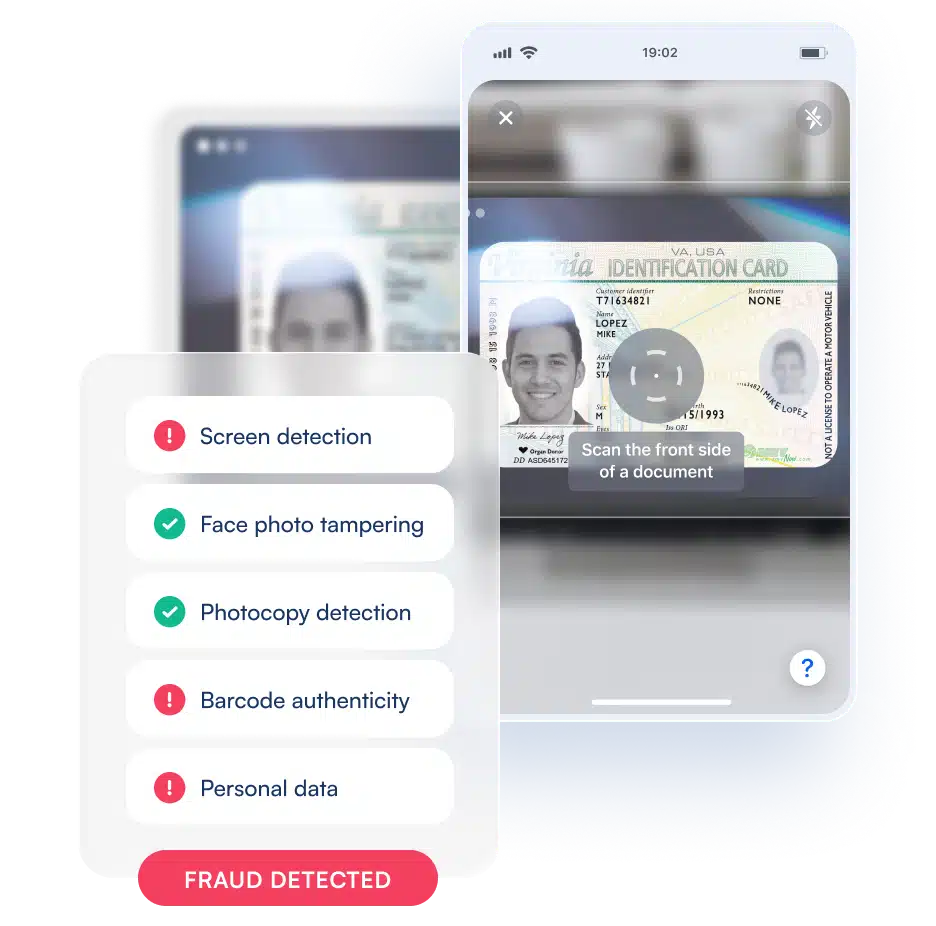
Microblink provides a flexible, AI-powered address verification engine designed to help enterprise organizations meet global compliance standards and combat fraud without creating unnecessary friction for customers. Its proprietary computer vision technology extracts address data directly from identity documents, anchoring digital transactions to a verified physical location. This approach is ideal for Fraud Decision-Makers (FDMs) who require high assurance in KYC/AML workflows, e-commerce onboarding, and regulatory compliance.
Key Benefits
– Flexible Verification Options: Tailor workflows with document scanning, ID capture, or passive address matching against official sources.
– Global Coverage with Local Accuracy: Normalize and verify addresses worldwide, adapting to local postal formats and languages in real time.
– Transparent and Controllable AI: Gain full visibility into decisioning, with adjustable model tolerances to balance risk and user experience.
– Proprietary OCR for Unmatched Accuracy: Minimize data entry errors and ensure reliable data for compliance checks.
Core Features
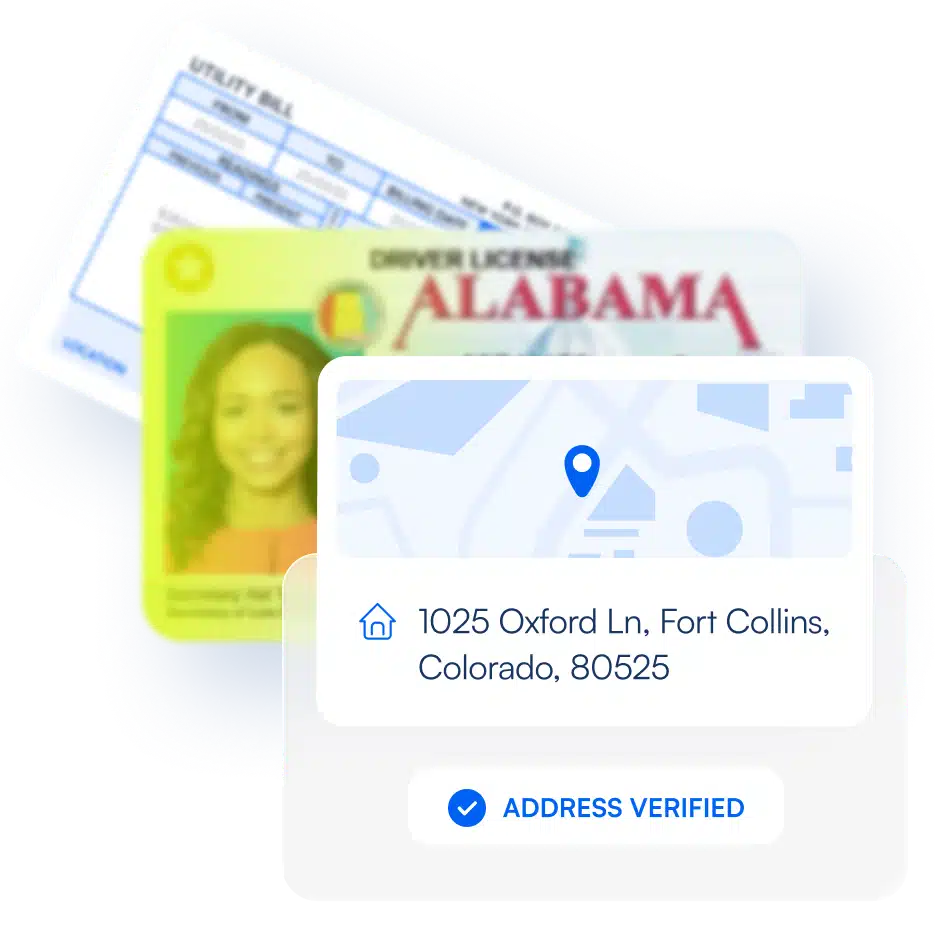
– AI-powered address extraction from government-issued IDs and utility bills.
– Real-time data parsing and normalization for global address formats.
– Secure on-device or API-based processing to protect sensitive information.
– Developer-friendly ID verification APIs and SDKs for rapid integration.
Primary Use Cases
– KYC/AML compliance for financial institutions and regulated industries.
– E-commerce and marketplace onboarding to meet regulations like INFORM Consumers Act and DAC7.
– Credit card fraud prevention by verifying billing addresses at checkout.
Recent Updates
– Enhanced BlinkID engine with deeper deep-learning models for improved extraction from blurred or low-light images.
– Expanded support for vertical ID formats and non-Latin character sets.
– Streamlined user experience to reduce onboarding friction.
Limitations
– Requires a physical document for address extraction, which may not fit all digital-only workflows.
– Dependent on image quality; poor camera or damaged IDs can hinder extraction.
– Does not cross-reference postal delivery databases, focusing on document-based verification.
2. Smarty

Platform Summary
Smarty is engineered for speed and reliability, catering to enterprises that need to validate massive address datasets in real time. Its cloud-native infrastructure and rooftop geocoding make it a top choice for logistics, shipping, and location intelligence, especially within the US market.
Core Features
– US rooftop geocoding for precise latitude and longitude.
– High-speed bulk validation, processing billions of addresses with low latency.
– International address standardization for global database consistency.
– Developer-friendly API and documentation for rapid integration.
Primary Use Cases
– Ensuring deliverable addresses for logistics and shipping.
– Cleansing and standardizing CRM and marketing databases.
– Location intelligence for risk modeling and fraud pattern analysis.
Recent Updates
– Refined US Master Address List for faster enterprise queries.
– More granular metadata for non-postal addresses.
– Enhanced API performance for high-traffic bursts.
Limitations
– Deepest data granularity and features are US-centric.
– Lacks identity linking and broader fraud prevention capabilities.
– Utilitarian interface may not appeal to non-technical users.
3. Loqate

Platform Summary
Loqate, a GBG company, is a global leader in location intelligence, offering predictive type-ahead address entry and deep data enrichment. Its solutions are trusted by e-commerce, logistics, and CRM teams to ensure accurate address capture and reduce cart abandonment worldwide.
Core Features
– Global type-ahead technology for predictive, error-free address entry.
– Transliteration capabilities for non-Latin scripts.
– Universal address formatting for consistent CRM data.
– Cross-referencing multiple data sources to create a ‘Golden Record.’
Primary Use Cases
– E-commerce checkout optimization to reduce abandonment.
– CRM data enrichment and global outreach.
– Logistics and supply chain management in emerging markets.
Recent Updates
– Expanded Global Knowledge Graph for better coverage in emerging markets.
– Optimized API for faster mobile load times.
– Improved matching logic for apartment and suite numbers.
Limitations
– Premium pricing may be prohibitive for smaller businesses.
– Complex integration for large enterprises and legacy systems.
– Overkill for businesses with only local or domestic needs.
4. Melissa

Platform Summary
Melissa is a data quality powerhouse, offering holistic identity verification that goes beyond addresses. Its ‘Personator’ technology cross-references names, emails, and phone numbers with addresses, making it a robust solution for compliance, fraud prevention, and marketing enrichment.
Core Features
– Personator identity verification for multi-factor fraud detection.
– Access to global National Change of Address (NCOA) records.
– Geocoding and demographic enrichment for deeper insights.
– Integration with major CRM platforms.
Primary Use Cases
– Fraud prevention by detecting mismatches in identity data.
– Direct mail marketing with up-to-date address records.
– Banking compliance and rigorous KYC/AML checks.
Recent Updates
– Tighter integration with Salesforce and Microsoft Dynamics.
– Enhanced global email and phone validation algorithms.
– New international identity verification datasets.
Limitations
– Steep learning curve and resource-intensive setup.
– Dated user interface compared to newer competitors.
– Bulk operations may require significant infrastructure.
5. PostGrid

Platform Summary
PostGrid bridges digital address verification with automated physical mail delivery. Its CASS and SERP certifications ensure postal compliance, while its API-first design enables businesses to trigger print and mail workflows directly from their software.
Core Features
– Print & Mail API for automated physical correspondence.
– CASS and SERP certified address verification for postal discounts.
– Address standardization and autocomplete for web forms.
– Real-time analytics dashboard for deliverability tracking.
Primary Use Cases
– Automated direct mail for marketing and compliance notifications.
– Address autocomplete for seamless user onboarding.
– Physical KYC verification via mailed codes or documents.
Recent Updates
– New integrations for no-code platforms to simplify workflow setup.
– Improved dashboard analytics for real-time deliverability insights.
– Support for international mail tracking.
Limitations
– Focused on logistics and marketing, with less emphasis on real-time fraud prevention.
– API-first approach may require developer resources for full automation.
– Core features may be less relevant for digital-only businesses.
Why Address Verification Matters for FDMs
For Fraud Decision-Makers, the right address verification solution is more than a compliance checkbox—it’s a critical layer in your fintech fraud prevention and risk management strategy. Whether you need to anchor digital identities to physical locations, streamline onboarding, or ensure regulatory adherence, the platforms above offer a range of options to fit your organization’s needs. Real-world applications demonstrate the impact of these tools; for example, Latin ID achieves a 98% identity verification success rate with Microblink, showcasing the efficacy of integrated verification.
For more on how address verification fits into a holistic compliance and fraud prevention strategy, explore our KYC/AML compliance solutions and digital onboarding best practices.
Related Reading:
– How AI-Powered Identity Verification Reduces Fraud
– Building a Seamless Digital Onboarding Experience
– The Role of Address Verification in Regulatory Compliance
What is Address Verification Software?
Address Verification Software (AVS), also known as address validation, is a tool designed to check the accuracy and deliverability of a physical mailing address. At its core, the software cross-references address data entered by a user against an authoritative postal database, such as the USPS CASS-certified database in the United States. It automatically standardizes addresses to the official postal format, corrects typos and spelling errors, and appends missing information like ZIP+4 codes, apartment numbers, or suite details. This process ensures that an address not only exists but is also a valid, mailable location recognized by postal carriers.
Why is Address Verification Important for Compliance and Fraud Prevention?
For businesses in regulated industries, address verification is a critical component of Know Your Customer (KYC) and <a href= »https://mb.wpstaging.uk/resources/blog/aml-for-banks/ »>Anti-Money Laundering (AML) compliance programs. Regulators require financial institutions and other obligated entities to establish a customer’s identity, and a valid physical address is a key data point in this process. From a fraud prevention perspective, AVS acts as a powerful first line of defense. Fraudsters often use fake, invalid, or high-risk addresses (like mail drops) to open synthetic accounts or commit identity theft. By validating an address in real-time during onboarding or a transaction, you can flag suspicious entries, reduce the risk of fraudulent accounts, and protect your business from financial and reputational damage.
How to Choose the Best Software Provider
Selecting the right address verification provider requires evaluating several key factors beyond basic validation. First, assess the provider’s data accuracy and global coverage; ensure they use official, up-to-date postal databases for all the countries you operate in. Second, examine the ease of integration. A robust, well-documented API is essential for seamlessly embedding verification into your existing onboarding workflows, CRM, or e-commerce platforms. Finally, consider the feature set and scalability. Look for capabilities like real-time verification at the point of entry, batch processing for cleaning existing databases, and additional data enrichment like geocoding. The best provider will offer a solution that is not only accurate but also flexible, secure, and capable of scaling with your business needs.
What is address verification software and why is it important for fraud prevention?
Address verification software is a digital tool that validates the accuracy and legitimacy of physical addresses provided by users or customers. For Fraud Decision-Makers, it’s crucial because it helps anchor digital identities to real-world locations, detect inconsistencies that may indicate fraudulent activity, and ensure compliance with regulations such as KYC (Know Your Customer) and AML (Anti-Money Laundering). By confirming that an address is genuine and matches official records or identity documents, organizations can reduce the risk of fraud, failed deliveries, and regulatory penalties.
How does AI enhance the effectiveness of address verification solutions?
AI-powered address verification solutions use machine learning and computer vision to extract, parse, and validate address data from a variety of sources, such as government-issued IDs or utility bills. This allows for real-time verification, improved accuracy even in challenging conditions (like low-light images), and the ability to adapt to global address formats and languages. AI also reduces manual data entry errors and can flag suspicious patterns that might indicate fraud, making the verification process both faster and more reliable for compliance teams.
What compliance standards should address verification software support?
For organizations in regulated industries, address verification software should support compliance with KYC/AML regulations, data privacy laws (such as GDPR or CCPA), and postal standards (like CASS or SERP certification for mail delivery). Compliance features may include secure data processing, audit trails, support for global document standards, and the ability to integrate with other identity verification or risk management systems. Ensuring your chosen solution meets these standards is essential for passing audits and avoiding regulatory fines.
Can address verification software be integrated with existing enterprise systems?
Yes, most leading address verification platforms offer APIs, SDKs, and pre-built integrations for popular CRM, onboarding, and risk management systems. This allows organizations to embed address verification directly into their workflows, whether for digital onboarding, transaction monitoring, or direct mail automation. Some solutions also provide no-code or low-code options for rapid deployment, while others may require more technical resources for full integration, especially in complex enterprise environments.
What are the main limitations or challenges of using address verification software?
Common challenges include the need for high-quality images or physical documents (for document-based verification), potential complexity in integrating with legacy systems, and varying levels of global coverage or support for non-Latin address formats. Some solutions focus primarily on postal accuracy and may lack broader fraud prevention features, while others may have a steep learning curve or require significant developer resources. It’s important to assess your organization’s specific needs—such as real-time fraud detection, compliance requirements, and user experience—when selecting the best address verification software.