
7 Most Common Types of Frauds in Banks

The alarming increase in suspicious, fraud-like activity is a cause for concern, especially since reports have shown that more than 2.5 million Suspicious Activity Reports (SARs) were already filed by August last year.
Check fraud alone has skyrocketed 201.2% between 2018 and 2022, not to mention other forms of financial fraud like money laundering. But don’t worry—there’s hope!
Anti-fraud technology is helping financial institutions combat this type of criminal activity. However, understanding the primary types of fraud in banks is the first step toward preventing it.
1. Identity theft and account takeover
Identity theft and account takeover may be separate beasts, but they have a common objective: to hijack another’s financial assets.
Their definitions are as follows:
- Identify theft in banking refers to a fraudster stealing an individual’s Personally Identifiable Information (PII) to open a new bank account or perform other fraudulent activities.
- Account takeover—or ATO—occurs when a bad actor obtains unauthorized access to a person’s online accounts (usually through stolen credentials) to commit fraudulent transactions.
The impact of either can be catastrophic. Customers can face damaged credit, legal troubles, and emotional repercussions. Meanwhile, banks may encounter reputational harm and potentially permanent financial losses.
Technological advances have facilitated both forms of financial fraud—and expanded them. From gaining the ability to bypass biometric authentication through AI to committing synthetic identity theft, bank fraud is becoming progressively sophisticated.
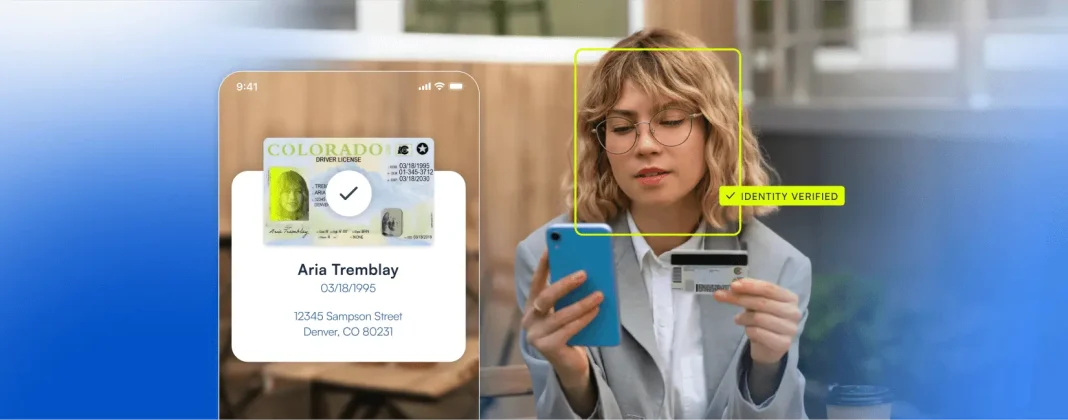
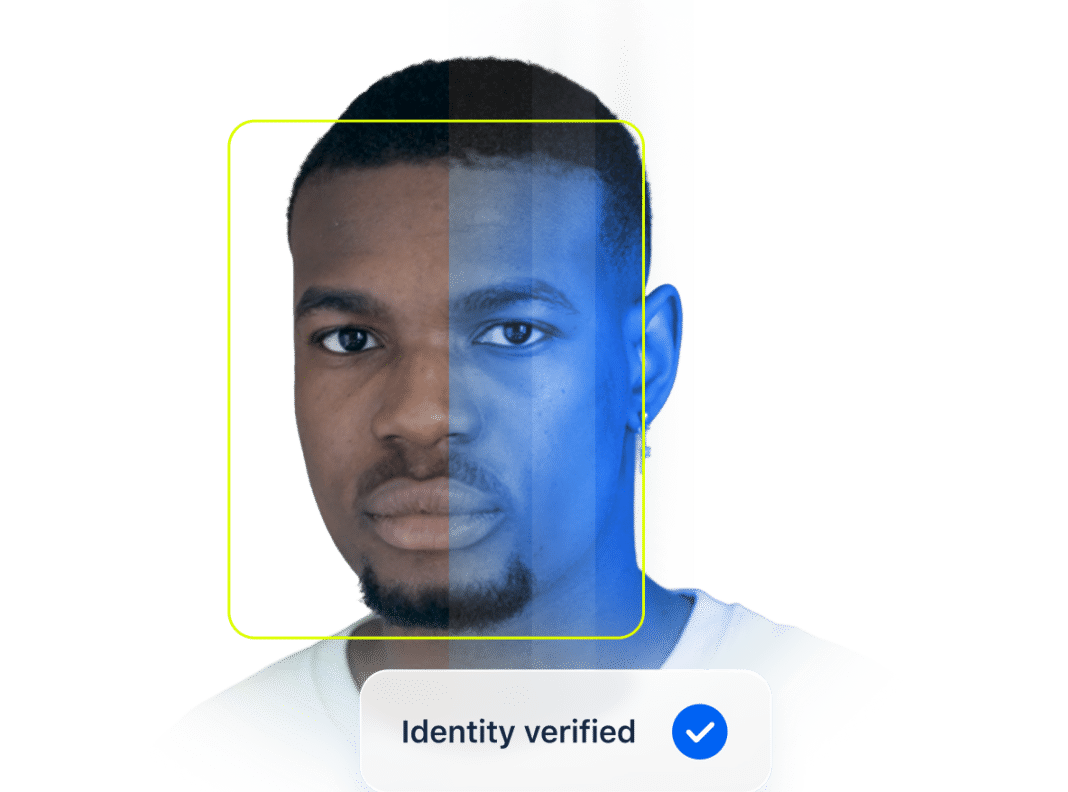
But so are banking fraud solutions. AI-driven remote identity verification like Microblink’s BlinkID Verify helps financial institutions ensure people are who they claim to be swiftly and accurately, thereby deterring fraud and its consequences.
2. Phishing scams and social engineering
Phishing scams in finance have become increasingly complex with the upsurge in AI and cleverer forms of social engineering.
Here’s how they differ:
- Social engineering is characterized by a fraudster posing as a familiar person or valid entity to solicit sensitive information through emotional manipulation.
- Phishing is a type of social engineering. In these cases, the fraudster masquerades as an established organization—such as a bank—via text, email, phone, or social media to access authentication credentials, demand funds, or obtain credit card details.
Together, phishing and social engineering account for the most ubiquitous forms of cybercrime. Plus, the ability of AI to generate voice deepfakes—like the sound of a loved one’s voice or the voice of a bank customer—has made these deceptions all the more difficult to decipher.
3. Card fraud (card not present fraud)
Credit card fraud is the most prevalent form of identity theft. It occurs in a variety of ways, including lost or stolen cards and:
- Skimming or capturing credit card data through illegal devices, such as a false swiper at fuel pumps and point-of-sale terminals
- Cloning, in which a valid credit card’s details—usually acquired through skimming—are superimposed on a blank card or otherwise duplicated
This information can then be used to commit card not present (CNP) fraud, wherein a fraudster uses the credit card information to make counterfeit purchases by phone or online.
AI-enabled banking fraud detection can be a boon in this regard. By sifting through immense amounts of historical data and user patterns, AI can identify red flags—such as unusual purchases—to alert the customer (and their bank) and prohibit transactions.
4. Loan and credit fraud
Loan and credit fraud are a manifestation of identity theft. Both refer to the illegal use of an individual’s PII to obtain a loan or line of credit. This could be as seemingly minor as taking out a payday loan to as major as securing a $50,000 line of credit—a probability that harms both customers and the banks.
Microblink is at the forefront of fighting this. Using automated document and customer identity verification technology, Microblink can halt fraudsters from securing loan approvals and save customers from the lasting ramifications.
5. Insider fraud
The FDIC reports that insider fraud is responsible for more than 50% of all frauds in banks. Perpetuated by employees in a financial institution, it includes:
- Embezzlement
- Money laundering
- Data theft
- Asset misappropriation fraud
AI is at the vanguard of battling this global problem as well. ML algorithms can track employee behavior and ring the alarm if suspicious activity—like data leaks and unauthorized access—is discovered.
6. Online banking fraud
Convenience, simplicity, rapid-fire transactions—there are a slew of reasons why 71% of bank customers prefer to manage their accounts online. And yet, the inherent nature of online banking renders financial institutions and their customers vulnerable to cybercriminals.
The most frequent forms of digital banking fraud include the use of malware to perform account takeovers, as well as:
- Wire transfer fraud
- Zelle fraud
- Advance fee fraud
Fortunately, banking cybersecurity has kept pace with bank account fraud. Robust AI for fraud detection measures, like real-time evaluations of app usage, can help customers keep their online accounts secure. At the same time, advances in identity proofing can decrease the risk of identity theft.
Microblink’s BlinkID Verify stands out from the crowd in this regard and may curb fraud by as much as 50%.
7. Mortgage fraud
Recent data indicates that mortgage fraud is identified in one of every 134 mortgage applications. This doesn’t just hit the banking industry hard: it can also send shockwaves throughout the economy by diminishing property values and limiting credit availability.
The criminal offense is committed through several schemes, namely:
- Straw buyers
- Occupancy fraud
- Falsifying documents
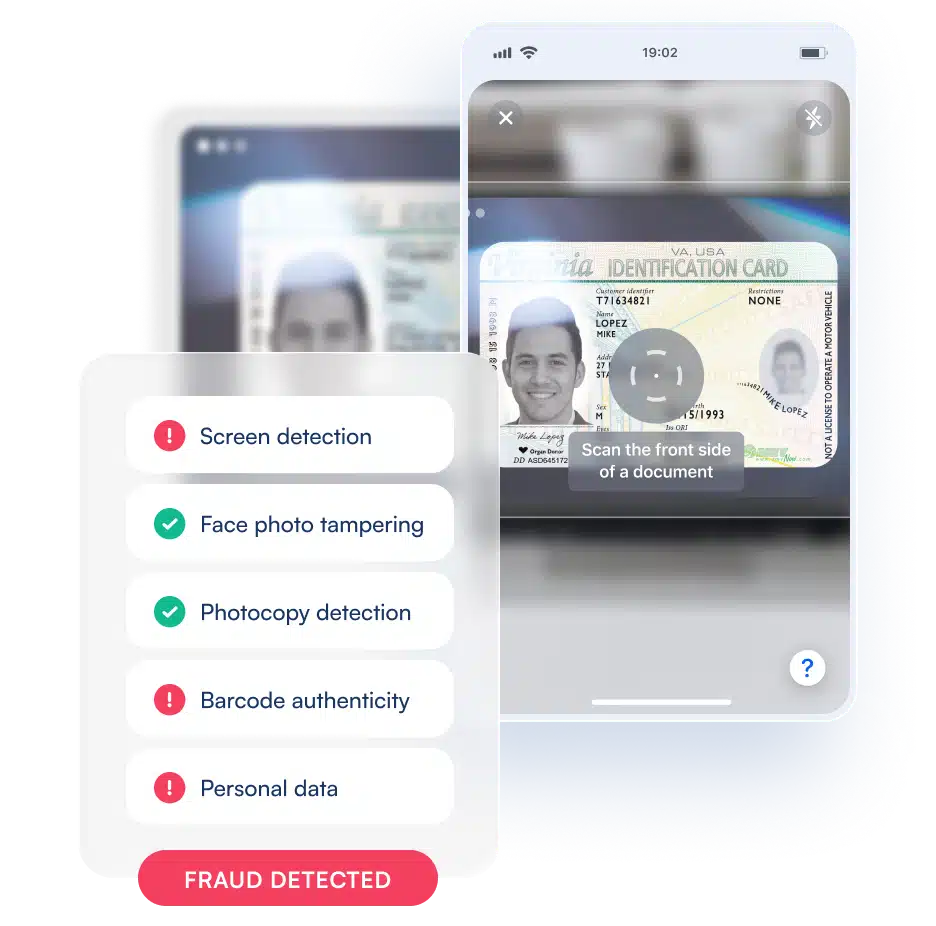
AI/ML can distinguish suspicious activity and block mortgage fraud at the outset through AI-driven identification verification. Several of Microblink’s key features, including barcode authentication and the ability to recognize face photo tampering, may result in fewer fraudulent applications landing on a mortgage lender’s (virtual) desk.
Elevate anti-fraud methods with Microblink
From forged or fraudulent documents to fraud involving wire transfers, the types of fraud in banks run the gamut. Yet, they share a common thread: they can cause enormous damage to a financial institution and the customers who have trusted them. Microblink was designed with these concerns at the top of mind. Try our demo to learn how our digital identity products can safeguard your customers—and keep you at the head of fraud prevention.