
Digital Mythbusters: Real vs Fake in AI-powered Fraud
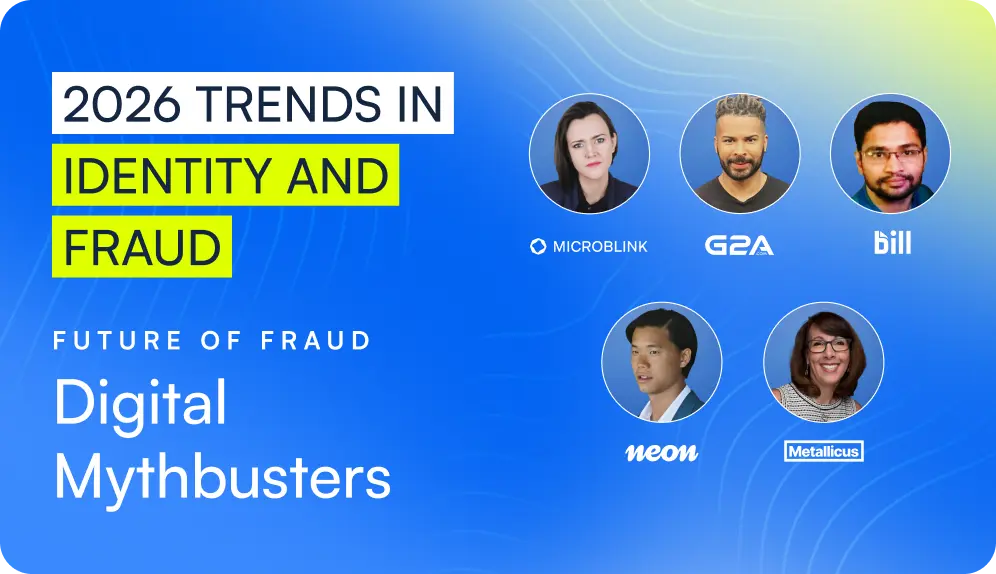
Artificial intelligence is reshaping the fraud trends and landscape, but not always in the ways headlines suggest. In Microblink’s latest Trust Talks session, Iremar Brayner, Fraud Manager at G2; Mark T. H. Sze, Sr. Head of Product at Neon; Kali Kishore Chintha, Risk Manager at Bill.com; Karen McHenry VP, Product at Metallicus and Microblink’s Sr. Director of Marketing Rex Robinson dug into what’s actually changing, what’s hype, and how businesses should prepare heading into 2026.
Here are the biggest insights from the conversation.
AI Fraud Isn’t New. It’s an Evolution (But a Powerful One)
The panel agreed: AI isn’t introducing entirely new forms of fraud. It’s supercharging old ones.
A decade ago, bots were rule-based and easy to spot. Now, modern automated attacks learn, adapt, and mimic humans with frightening accuracy. Deepfaked voices and synthetic interviews are real risks—but the bigger shift is scale and believability.
As one speaker put it:
“It’s getting difficult to differentiate what is true and what isn’t.”
But there’s a silver lining: defenders can use the same AI advancements to fight back.
Watch out for Deepfakes, but don’t forget about ATOs and fake acocunts
The most immediate threat facing financial institutions isn’t deepfakes—it’s the surge in account takeovers and fake account creation. While headline-grabbing deepfake heists dominate the news cycle, fraud teams are feeling the real impact in day-to-day operations through a sharp rise in ATO attempts, account openings using fake or synthetic identities, and the rapid proliferation of mule accounts.
Panelists pointed to one notable Brazil-specific development: a national identity-protection registry designed to stop unauthorized account openings before they happen. But across all markets represented in the discussion, the message was the same—image-only deepfake detection is no longer sufficient. As fraudsters lean heavily on agentic AI to automate impersonation and identity spoofing, banks and fintechs must shift toward multi-layered defenses that combine behavioral intelligence, device signals, and transactional patterns to reliably distinguish genuine customers from AI-assisted impostors.
First-Party Fraud Is Exploding—and AI Is Accelerating the Trend
Another resounding theme from the webinar was the dramatic rise of first-party fraud and how generative AI is making the problem significantly worse. Once treated primarily as a credit or collections issue, first-party fraud has now become a blended “fraud–credit–CX” challenge that institutions can no longer silo. Everyday consumers, who historically lacked the tools or sophistication to deceive banks and merchants, can now use AI to fabricate documents, create fake communication histories, manipulate digital receipts, and produce convincing evidence trails to dispute legitimate charges.
These capabilities have tipped the scales: it’s now easier than ever for a consumer to exploit refund and chargeback policies, especially in digital goods and services where “item not received” and return-refund abuse are exploding. The panelists emphasized that this shift requires new strategies, not just stronger controls. Expect to see increased investment in first-party fraud scoring models, intent-based behavioral analytics, and proactive signals that flag “friendly fraud” before it hits the bottom line. The era of treating first-party fraud as an unavoidable cost of doing business is over.
The AI Arms Race Will Accelerate Into 2026
Panelists agreed: things aren’t stabilizing, in fact they’re speeding up.
Changes to global card network rules, wider adoption of 3DS and other authentication controls, and more sophisticated fraud tooling will force fraudsters (and fraud teams) to evolve again.
What’s coming next?
- Predictive models for first-party fraud propensity
- Behavioral scoring as a core fraud signal
- Advanced cross-layer signal aggregation
- Heavier internal education around social engineering, impersonation, and deepfake-driven employee attacks
One expert summed up the challenge:
“Fraudsters have the tools to deceive at scale. We need the tools to defend at scale.”
To learn more about how Microblink can help your business prepare for the future of fraud, get in touch today.