
Agentic Commerce: How AI Agents Handle Identity Verification in Autonomous Buying

Commerce is entering a new phase. Instead of users clicking through every step of a transaction, AI-powered agents are beginning to act on their behalf, searching, comparing, deciding, and even purchasing with minimal human intervention. This shift is known as agentic commerce, and it’s already reshaping how marketplaces think about customer experience, trust, and compliance.
For product leaders, the opportunity is obvious. Agentic commerce promises smoother flows, fewer drop-offs, and more personalized buying journeys. The challenge is less obvious but more dangerous: once customers delegate decisions to agents, marketplaces must verify who is behind the agent and whether that activity can be trusted.
What Is Agentic Commerce and How Does It Work?
Agentic commerce refers to commerce workflows where AI agents act autonomously on behalf of users or businesses. These agents can search for products, compare prices, initiate transactions, and interact with platforms without requiring constant user input.
In practice, an agentic commerce workflow looks less like a traditional checkout funnel and more like a delegated process. A user authorizes an agent to act within defined constraints, such as budget, preferences, or merchants. The agent then interacts with marketplaces, payment systems, and fulfillment services directly.
For marketplaces, this means transactions may increasingly originate from software agents rather than humans tapping screens. That changes how identity, intent, and risk must be evaluated at every step.
Why Agentic Commerce Changes the Stakes for Marketplaces
Agentic commerce improves convenience, but it also compresses decision-making. Fewer steps means fewer opportunities to detect fraud or verify identity using traditional checkpoints. This is especially risky in environments already facing pressure from synthetic identities and AI-generated fraud.
At the same time, marketplaces cannot afford to slow these flows down. Product teams are already battling abandonment driven by clunky onboarding and outdated verification experiences. Agentic commerce raises the bar: verification must be faster, quieter, and more intelligent, or it will be bypassed entirely.
This is where identity verification stops being a compliance checkbox and becomes a core product capability.
Key Benefits of Agentic Commerce for Businesses and Customers
Agentic commerce delivers value when it’s implemented correctly and safely. The upside spans both customer experience and operational efficiency.
- Reduced friction in discovery, checkout, and repeat purchases
- Higher conversion rates through automated, personalized decisioning
- Improved accessibility for users who prefer delegation over manual interaction
- Faster transaction cycles and lower operational overhead
- More consistent user experiences across channels and devices
These benefits only materialize if customers trust the system enough to delegate control. Trust, in turn, depends on strong identity verification and fraud prevention behind the scenes.
Security and Compliance in Agentic Commerce Environments
Agentic commerce does not reduce regulatory obligations. In many cases, it increases scrutiny.
Marketplaces still need to meet KYC and AML requirements, protect payment data under PCI standards, and maintain defensible audit trails. The difference is that actions may now be taken by agents rather than end users, which complicates attribution and accountability.
To stay compliant, platforms must be able to verify:
- The identity of the user who authorized the agent
- The scope of the agent’s permissions
- The legitimacy of transactions initiated autonomously
- The continuity of identity across sessions and interactions
Without modern identity verification, agentic workflows create blind spots that auditors and regulators are increasingly unwilling to tolerate.
How to Implement Agentic Commerce Workflows Without Breaking Trust
Implementing agentic commerce does not mean rebuilding your entire stack. Most successful approaches layer agent capabilities on top of existing commerce and payment infrastructure using APIs and standardized integrations.
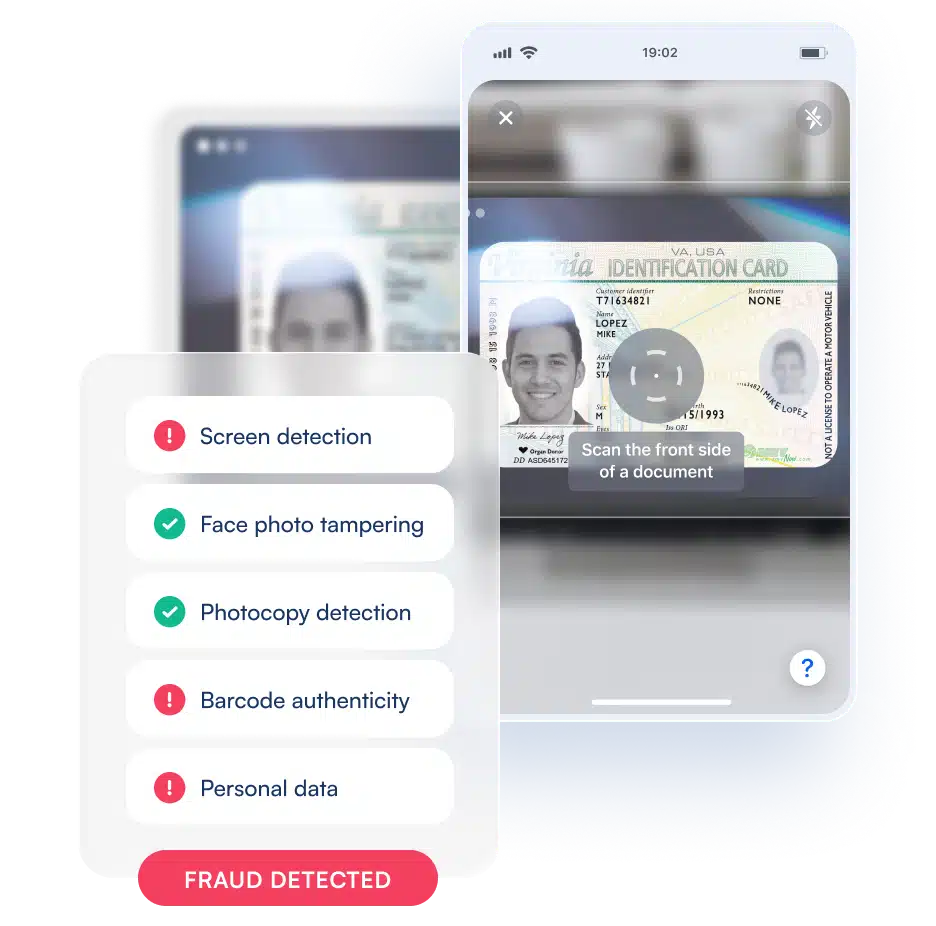
The critical design decision is where identity verification happens. In agentic workflows, verification must occur early, automatically, and with minimal user friction. That often means combining document verification, biometric checks, and real-time risk signals into a single, streamlined flow.
Modern identity verification platforms allow marketplaces to:
- Verify users once and reuse trusted identity signals across agentic actions
- Apply adaptive verification when risk increases
- Maintain audit-ready records without interrupting the user experience
This approach keeps agents fast while keeping marketplaces protected.
Reducing Onboarding Abandonment in Agentic Flows
Agentic commerce only works if users complete onboarding in the first place. Unfortunately, identity checks are one of the biggest contributors to drop-off.
The solution is not removing verification, but modernizing it. Instant document capture, passive biometrics, and mobile-first UX reduce friction while improving accuracy. In agentic contexts, this is especially important because onboarding is often the only direct interaction a user has before delegating control.
When verification feels invisible but effective, users are more willing to trust agents with meaningful actions.
Agentic Commerce Challenges and Solutions at a Glance
| Challenge | Why It Matters | Practical Solution |
|---|---|---|
| Synthetic identity fraud | Agents can scale fraud faster than humans | Context-aware identity verification and biometrics |
| High onboarding abandonment | Fewer users ever reach agentic flows | Streamlined document scanning and UX-first verification |
| Regulatory audit pressure | Agent actions must be traceable | Automated audit trails and verification logs |
| Legacy system integration | Rebuilds slow product teams | API-based identity platforms that layer onto existing stacks |
How Microblink Helps
Agentic commerce is not a future concept. It’s already appearing in travel booking, subscriptions, financial services, and marketplaces. Teams that wait for standards to fully settle will be reacting instead of designing.
Preparation starts with identity. Marketplaces need verification systems that are fast enough for agents, accurate enough to stop synthetic fraud, and compliant enough to survive audits. That combination is difficult to achieve with fragmented or outdated tools.
Microblink’s identity verification platform supports agentic commerce by enabling fast, secure customer verification that integrates seamlessly with existing systems. By reducing false positives, lowering onboarding friction, and maintaining compliance at scale, it provides the trust layer agentic commerce depends on. Get in touch today to learn more about how we can help your business prepare for the new world of agentic commerce.