
KYA vs KYC Confusion: How Compliance Officers Get This Wrong

As identity fraud grows more sophisticated, compliance teams are being forced to rethink long-standing assumptions about customer verification. Traditional Know Your Customer (KYC) processes remain foundational, but they are no longer sufficient on their own. A newer concept, Know Your Actor (KYA), is emerging as a necessary evolution for organizations facing modern fraud threats.
Understanding the difference between KYA vs KYC is no longer academic. It directly impacts regulatory readiness, fraud exposure, onboarding efficiency, and audit outcomes.
This blog explains how KYA and KYC differ, how they work together, and which approach is most relevant for today’s compliance requirements.
What Is KYC?
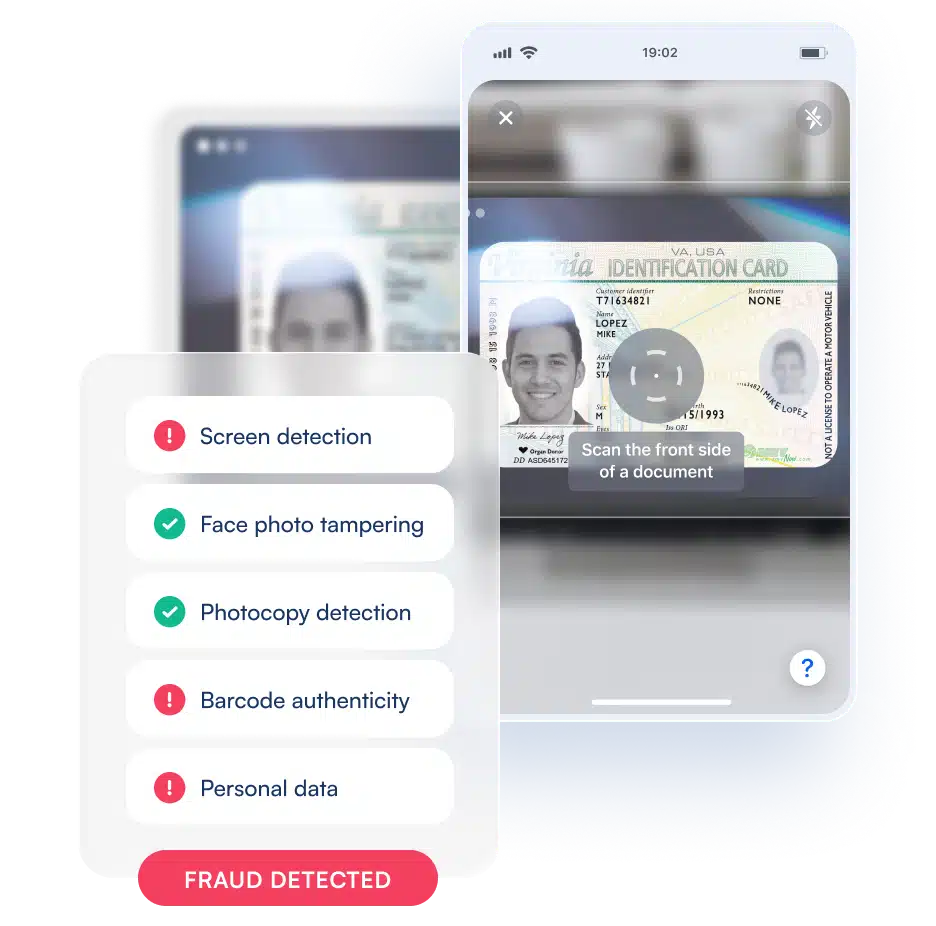
Know Your Customer (KYC) is a regulatory process used to verify the identity of customers before establishing a business relationship. It is a core requirement under AML regulations across financial services, fintech, payments, and other regulated industries.
KYC typically includes:
- Identity document verification
- Biographic data checks (name, date of birth, address)
- Sanctions and watchlist screening
- Risk scoring at onboarding
The goal of KYC is to ensure that a real person is who they claim to be at a specific moment in time, most often during account opening.
Where Traditional KYC Falls Short
While KYC remains essential, it was designed for a simpler threat landscape. Today’s fraud does not stop once onboarding is complete.
Modern challenges include:
- Synthetic identities built from real and fake data
- Account takeovers after successful onboarding
- Bot-driven fraud and automated abuse
- Reuse of compromised credentials across platforms
In many organizations, KYC still functions as a single checkpoint, leaving blind spots once a customer is approved.
What Is KYA?
Know Your Actor (KYA) expands identity verification beyond the customer to include any entity interacting with your systems, including:
- Human users
- Authorized agents
- Bots and automated scripts
- AI-driven actors operating at scale
Rather than verifying identity once, KYA focuses on continuous identity assessment across the full lifecycle of interactions.
KYA asks different questions than KYC:
- Is this the same actor who onboarded?
- Does this behavior align with expected patterns?
- Are identity, device, and payment signals consistent over time?
- Has risk changed since the last verification event?
KYA vs KYC: Key Differences
| Aspect | KYC | KYA |
|---|---|---|
| Scope | Customer identity | All actors interacting with the system |
| Timing | One-time or periodic | Continuous |
| Focus | Identity verification | Identity, behavior, and context |
| Risk Model | Static | Dynamic |
| Fraud Coverage | Onboarding fraud | Lifecycle fraud, bots, ATO, abuse |
| Audit Readiness | Baseline compliance | Ongoing control and evidence |
Why KYA Matters for Fraud Prevention
Fraudsters are no longer trying to beat one check. They are trying to exploit gaps between checks.
KYA helps address threats that KYC alone cannot:
- Synthetic identities that pass initial verification
- Legitimate accounts later used for fraud
- Payment misuse tied to identity inconsistencies
- Automated attacks that mimic human behavior
By correlating identity, behavioral, device, and payment signals over time, KYA reduces reliance on manual review and static rules that generate high false positives.
Regulatory and Audit Implications
Regulators increasingly expect organizations to demonstrate ongoing risk management, not just point-in-time compliance.
KYA supports audit readiness by:
- Providing continuous evidence of identity control
- Reducing unexplained risk exposure post-onboarding
- Demonstrating proactive fraud prevention measures
- Aligning with risk-based AML frameworks
While regulations may still reference KYC explicitly, enforcement trends show growing scrutiny of what happens after onboarding.
Organizations that rely solely on KYC often struggle to explain downstream fraud events during examinations
mpact on Onboarding Speed and Customer Experience
Traditional KYC processes frequently lead to:
- High false positive rates
- Excessive manual review
- Slower onboarding times
- Increased abandonment
KYA-enabled systems allow identity checks to operate more intelligently:
- Stronger confidence at onboarding reduces rework
- Continuous assessment lowers unnecessary friction
- Automation replaces manual escalation
The result is faster onboarding without compromising compliance or risk posture.
Final Thoughts: KYA vs KYC Is Not an Either-Or Decision
KYC remains a regulatory requirement, while KYA reflects operational reality.
Together, they form a modern identity strategy that aligns compliance, fraud prevention, and customer experience.
For compliance leaders under pressure to do more with less, the shift toward continuous, automated identity assessment is no longer optional. It’s the direction the industry is already moving.