
Digital Onboarding API with Built-in Fraud Detection

Digital onboarding is the defining moment for users who engage with modern banking and financial products. The first interaction a customer has with your platform now happens entirely online, often on a mobile device, and expectations are unforgiving. Users want speed and simplicity. Regulators demand rigor and auditability. Fraudsters are actively probing for weaknesses. A well-designed financial services digital onboarding API sits at the center of this tension, helping product teams deliver seamless experiences without sacrificing identity assurance or compliance.
For payments companies in particular, the stakes are even higher. A payments digital onboarding API must not only verify who a customer is, but ensure they are trusted enough to move money, access financial instruments, and transact at scale from day one.
What a Digital Onboarding API Actually Does
At its core, a digital onboarding API orchestrates identity verification, data capture, and risk assessment within your existing application flow. Instead of forcing users through manual reviews or disconnected third-party tools, the API embeds verification directly into signup and account creation.
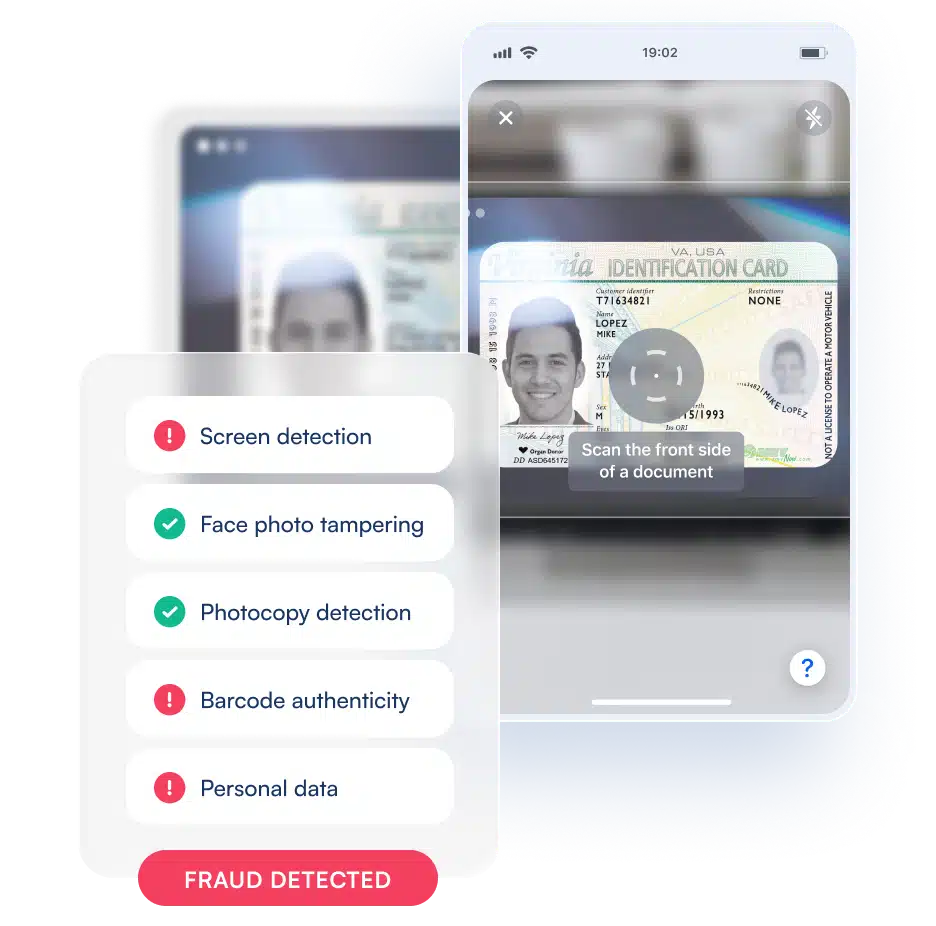
Modern onboarding APIs typically support government-issued ID verification, biometric checks such as face matching and liveness, and contextual risk signals that help detect synthetic or stolen identities. For product managers, the value lies in abstraction. The API handles complexity like document formats, edge cases, and regional compliance rules, while your team controls the user experience and business logic.
Why Conversion Suffers Without the Right Onboarding Architecture
Many onboarding flows fail not because they are too strict, but because they are poorly designed. Long wait times, unclear instructions, repeated retries, and unnecessary step-up checks all contribute to abandonment. This becomes especially visible on mobile, where camera quality, lighting conditions, and network reliability vary widely.
A high-performing digital onboarding API improves conversion by providing real-time feedback during capture, automating verification decisions where possible, and escalating only high-risk users to additional checks. Instead of treating fraud prevention and user experience as opposing forces, the API allows teams to tune friction dynamically based on risk.
Core Capabilities Product Managers Should Expect
While implementations vary, there are several foundational capabilities that consistently separate strong onboarding APIs from commodity solutions:
| Capability | Why It Matters for Digital Onboarding |
|---|---|
| API-first integration | Enables fast implementation without rewriting existing onboarding flows |
| Identity verification (ID + biometrics) | Establishes trust and prevents synthetic identity fraud |
| Configurable workflows | Allows different paths for low-risk vs. high-risk users |
| Developer documentation & SDKs | Reduces implementation time and long-term maintenance costs |
| Audit logs and reporting | Supports KYC/AML reviews and regulatory inquiries |
This combination allows teams to move quickly without locking themselves into rigid, one-size-fits-all flows.
Integrating a Digital Onboarding API Into Existing Systems
One of the most common concerns among product managers is integration complexity. In practice, a well-designed onboarding API should slot into your existing architecture with minimal disruption. This typically involves calling the API at defined points in your signup flow, passing user inputs such as images or device signals, and receiving structured verification results in return.
For payments platforms, integration often extends into downstream systems such as transaction monitoring, account provisioning, and risk scoring. The key is consistency. When onboarding outputs are structured and machine-readable, they can be reused across fraud, compliance, and customer experience teams without duplication.
Compliance Without Slowing the Business Down
Meeting KYC and AML requirements does not require bloated onboarding flows. In fact, many regulatory failures stem from incomplete or inconsistent verification rather than insufficient friction. A digital onboarding API helps by enforcing standardized checks, maintaining clear audit trails, and adapting verification depth based on jurisdiction and risk profile.
For payments use cases, this is especially important as regulators increasingly scrutinize how quickly bad actors can move funds after account creation. Strong onboarding controls reduce downstream enforcement risk while preserving a smooth path for legitimate users.
Scaling Digital Onboarding for High-Volume Growth
As products grow, onboarding traffic becomes bursty and unpredictable. Marketing campaigns, new market launches, or seasonal demand can create sharp spikes in verification volume. A production-ready digital onboarding API must support horizontal scaling, parallel processing, and intelligent load balancing to maintain performance under pressure.
From a product perspective, scalability is not just a technical concern. Slow onboarding during peak moments directly impacts revenue, brand perception, and customer trust. APIs that are built for scale ensure that growth does not come at the expense of experience or security.
Security Beyond the Compliance Checklist
While regulatory compliance sets a baseline, modern onboarding APIs go further by embedding security into every layer of the workflow. This includes end-to-end encryption for sensitive data, strict access controls for internal users, and detailed audit logging for every verification decision.
Equally important is resilience against evolving fraud tactics. As generative AI lowers the barrier to creating fake IDs and synthetic personas, onboarding systems must rely on more than static rules. APIs that combine document analysis, biometrics, and behavioral signals are better equipped to adapt as attack patterns change.
How Microblink Approaches Digital Onboarding
Microblink’s digital onboarding API is designed to help product teams move faster without cutting corners. By combining document verification, biometric authentication, and risk intelligence into a single, streamlined integration, Microblink enables businesses to verify customers quickly while maintaining strong fraud defenses and regulatory alignment.
Rather than forcing rigid flows, the platform supports tailored onboarding journeys that adapt to user risk, geography, and channel. The result is higher completion rates, lower fraud exposure, and onboarding experiences that feel invisible when things are going right. To learn more, get in touch today.