
The Top Banking AML Software: Features, Differentiators, and Use Cases

Anti‑Money Laundering (AML) software is non‑negotiable for banks and regulated financial institutions — it’s the backbone of financial crime compliance. The right AML platform helps teams monitor transactions, run sanctions / PEP screening, and scale investigations. The wrong choice can leave gaps in risk detection or overburden compliance teams with false positives.
To help compliance, risk, and operations teams pick the right tool, here’s a comparison of Microblink, Flagright, Napier AI, NICE Actimize, ThetaRay, and Facctum. We detail their strengths, core capabilities, and optimal use cases.
AML Software at a Glance
| Provider | Primary Strength | Core Features | Ideal For | Pricing |
| Microblink | AI-driven identity verification + layered AML screening | Real-time ID capture, on-device liveness; PEPs & sanctions screening; adaptive image capture | Banks & fintechs needing fast onboarding + AML risk control | Quote-based |
| Flagright | No-code, AI-native transaction monitoring | Real-time + post-transaction monitoring, case management, rule builder, AI agents | Fintechs and banks needing flexible, scalable transaction monitoring | Usage-based / API-first |
| Napier AI | AI transaction monitoring + screening | 100+ AML typologies, rule sandbox, no-code rule builder, real-time screening | Institutions needing high-throughput, configurable monitoring | Quote-based |
| NICE Actimize | Enterprise-grade AML / financial crime | Transaction monitoring, behavioral analytics, case management, AI risk scoring | Large banks & global financial institutions | Enterprise / custom |
| ThetaRay | Advanced anomaly detection via AI / big data | Transaction monitoring, sanctions screening, graph analytics | Banks / fintechs needing deep insight into hidden risk networks | Quote-based |
| Facctum | Modern RegTech for financial crime compliance | AML screening, customer due diligence, payment monitoring | Neobanks, digital banks, fintechs building compliance from scratch | Quote-based |
1. Microblink
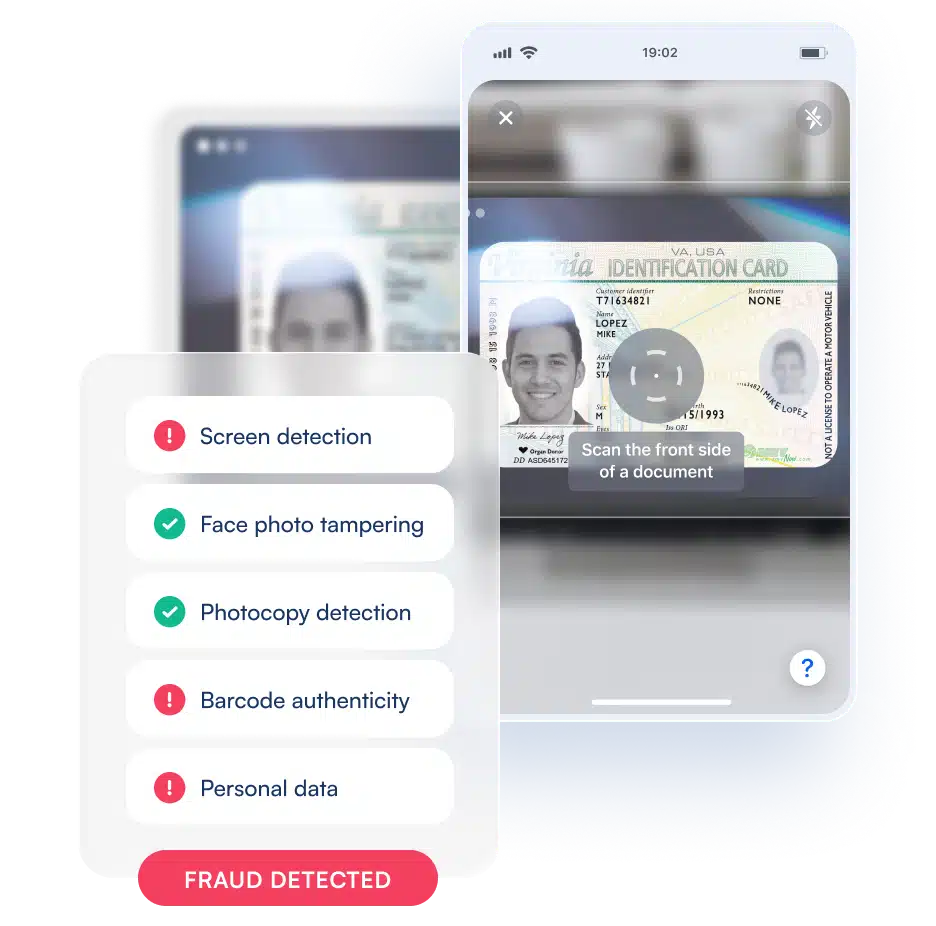
Microblink’s AML software integrates advanced AI-driven identity verification with layered AML and KYC compliance checks. This ensures that financial institutions can onboard customers quickly while maintaining regulatory standards and reducing fraud risk.
Unlike traditional AML platforms, Microblink combines real-time document verification, biometric liveness detection, and automated sanctions/PEP screening—all within a no-code orchestration layer. Teams can configure compliance workflows, decision thresholds, and automated reporting without requiring dedicated engineering resources.
Key Features
- AI-Powered Document Verification: Extracts and validates ID data from 160+ countries, reducing manual review time.
- Integrated AML/KYC Screening: Checks against PEPs, sanctions, and adverse media for real-time compliance alerts.
- On-Device Liveness & Anti-Spoofing: Ensures the person behind the document is genuine, preventing synthetic fraud.
- Adaptive Image Capture: Guides users to capture high-quality ID images under real-world conditions.
- Cross-Platform Support: Works on iOS, Android, and web.
Pricing
Not publicly listed; pricing is customized based on volume, geographies, and integration needs. Contact Microblink for a tailored quote.
Pros
- Global coverage (65M+ scans monthly)
- Lightning-fast onboarding
- Adaptive UI and high image-capture success
- No-code orchestration
- Trusted by major fintechs and banks
Cons
- Platform launched 2025, newer orchestration on the market compared to legacy technology
- No manual reviewers
- Not suitable for IAM use cases
Practical Use Cases
- Banking Onboarding: Streamline account opening while screening against AML/PEP lists.
- Fintech Platforms: Rapidly verify users while maintaining compliance in multiple jurisdictions.
- Crypto & Digital Assets: Ensure regulatory adherence during fiat onramps and payouts.
2. Flagright
Primary Strength: AI-native transaction monitoring with no-code rules and investigation workflows.
Key Features
- Real-time or post-transaction monitoring
- No-code rule builder + scenario library
- AI Agents (“Flagright AI”) for investigation / forensics
- Case Management: centralized investigations and SAR reporting
- Regulatory Filing Automation: supports SAR workflows
Pricing
Usage-based, API-first model.
Pros
- Extremely flexible, good for teams without heavy engineering resources
- Reduces false positives through AI
- Fast rule testing and backtesting via no-code simulations
Cons
- (Not explicitly stated by Flagright; but for context) rule-heavy workflows may require continuous tuning
- May be less suited for on‑device identity capture (since it’s more about transactions)
Use Cases
- Fintechs scaling payments or banking operations
- Banks wanting modern, scalable monitoring without legacy constraints
- Compliance teams seeking AI-powered investigations
3. Napier AI
Primary Strength: Scalable, AI-backed transaction monitoring and screening with a rich typology library.
Key Features
- 100+ built‑in AML typologies for transaction monitoring
- No-code rule builder + sandbox environment for testing risk rules
- Real-time transaction screening against sanctions lists
- Big data architecture: handles hundreds of millions of transactions
- Audit trail & workflow automation for alert review
Pricing
Quote-based; offers plug‑and‑play hosted or API‑first deployment.
Pros
- Configurable and powerful typology coverage
- Designed for both technical and non-technical compliance users
- Fast deployment options (sandbox + API)
Cons
- Advanced setup may require tuning for very unusual transaction patterns
- As with many sophisticated AML tools, fewer “out-of-the-box” manual reviewers (depending on customer setup)
Use Cases
- Digital banks needing robust monitoring at scale
- Institutions seeking to rapidly adjust their rules as risk patterns evolve
- Fintechs that need a cloud-first, data-rich AML platform
4. NICE Actimize
Primary Strength: Enterprise-grade, battle-tested AML solution for large banks.
Key Features
- Transaction Monitoring / Suspicious Activity Monitoring (SAM)
- AI / Behavior Analytics: detects anomalous patterns, hidden relationships
- Case Management: integrated alert-to-investigation workflows
- Cloud-native AML SaaS (e.g., Xceed) for modern deployments
Pricing
Enterprise‑custom; depends on product modules, deployment type.
Pros
- Deep domain experience and proven at large institutions
- Rich analytics + AI capabilities for minimizing false positives
- Mature case management and escalation framework
Cons
- Longer implementation / integration time compared to cloud-native startups
- Might be costly or too heavyweight for smaller fintechs
Use Cases
- Large banks with legacy systems and high transaction volume
- Multinational institutions needing robust global AML compliance
- Institutions consolidating risk, fraud, and AML functions
5. ThetaRay
Primary Strength: Advanced anomaly detection using patented AI/mathematical models.
Key Features
- AI-powered transaction monitoring (SaaS or on-prem)
- Sanctions screening / entity risk detection
- Graph analytics to detect hidden networks of money movement
- Big data architecture to scale with large transaction volumes
Pricing
Quote-based, given its enterprise and analytic sophistication.
Pros
- Excellent for uncovering sophisticated money-laundering networks
- Powerful detection of non-obvious risk relationships
- Suitable for both fintechs and regulated banks with high risk exposure
Cons
- Requires significant integration / data feed readiness
- May be more complex to tune than rule-based systems
Use Cases
- Financial institutions under high regulatory scrutiny or with complex risk models
- Use cases that require graph‑based detection (e.g., layering, network-based laundering)
- Banks scaling AI-driven compliance programs
6. Facctum
Primary Strength: Modern, modular RegTech built for financial crime prevention from onboarding through transaction risk.
Key Features
- AML screening & sanctions checks
- Customer Due Diligence / KYC integration
- Payment and transaction monitoring, including payment screening
- Risk scoring and compliance workflows tailored for digital-first orgs
Pricing
Quote-based; depends on modules used (screening, monitoring, KYC, etc.)
Pros
- Highly flexible and modular — good for fintechs and digital banks
- Modern UI and API-first design
- Scalable as business lines expand
Cons
- Less “battle-tested” in very large legacy banks compared to more established providers
- May require tuning of risk models for sophisticated fraud typologies
Use Cases
- Neobanks, challenger banks building compliance from the ground up
- Fintechs embedding AML compliance into payments infrastructure
- Digital platforms wanting to unify onboarding and transaction monitoring
How to Choose the Right AML Software
When evaluating AML platforms, consider:
- Global compliance coverage: Does it support your operational geographies?
- Fraud and risk prevention: Does it include PEP/sanctions checks, transaction monitoring, and liveness detection?
- Integration & developer tooling: APIs, SDKs, no-code editors—how quickly can you go live?
- Workflow flexibility: Can you define rules, escalation paths, and ongoing monitoring?
- Scalability & pricing: Are you prepared for high-volume transactions and growth?
- User experience: Minimize onboarding friction while maintaining compliance.
Frequently Asked Questions
What is AML software?
AML software automates monitoring, detection, and reporting to prevent money laundering and financial crime, integrating identity verification, KYC, transaction monitoring, and regulatory screening.
Which industries benefit most?
Banks, fintechs, crypto exchanges, digital wallets, and any financial institution with regulatory obligations benefit from AML software.
Is Microblink’s AML solution secure?
Yes. It uses encryption, secure APIs, and compliance with global standards such as GDPR and ISO 27001.
Why is pricing not usually public?
Pricing varies based on transaction volume, jurisdictions, features, and support, so vendors generally provide custom quotes.