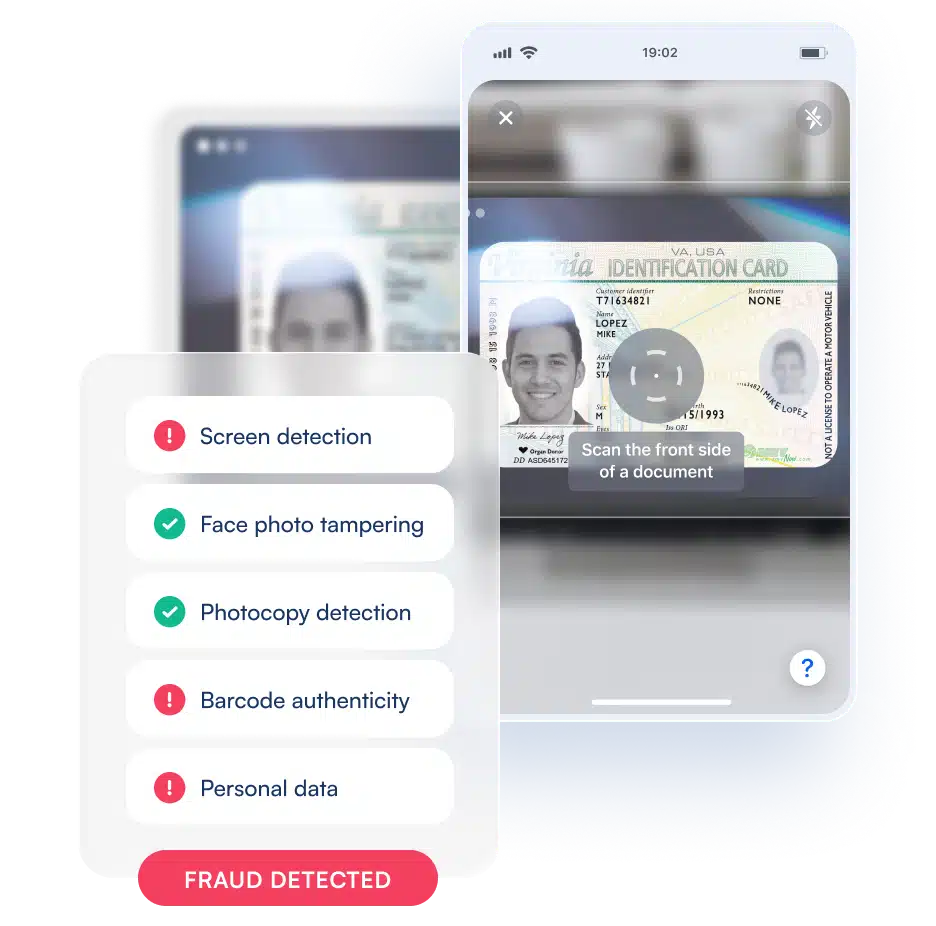

Best ID Verification Software

Choosing the right ID verification software is crucial for businesses looking to streamline onboarding, ensure regulatory compliance, and prevent fraud. The market is filled with robust solutions, each offering unique strengths, pricing models, and technology approaches. Below, we break down the top ID verification providers—highlighting their standout features, recent updates, and how they compare—so you can make an informed decision for your business needs.
Microblink
Best for: Fast, AI-powered global ID verification with transparent pricing
Microblink leverages advanced AI and machine learning to deliver fast, accurate, and user-friendly ID verification. Its modular platform supports a wide range of document types and integrates easily with web and mobile apps, making it ideal for businesses seeking a balance of automation, compliance, and a frictionless user experience. Recent updates have enhanced its AI engine for improved fraud detection, expanded document support, and introduced new SDKs for easier integration, along with more compliance features for global markets.
Key Features:
– AI-driven document and biometric verification: Instantly verifies government-issued IDs and matches selfies with high accuracy, reducing manual review workload and speeding up onboarding.
– Flexible integration options: Offers SDKs and APIs for web, mobile, and iFrame, allowing businesses to implement ID verification with minimal engineering effort and adapt to existing workflows.
– Real-time compliance checks: Continuously screens users against sanctions, PEPs, and watchlists, ensuring ongoing regulatory compliance and reducing risk exposure.
Pricing:
Transparent pay-per-verification model, with discounts for higher volumes. Pricing starts at $0.50 per approved verification, and custom enterprise packages are available. Notably, there are no charges for failed or rejected verifications, helping businesses control costs.
Pros:
– Fast and accurate AI-powered verification minimizes onboarding friction.
– Supports over 3,500 document types from 200+ countries, making it suitable for global businesses.
– Transparent pricing structure with no charges for failed verifications.
Cons:
– Limited manual review compared to some competitors, which may affect edge-case accuracy.
– Advanced compliance features may require higher-tier plans.
– Some integrations may need developer resources for full customization.
Use Cases:
– Fintech onboarding: Quickly verifies new users while meeting KYC and AML requirements, reducing fraud risk and ensuring regulatory compliance.
– E-commerce age verification: Confirms customer age for restricted goods with instant document checks, streamlining the checkout process.
– Crypto and gaming platforms: Seamlessly integrates with apps for global user verification and compliance, supporting rapid user growth.
What Makes Microblink Unique:
Microblink stands out for its speed, global coverage, and transparent pricing—charging only for successful verifications, which significantly reduces onboarding costs for businesses operating at scale.
ExampleID
Best for: Comprehensive regulatory compliance and interactive comparison tools
ExampleID provides a robust platform for digital identity verification, focusing on regulatory compliance (KYC, AML) and fraud prevention. The solution offers a wide range of verification methods, including biometric authentication, document verification, and database cross-checks, making it suitable for businesses that require a high degree of assurance and flexibility. Its content and tools are designed to help compliance officers and IT managers navigate the complex regulatory landscape.
Key Features:
– Biometric authentication: Uses facial recognition and liveness checks to ensure the person presenting the ID is genuine, reducing the risk of spoofing.
– Document verification: Supports a broad array of government-issued IDs, passports, and licenses, with automated checks for authenticity and tampering.
– Database cross-checks: Validates user data against trusted databases in real time, adding an extra layer of fraud detection.
Pricing:
Tiered pricing based on verification volume, with custom enterprise pricing and a free trial available. This flexibility allows businesses of all sizes to find a plan that matches their needs.
Pros:
– Comprehensive regulatory coverage with up-to-date legal references.
– Interactive comparison tools and expert commentary for informed decision-making.
– Scalable for businesses of all sizes.
Cons:
– Limited focus on user experience and accessibility.
– No detailed case studies or ROI data.
– Lacks coverage of emerging technologies like AI/ML in verification.
Use Cases:
– Financial services onboarding: Automates KYC checks and reduces manual workload for banks and fintechs.
– E-commerce age verification: Ensures compliance for age-restricted goods.
– Gig economy worker verification: Streamlines onboarding for platforms hiring remote or freelance workers.
What Makes ExampleID Unique:
Its in-depth regulatory section, interactive comparison table, and expert quotes set it apart for organizations prioritizing compliance and due diligence.
SecureVerify
Best for: Industry-specific solutions and global document coverage
SecureVerify is designed for businesses seeking top ID verification solutions with a focus on industry-specific compliance and scalability. The platform offers multi-factor authentication, mobile verification, and customizable workflows, making it adaptable for a variety of industries, including banking, online gaming, and marketplaces. SecureVerify’s feature-by-feature breakdown and recommendations help businesses select the right solution for their unique needs.
Key Features:
– Multi-factor authentication: Adds an extra layer of security by combining document checks with SMS, email, or app-based authentication.
– Mobile verification: Enables users to complete verification on their smartphones, improving accessibility and user experience.
– Global document coverage: Supports a wide range of international IDs, making it ideal for businesses with a global customer base.
Pricing:
Per-verification pricing, annual subscription options, and a free demo upon request. This flexibility supports both SMBs and large enterprises.
Pros:
– Global coverage for international businesses.
– Customizable workflows to fit unique business needs.
– Quick integration with existing systems.
Cons:
– Minimal technical explanation of how the technology works.
– No discussion of privacy or data protection.
– Lacks testimonials or user stories.
Use Cases:
– Banking KYC: Streamlines compliance for financial institutions onboarding new customers.
– Online gaming age checks: Ensures only eligible users access age-restricted content.
– Marketplace seller verification: Reduces fraud by verifying the identity of sellers before onboarding.
What Makes SecureVerify Unique:
Industry-specific solution recommendations and an interactive feature comparison tool help businesses quickly identify the best fit for their regulatory and operational requirements.
iDenfy
Best for: High-accuracy ID verification with 24/7 human oversight
iDenfy combines AI-powered ID verification with manual review for high accuracy and compliance, making it a strong choice for industries with strict regulatory needs. The platform covers KYC, KYB, AML, and fraud prevention, and is tailored for fintech, crypto, and e-commerce businesses. Recent updates include patented 3D liveness detection, expanded integrations for platforms like WordPress and Shopify, and enhanced ongoing AML screening.
Key Features:
– AI and manual verification: Every verification is double-checked by in-house experts, reducing false positives and increasing approval rates.
– 3D liveness and passive verification: Patented technology detects fraudulent attempts, supporting both active (user interaction) and passive (background) checks.
– Comprehensive compliance tools: Ongoing AML screening, business registry access, and customizable rules for sanctions and PEPs ensure robust compliance.
Pricing:
Pay-per-approved-verification model, with potential savings up to 75% for businesses with high rejection rates. Custom quotes are provided based on volume and industry.
Pros:
– Manual review for every verification increases accuracy.
– Supports over 3,500 document types and 200+ countries.
– Integrates with popular platforms and offers white-label SDKs.
Cons:
– Manual review can add up to 3 minutes to the process.
– Some advanced features are only in custom or enterprise plans.
– Base pricing is not transparent; requires contacting sales.
Use Cases:
– Fintech and banking: Ensures compliance and reduces onboarding costs for new customers by combining automation with human oversight.
– Online gambling: Meets strict AML and age verification requirements with ongoing monitoring and manual checks.
– E-commerce: Integrates with major platforms for seamless customer verification, reducing fraud and chargebacks.
What Makes iDenfy Unique:
Its hybrid approach—combining AI with 24/7 human supervision—delivers high accuracy and compliance, especially for industries with strict regulatory needs.
IDTechReview
Best for: Transparent pricing and user-friendly buying guides
IDTechReview offers detailed product reviews and rankings, focusing on pros, cons, and pricing transparency. The platform is tailored for small business owners, HR managers, and non-technical decision-makers who need straightforward, actionable information. Its side-by-side pros and cons, summary comparison tables, and buying guides make it easy to compare leading solutions.
Key Features:
– User-friendly dashboards: Simplifies the verification process for non-technical teams.
– 24/7 support: Ensures help is always available, reducing downtime and frustration.
– Automated document capture and fraud analytics: Streamlines onboarding and enhances fraud detection.
Pricing:
Transparent per-user or per-check pricing, with discounts for annual contracts and free trials for select products.
Pros:
– Easy to implement for non-technical teams.
– Transparent pricing with no hidden fees.
– Responsive customer support.
Cons:
– Limited focus on enterprise needs and compliance.
– Few technical details for advanced users.
– No mention of regulatory aspects.
Use Cases:
– Small business onboarding: Enables quick and easy verification for new hires or customers.
– Remote employee verification: Supports distributed teams and remote workforces.
– Subscription service sign-ups: Reduces fraud for SaaS and subscription-based businesses.
What Makes IDTechReview Unique:
Its clear, side-by-side pros and cons, transparent pricing, and user-friendly buying guides make it ideal for small businesses and non-technical buyers.
FinReg Insights
Best for: Deep compliance and security analysis for regulated industries
FinReg Insights stands out for its in-depth coverage of regulatory compliance (KYC, AML, GDPR) and security best practices. The platform is designed for compliance officers, C-suite executives, and legal teams who need to mitigate regulatory risk and protect sensitive data. Its content includes detailed compliance checklists, expert legal commentary, and a focus on risk mitigation.
Key Features:
– Audit trails and encryption standards: Ensures all verification actions are logged and data is protected to the highest standards.
– Regulatory reporting and custom compliance workflows: Helps businesses meet industry-specific requirements and streamline audits.
– Expert commentary and compliance checklists: Provides actionable insights and resources for vendor selection and ongoing compliance.
Pricing:
Enterprise custom pricing with a value-based (ROI-focused) approach. Consultation offers are available for tailored solutions.
Pros:
– Deep compliance and security analysis.
– Detailed checklists and expert legal commentary.
– Tailored compliance solutions for regulated industries.
Cons:
– No product-specific recommendations or user experience discussion.
– Few visuals or onboarding details.
– Lacks interactive elements.
Use Cases:
– Banking and finance: Mitigates regulatory risk and streamlines compliance for financial institutions.
– Healthcare compliance: Protects patient data and ensures regulatory adherence.
– Insurance onboarding: Reduces fraud and accelerates customer onboarding.
What Makes FinReg Insights Unique:
Its focus on compliance, security, and risk mitigation—supported by expert legal commentary—makes it a go-to resource for highly regulated industries.
SaaSCompare
Best for: User-driven reviews and transparent pricing for SaaS and marketplaces
SaaSCompare aggregates user ratings, reviews, and pricing breakdowns for leading ID verification vendors. The platform is ideal for SaaS founders, marketplace operators, and IT teams looking for community-driven insights and flexible integration options. Its transparent pricing tables and user-generated reviews help businesses make informed decisions quickly.
Key Features:
– API and SDK availability: Supports easy integration with a wide range of platforms and tech stacks.
– Multi-language support and reporting analytics: Enables global reach and detailed performance tracking.
– Customer support channels: Offers multiple ways to get help, from live chat to email and phone.
Pricing:
Monthly/annual subscription and pay-as-you-go options, with free trials for most vendors.
Pros:
– Wide range of integrations and flexible pricing.
– Community-driven reviews and ratings.
– Transparent pricing tables.
Cons:
– Limited compliance and regulatory content.
– Few expert insights or technical deep-dives.
– No in-depth security or fraud prevention analysis.
Use Cases:
– SaaS onboarding: Simplifies user verification for new software customers.
– Marketplace KYC: Ensures compliance and reduces fraud for online marketplaces.
– Freelancer verification: Verifies the identity of remote workers and contractors.
What Makes SaaSCompare Unique:
Its focus on user-generated reviews, transparent pricing, and community Q&A makes it a valuable resource for businesses seeking peer insights and straightforward comparisons.
Feature Comparison and Market Context
Across the ID verification software landscape, several core features are consistently prioritized: biometric and document verification, robust API/SDK integration, fraud detection analytics, and compliance support. Microblink, iDenfy, and SecureVerify lead with advanced AI-driven verification and global document coverage, while ExampleID and FinReg Insights excel in regulatory depth and compliance resources. SaaSCompare and IDTechReview differentiate themselves with user-driven reviews and transparent pricing, catering to non-technical buyers and small businesses.
The market is trending toward faster onboarding, improved user experience, and deeper AI/ML integration, though most competitors still lack comprehensive coverage of accessibility, privacy, and real-world ROI. Microblink’s transparent pricing and pay-for-success model stand out for cost-conscious businesses, while iDenfy’s hybrid AI-human approach appeals to those needing maximum accuracy. Entrust (noted above) is best suited for government and enterprise-scale deployments, offering unmatched compliance and orchestration capabilities.
Opportunities for Differentiation
- User Experience & Accessibility: Most platforms under-serve this area. Solutions that prioritize seamless onboarding, accessibility, and branding customization can capture more market share.
- Privacy & Data Protection: Adding in-depth privacy and data security content, along with certifications, will appeal to regulated industries.
- Technical Deep-Dives: Offering architectural guides, integration walkthroughs, and developer resources can attract IT teams and enterprises.
- Real-World Case Studies: Demonstrating measurable ROI and compliance outcomes through customer stories will build trust and credibility.
- Interactive Tools: ROI calculators, compliance checklists, and feature selectors can enhance the decision-making process for buyers.
By focusing on these gaps and referring back to comprehensive ID verification providers guides, vendors can better address the evolving needs of businesses navigating the complex world of digital identity verification.
Frequently Asked Questions
How do I choose the best ID verification software for my business?
Start by identifying your main needs—compliance, fraud prevention, user experience, or integration. Compare features, pricing, and support. Look for solutions that fit your industry, scale, and technical requirements.
What are the main differences between AI-powered and manual ID verification?
AI-powered verification is faster and scales easily, but may miss edge cases. Manual review adds accuracy, especially for complex documents, but can slow down onboarding. Some platforms combine both for the best results.
How does ID verification software help with regulatory compliance?
ID verification software automates KYC, AML, and GDPR checks, screens users against watchlists, and keeps audit trails. This helps businesses meet legal requirements and avoid penalties.
Is it easy to integrate ID verification tools with my existing systems?
Most leading solutions offer APIs and SDKs for quick integration with web and mobile apps. Some platforms provide low-code options or pre-built connectors for popular platforms like WordPress and Shopify.
What should I consider when comparing pricing models?
Check if pricing is per verification, per user, or subscription-based. Look for transparent fees, discounts for volume, and whether failed verifications are charged. Consider your expected usage and growth.