
Executive Interview Series: Daniel Koffler, President of New Frontiers, on How Smarter Tools Support Smarter Teams
At Microblink, our technology reduces friction, prevents fraud, and empowers businesses with smarter tools for decision-making. But systems aren’t the only place where inefficiency shows up—it also happens in people.
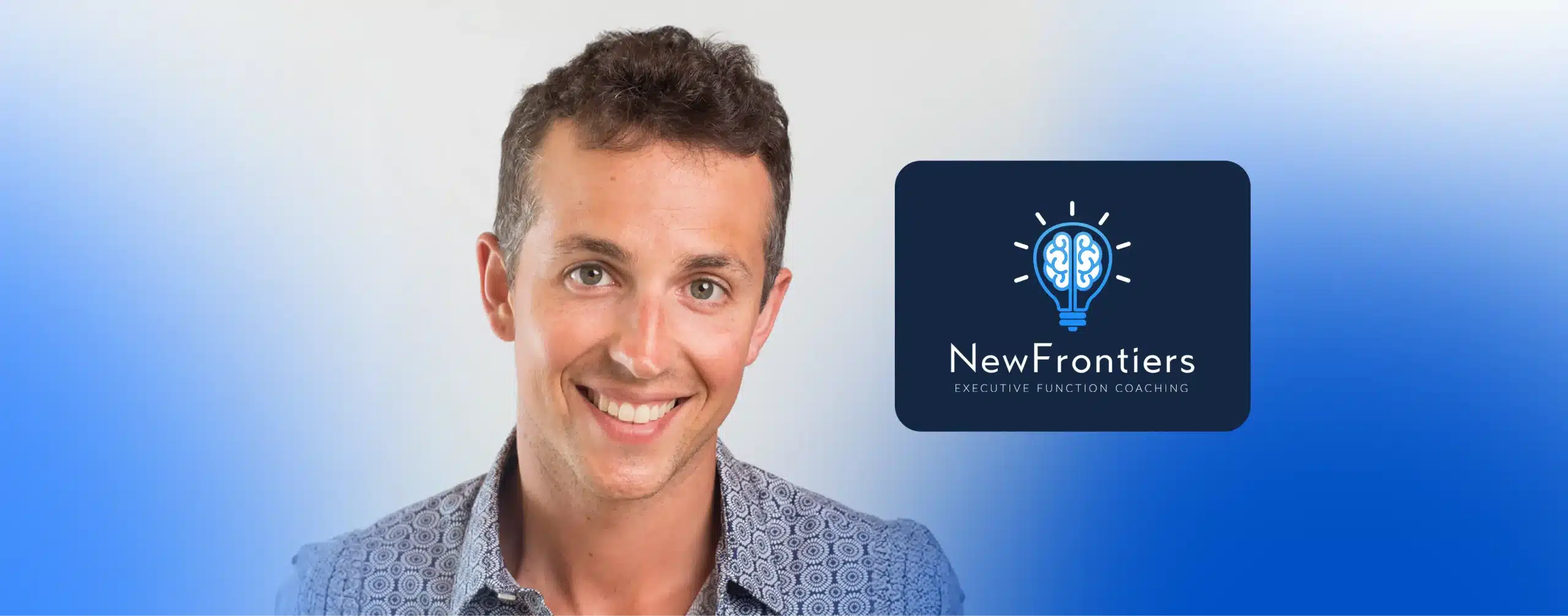
That’s why we sat down with Daniel Koffler, founder and CEO of New Frontiers Executive Function Coaching. New Frontiers is one of the nation’s leading organizations specializing in executive function and ADHD coaching, with over a decade of experience and tens of thousands of coaching hours delivered. While their breadth of work spans individuals, families, and organizations, they pride themselves on treating every case uniquely—because no two people or companies face the exact same challenges. Yet across this work, one theme consistently emerges: the efficient use of tools is often the difference between ongoing struggle and sustainable success.
In this conversation, Daniel shares why efficiency is rarely about “trying harder,” how tools and strategies complement each other, and what leaders can do to unlock higher performance across their teams.
Q: Daniel, you work with individuals and organizations. What are some common inefficiencies you see across teams?
A: Inefficiency often comes from people relying too heavily on memory or willpower. Teams may have talented individuals, but if they’re juggling complex responsibilities without reliable systems, things slip. We see breakdowns in communication, duplication of effort, and tasks stalling out because people don’t know where to start. These aren’t character flaws—they’re predictable executive function challenges. And when left unaddressed, they drain focus and energy that could be better spent on strategic, high-value work.
Q: Many companies try to solve those gaps with training or “work harder” messages. What’s missing from that approach?
A: The assumption that inefficiency is a motivation problem. Most people are motivated—they just don’t have the right supports. Self-management strategies like prioritization or time-blocking can help, but they only go so far if the underlying systems aren’t set up well. For example, if a team is managing projects across multiple spreadsheets and email threads, no amount of personal discipline will make that efficient. You need tools that reduce friction at the system level, so the strategies have somewhere to land.
Q: So in your view, efficiency comes from a mix of tools and strategies?
A: Exactly. Tools without strategies can create clutter—another platform people don’t use. Strategies without tools force people to over-rely on their brains, which are already overloaded. The real magic happens when teams use the right tools in combination with executive function strategies. For instance, introducing a project management platform is a start—but coaching people on how to break down tasks, assign ownership, and review progress ensures that the tool actually supports them. That balance creates sustainable efficiency.
Q: Microblink’s technology is designed to simplify onboarding and reduce friction in processes like identity verification. From your perspective, how can tools like this actually support employees’ executive function?
A: Tools like Microblink’s are powerful because they take the burden off of employees to remember, cross-check, or troubleshoot high-stakes details during onboarding or compliance tasks. Those processes can easily overwhelm executive function—especially working memory and task initiation. By automating identity verification or streamlining documentation, you’re not just saving time; you’re reducing the cognitive load on employees. That means they have more bandwidth to focus on creative problem-solving, relationship-building, or higher-value decision-making. In many ways, it’s the same principle we use in coaching: identify where human effort is best spent, and support the rest with reliable systems.
Q: How does this tie into adaptability, especially in fast-moving industries?
A: Adaptability is the skill that keeps everything moving when circumstances change—and they always do. The hardest part of change is often letting go of “the way I’ve always done it.” Coaching helps people practice that mindset shift. When you combine that with well-chosen tools, teams can adapt more quickly without feeling overwhelmed. A system that once felt like a burden becomes a support, because it’s flexible enough to evolve with the team’s needs.
Q: Can you share an example of how you’ve seen tools transform team performance?
A: We worked with a company where project deadlines were constantly slipping. Everyone was capable, but they were tracking tasks in scattered ways—sticky notes, inboxes, individual calendars. We helped them adopt a unified project management tool, but more importantly, we coached them on how to use it consistently: breaking projects into steps, setting reminders, and running weekly check-ins. Within a quarter, their on-time completion rate had jumped dramatically, and the team reported feeling less stressed because they no longer had to carry everything in their heads.
Q: For leaders reading this, what’s one takeaway you’d leave them with?
A: Don’t assume inefficiency is about effort. People usually care deeply about doing good work. What they need is the right balance of tools and strategies to help them do it consistently. When leaders invest in both—choosing tools that genuinely reduce friction, and supporting people in how to use them—they’re not just improving workflow. They’re building teams that are more resilient, adaptable, and focused on what matters most.