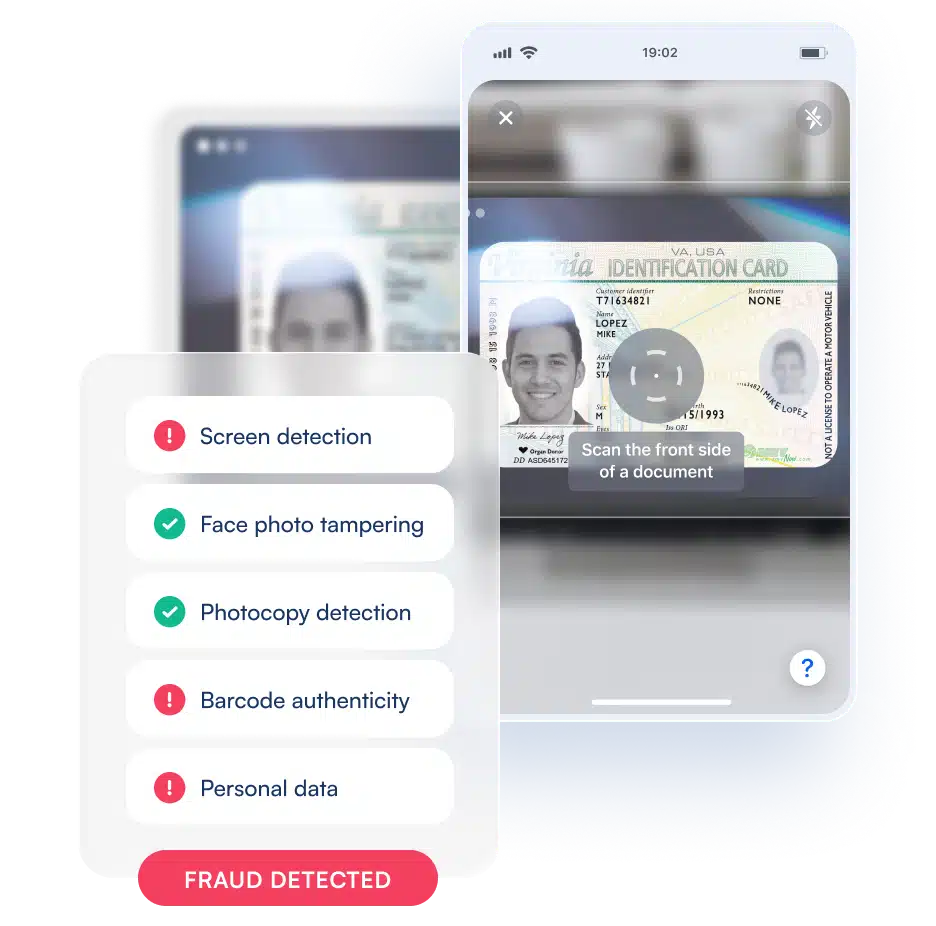

Bank Fraud Prevention: The Top 4 Platforms and Tools for 2025

In 2025, bank fraud is more sophisticated than ever—ranging from socially‑engineered payment scams to synthetic‑identity attacks at onboarding and real‑time fund diversion. For consumers, businesses, and institutional finance teams alike, the right fraud‑prevention platform can make or break the customer experience and a bank’s bottom line. Whether you’re seeking powerful onboarding identity checks, robust treasury controls, or real‑time payment fraud detection, the market offers specialist solutions for every need.
Below, we break down four leading bank fraud‑prevention platforms and tools—what they’re best at, their standout features, and who should consider each one. Use this list to compare, choose, and fortify your defenses.
Fraud Prevention Platforms: Quick Comparison
| Provider | Best For | Key Features | Differentiators | Pricing/Access |
| Microblink | Banks / Fintechs needing fast, accurate ID verification | Document scanning & data extraction (IDs); document authenticity checks; liveness & biometric matching; SDKs/APIs | High‑accuracy OCR, global coverage, on‑device/lightweight deployment | Contact vendor; usage‑based |
| Feedzai | Banks with high‑volume payments and real‑time transaction risk | Real‑time ML scoring for transactions; unified fraud & AML platform; multi‑channel monitoring | AI/ML at scale, unified fraud + risk + AML in one platform Wikipedia+3Edenred+3Cyber Security News+3 | Custom enterprise |
| Alloy | Banks needing flexible decisioning platform for onboarding & fraud | Identity decisioning, fraud prevention, compliance and risk rules automation | Unified onboarding‑to‑fraud workflow, API/low‑code focused Wikipedia | Custom/usage‑based |
| Clari5 | Banks with cross‑channel payment fraud / enterprise‑risk monitoring | Real‑time cross‑channel monitoring, network risk detection, payment fraud & AML risk links | Strong in payment/fraud risk across channels Wikipedia | Custom enterprise |
1. Microblink
Best for fast, scalable ID verification to support fraud prevention.
Microblink is an AI‑powered identity verification solution that strengthens fraud‑prevention efforts by improving the onboarding and credentialing layer. While not a full fraud‑suite, its high‑accuracy document and biometric checks make it ideal for reducing synthetic identities, account takeovers, and identity‑based entry fraud.
Key Features
- Real‑time OCR and data extraction for government‑issued IDs from 140+ countries
- On‑device biometric verification and liveness checks
- Adaptive image capture to reduce failed scans and manual review
- Lightweight SDKs for iOS, Android, and web applications
Pricing
Quote‑based; dependent on verification volume and SDK usage.
Pros
- Rapid onboarding and lower abandonment
- Strong identity assurance, reducing manual review and fraud risk
- Global ID coverage supports multi‑jurisdictional banks
- Developer‑friendly SDKs for fast integration
Cons
- Platform launched 2025, newer orchestration on the market compared to legacy technology
- No manual reviewers
- Not suitable for IAM use cases
Use Cases
- Digital account opening with identity verification
- Preventing account takeover and synthetic identity fraud at onboarding
- Global verification for cross‑border bank clients
2. Feedzai
Best for banks with high‑volume payment flows and real‑time fraud risk monitoring.
Feedzai offers a fraud and risk intelligence platform designed for large‑scale financial institutions and fintechs. Its strength lies in real‑time machine‑learning models applied to transactions, accounts, and customer behaviour, allowing consistent fraud detection across channels and geographies. eftsure+1
Key Features
- Real‑time machine‑learning scoring of transactions and accounts
- Unified fraud + AML + risk operations workflow
- Multi‑channel monitoring (payments, transfers, cards, digital)
- No‑code/low‑code rule‑configurator and model‑tuning interface
Pricing
Enterprise quote‑based; scaled by transaction volumes, geographies, and modules.
Pros
- High scalability: designed for banks handling large transaction volumes
- Unified view across fraud/risk/AML which often reduces tool‑stack complexity
- Advanced analytics and ML support evolving fraud typologies
Cons
- Because of its scale and capabilities, cost and deployment complexity can be high
- Requires strong data‑feeds, integration into payments/transaction systems
- Banks with simpler needs may find lighter tools more cost‑effective
Use Cases
- Monitoring real‑time payments and transfers for fraud indicators
- Behavioural anomaly detection across channels (web, mobile, branch)
- Consolidating fraud/risk/AML investigations into a single platform
3. Alloy
Best for banks requiring flexible, API‑centric fraud & onboarding decisioning.
Alloy is a platform designed to automate identity, fraud, compliance, and risk decisions in one workflow. It’s especially useful for banks or fintechs that want to orchestrate onboarding, ongoing monitoring, and risk decisions via rules and APIs rather than heavy legacy systems. Wikipedia
Key Features
- Flexible decision engine combining onboarding, fraud, KYC/KYB and ongoing risk monitoring
- Rule builder and workflow engine for fraud and compliance teams
- Third‑party integrations for identity, document verification, device signals
- Dashboards and analytics for monitoring fraud metrics
Pricing
Custom; often usage‑based or tiered by volume of decisions/workflows.
Pros
- Highly configurable and scalable as fraud threats evolve
- Good for embedded banking/fintech use‑cases as well as traditional banks
- Fast integration and orchestration across services
Cons
- May require internal resources to set up and maintain decision logic
- Not necessarily as heavy‑duty as full enterprise fraud platforms for very large banks
- Success dependent on quality of upstream data and signals
Use Cases
- Automated fraud decisioning at onboarding (identity + device + behaviour)
- Ongoing account‑monitoring workflows with custom escalation
- Fintech embedded banking fraud use‑cases where flexible workflows are needed
4. Clari5
Best for banks with cross‑channel fraud, payment flows, and enterprise fraud risk needs.
Clari5 offers real‑time enterprise fraud management (EFM) for banks, focusing on payment fraud, cross‑channel monitoring, and network‑based risk detection. It’s particularly well suited for institutions managing fraud across digital, branch, and payment systems. Wikipedia
Key Features
- Real‑time, cross‑channel transaction monitoring
- Network analytics to detect hidden links and fraud rings
- Payment fraud prevention (cards, digital, transfers)
- Dashboard and case‑management for fraud investigations
Pricing
Custom enterprise pricing based on volume and deployment.
Pros
- Good for complex fraud typologies and multi‑channel institutions
- Strong in linking behaviour across channels and detecting network‑based fraud
- Designed for sizeable banks with sophisticated fraud operations
Cons
- Implementation may be complex, require deep integration and data consolidation
- Smaller banks may find the platform more than needed for their scope
- Requires mature operations and data governance to get full value
Use Cases
- Real‑time fraud monitoring across digital, card, branch, and payments channels
- Detecting fraud rings or coordinated attacks (network‑based risk)
- Consolidated fraud dashboard and case‑management for enterprise banks
How to Choose the Right Fraud‑Prevention Platform for Your Bank
When selecting a fraud‑prevention solution, banks should evaluate the following:
- Area of highest risk: Are you primarily worried about onboarding fraud (identity), payment/transaction fraud, or account takeover?
- Volume & scale: How many transactions, channels, geographies? Do you need enterprise‑scale or more mid‑tier?
- Integration readiness: Can your core banking, payment systems, and data feeds provide the signals the tool needs?
- Flexibility and workflows: Do you need rule builders, APIs, custom decision‑logic, or a plug‑and‑play product?
- Analytics maturity: Are you ready for ML/AI or do you need simpler rules‑based first deployments?
- Operational readiness: Consider case‑management, investigation workflows, alert volumes, and cost of false positives.
Often, a best‑practice approach involves combining a strong identity verification layer (e.g., Microblink) and a transaction/fraud analytics platform (e.g., Feedzai or Clari5). Pair that with flexible decisioning via a platform like Alloy, and you’ll have a well‑rounded fraud‑prevention stack.
Frequently Asked Questions
What is the most effective way to prevent synthetic identity fraud during onboarding?
Use advanced identity verification tools that combine document scanning, biometric liveness, device intelligence, and cross‑referenced signals. Tools like Microblink provide high‑accuracy identity assurance—an essential first step in blocking synthetic identities.
How can banks balance a smooth user experience with strong fraud prevention?
Choose platforms that integrate seamlessly (SDKs or APIs), perform fraud checks in real time, and use layered decision logic (allow low‑risk flows with minimal friction, escalate only high‑risk ones). This reduces abandonment while keeping security strong.
What are the key signals for payment/transaction fraud detection?
Key signals include device/behavioral anomalies, location/time inconsistencies, known fraud ring patterns, network/peer‑link analytics (as offered by Clari5), and ML‑based scoring of transaction sequences (Feedzai covers this well).
Are these tools suitable for global banks or only domestic players?
Yes—platforms like Microblink (global ID support) and Feedzai (multi‑jurisdictional, multi‑channel) are designed for international operations. However, always verify coverage for your specific geographies and regulations.
What should I expect in terms of cost and deployment time?
Expect custom pricing for enterprise solutions; smaller/mid‑tier banks may negotiate modular usage‑based models. Deployment time depends on data integration, core system readiness, and workflow/configuration complexity—but many platforms support rapid API/SDK integration for some modules.