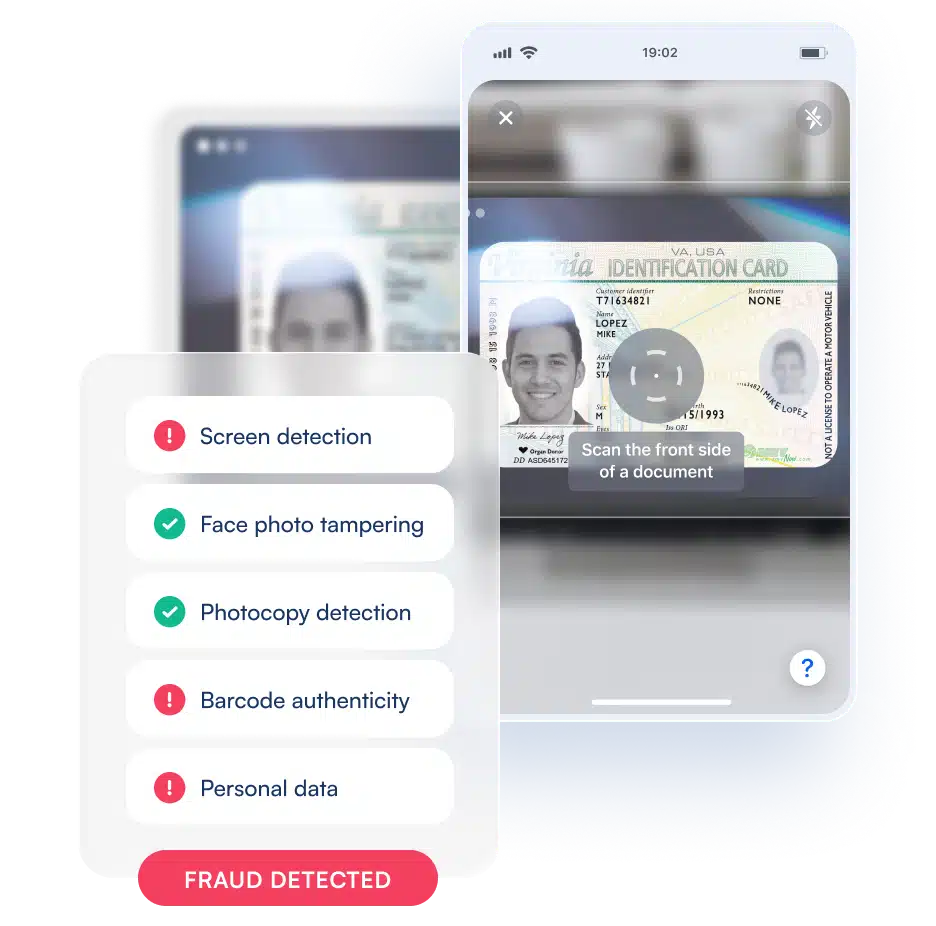

Identity Intelligence That Catches Fraud Other Systems Miss

Identity intelligence has become a foundational capability for organizations operating in high-risk, high-volume digital environments. As fraud tactics grow more sophisticated and regulatory scrutiny intensifies, traditional identity verification approaches are no longer sufficient on their own. Risk and fraud leaders are now expected to prevent synthetic and stolen identity fraud, meet strict KYC and AML requirements, and do so without introducing friction that drives legitimate customers away.
This is where identity intelligence enters the picture. Rather than treating identity verification as a single, static checkpoint, identity intelligence applies continuous analysis, automation, and contextual risk signals across the customer lifecycle. The result is stronger fraud prevention, higher compliance confidence, and onboarding experiences that move at the speed users expect.
What Is Identity Intelligence?
Identity intelligence refers to the ability to assess, verify, and monitor identity using a combination of data sources, AI-driven analysis, and behavioral context. Unlike traditional verification models that rely on one-time ID document checks or manual review, identity intelligence evaluates trust dynamically, adapting as risk signals change over time.
At its core, identity intelligence brings together government-issued document verification, biometric matching, liveness detection, device intelligence and behavioral signals, and decision automation. These components work together to determine not just whether an identity appears valid, but whether the interaction itself is trustworthy in context.
For risk teams, this approach shifts identity verification from a compliance obligation into an operational advantage.
Why Identity Intelligence Matters for Fraud Prevention
Fraud is no longer limited to simple impersonation or stolen credentials. Synthetic identities, AI-generated documents, and coordinated fraud rings now exploit gaps between onboarding, authentication, and transaction monitoring. One-time checks leave organizations vulnerable because fraudsters only need to succeed once.
Identity intelligence addresses this by combining multiple verification layers and continuously reassessing risk. Synthetic identities can be detected through document consistency checks and biometric correlation. Stolen identities are more likely to surface when behavior, device signals, or usage patterns deviate from expected norms. Automation allows these decisions to happen in real time, reducing reliance on manual review and enabling faster response to emerging threats.
Identity Intelligence and KYC/AML Compliance
Regulators increasingly expect organizations to demonstrate not just that checks were performed, but that identity risk is actively managed. Identity intelligence supports KYC and AML compliance by creating auditable, repeatable verification processes that adapt to regulatory requirements across regions.
Automated workflows reduce human error, while configurable rules and thresholds allow compliance teams to align verification rigor with risk appetite. When audits occur, identity intelligence platforms provide clear records of how decisions were made, which signals were evaluated, and how exceptions were handled.
This level of transparency is difficult to achieve with fragmented or manual identity verification processes.
Balancing Security With User Experience
One of the biggest challenges for fraud and risk leaders is balancing robust security controls with customer experience. Lengthy onboarding flows, repeated document uploads, or unnecessary manual reviews often result in high abandonment rates, especially on mobile devices.
Identity intelligence improves this balance by enabling fast, automated verification that adapts to user context. Low-risk users can complete onboarding in seconds, while higher-risk cases trigger additional checks behind the scenes. Mobile-first capture, biometric matching, and real-time decisioning allow organizations to increase security without increasing friction.
Core Capabilities of an Identity Intelligence Solution
When evaluating identity intelligence platforms, risk leaders should prioritize solutions that support both fraud prevention and operational efficiency. Key capabilities include:
- Multi-layer fraud detection, including synthetic identity detection and stolen identity prevention
- Real-time, automated verification using AI-powered document and biometric checks
- Configurable KYC and AML workflows that support audit readiness and regulatory change
- Low-friction onboarding experiences designed for mobile-first users
- Global document and biometric coverage to support international customers
Identity Intelligence vs Traditional Identity Verification
| Traditional Identity Verification | Identity Intelligence |
|---|---|
| One-time identity check | Continuous identity assessment |
| Manual review-heavy | Highly automated decisioning |
| Static rules | Adaptive, risk-based logic |
| High onboarding friction | Optimized user experience |
| Limited fraud visibility | Multi-signal fraud detection |
This shift is critical as organizations expand across channels, geographies, and use cases where identity risk does not remain static.
Privacy and Data Protection in Identity Intelligence
As identity systems become more intelligent, privacy and data protection become even more important. Modern identity intelligence solutions are designed with data minimization, user consent management, and regulatory compliance in mind. Processing sensitive signals locally when possible, limiting data retention, and aligning with frameworks like GDPR and CCPA help organizations maintain trust while meeting compliance obligations.
Privacy-aware design is not just a legal requirement; it is increasingly a differentiator for organizations operating in regulated industries.
Customization and Scalability Across Industries
Identity intelligence is not one-size-fits-all. Banks, e-commerce platforms, healthcare providers, and digital marketplaces all face different risk profiles and regulatory constraints. The ability to customize workflows, verification thresholds, and risk signals is essential for scaling identity intelligence across use cases.
A flexible identity intelligence platform allows organizations to adapt verification strategies as business models evolve, without rebuilding infrastructure or adding new vendors.
Why Identity Intelligence Is the Future of Trust
As digital interactions accelerate and fraud becomes more automated, identity verification must evolve from a point-in-time check into an intelligent, continuous system. Identity intelligence provides the foundation for this shift, enabling organizations to detect fraud earlier, meet regulatory demands, and deliver experiences that customers trust.
For risk management specialists, identity intelligence is no longer optional. It is the operating model that allows security, compliance, and growth to coexist. To learn more, get in touch today.