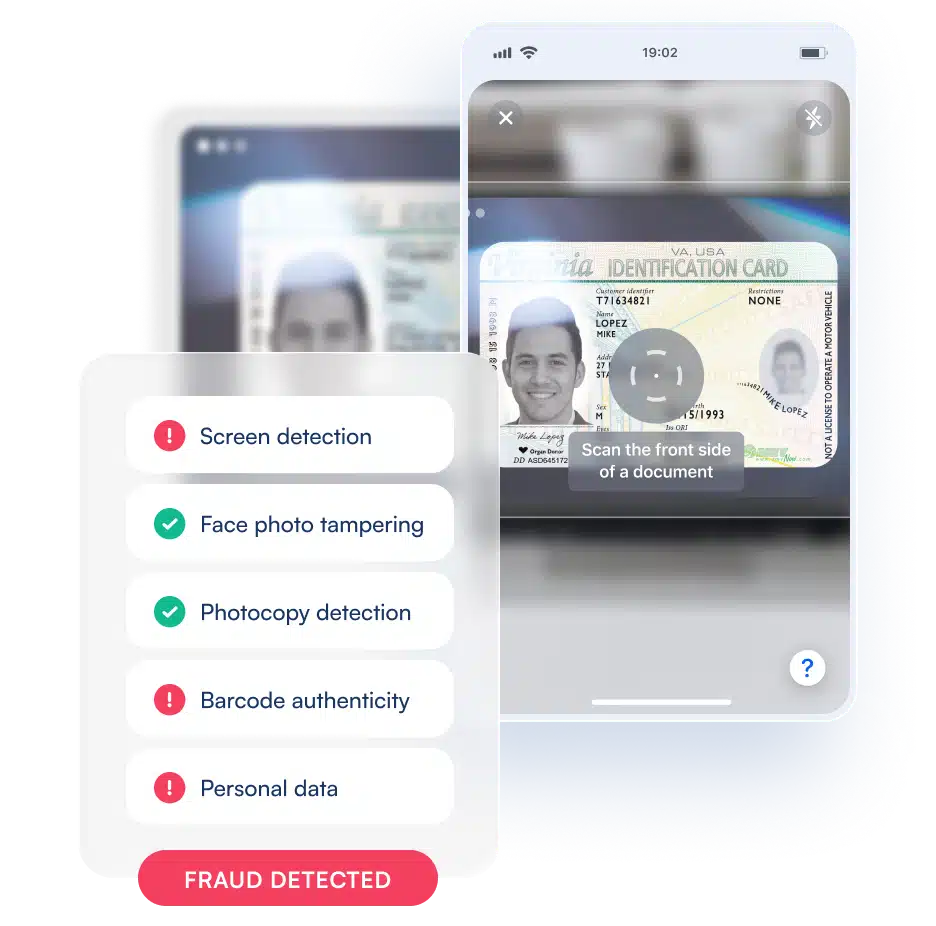

Top 6 Digital Onboarding Fraud Prevention Software: AI-Driven Security Reviews

Quick Look: Best Digital Onboarding Fraud Prevention Software
- Microblink: Best for Mobile-First ID Scanning & UX
- Resistant AI: Best for Sophisticated Document Forgery Detection
- Sardine: Best for High-Risk Fintech & Crypto Platforms
- Sumsub: Best for Global Compliance (KYC/KYB) Orchestration
- Feedzai: Best for Tier-1 Enterprise Banking & Scalability
- Unit21: Best for Operations Teams & No-Code Rule Management
Digital onboarding has evolved from a simple data entry process into a high-stakes battleground. As businesses move toward digital onboarding solutions that prioritize “digital-first” customer acquisition, the surface area for attack has expanded exponentially. Fraudsters are no longer just using stolen credit cards; they are deploying synthetic identities, high-resolution deepfakes, and AI-generated document forgeries that can easily bypass legacy verification systems.
For modern enterprises, the challenge is twofold: you must implement a “zero trust” security posture to block sophisticated bad actors, but you cannot afford to alienate legitimate customers with a clunky, high-friction signup process. High drop-off rates are the silent killers of growth, making the “friction vs. security” balance the most critical metric in fintech fraud prevention, banking, and e-commerce today. It is the key to today’s digital transformation efforts.
Modern digital onboarding fraud prevention software has risen to this challenge by leveraging advanced AI and machine learning. By analyzing document forensics, behavioral biometrics, and device intelligence in real-time, these tools can verify a user’s “digital DNA” in seconds.
In this review, we analyze the top fraud prevention solutions currently leading the market. We evaluate them based on their technical capabilities—such as liveness detection and forensic analysis—and their ability to provide a frictionless user experience that meets strict global compliance requirements (KYC/AML). Whether you are a high-growth startup needing a flexible API or a global bank looking for enterprise-grade RiskOps, this guide will help you identify the right shield for your ecosystem.
Comparison Table: Digital Onboarding Fraud Prevention Software
| Product | Compliance Features | Industry Focus | AI Capabilities | User Experience | Developer Experience |
|---|---|---|---|---|---|
| Microblink | Privacy-first on-device processing; GDPR and CCPA compliance | Mobile-first ID scanning and verification | Proprietary AI vision for ID scanning | Superior scanning speed and accuracy; Low friction | Requires SDK integration; Not a no-code solution |
| Resistant AI | Document forensics overlay for KYC systems | Document forgery detection | Advanced document forensics | Frictionless overlay integration | Requires existing KYC infrastructure to overlay |
| Sardine | Unified fraud and AML platform | High-risk fintech and crypto | Behavioral biometrics and device intelligence | Excellent social engineering detection | Complex integration for full feature utilization |
| Sumsub | Full-cycle KYC/KYB orchestration; Strong global compliance | Global compliance (KYC/KYB) | Biometric checks with liveness detection | Highly customizable workflow; Strong coverage | Drag-and-drop builder; UI customization limits |
| Feedzai | RiskOps for fraud and AML; Enterprise-level compliance | Enterprise banking | Whitebox AI with explainability | Scalable for high transaction volumes | Long implementation time; Resource-intensive management |
| Unit21 | Data orchestration for compliance operations | Operations and case management | No-code rules engine | Customizable rule testing in shadow mode | Requires third-party data integrations; Learning curve |
1. Microblink

Platform Summary
Microblink is an enterprise-grade, AI-powered Identity Operating System designed to secure digital onboarding while delivering a frictionless user experience. Built on over a decade of computer vision R&D, Microblink empowers global institutions to accelerate growth by reducing customer abandonment rates and shortening account opening times. Its proprietary AI and machine learning models provide real-time detection of advanced fraud vectors, functioning as a robust document fraud detection API that spots synthetic identities, deepfakes, and forgeries to ensure onboarding is both fast and secure.
Key Benefits
- Reduces abandonment rates by up to 40% and account opening times by up to 70%
- Real-time detection of synthetic identities, deepfakes, and document forgeries
- Supports identity documents from over 140 countries for global scalability
- Flexible, configurable workflows to meet diverse compliance requirements
- Proven Results: See how Latin ID achieves 98% identity verification success rate with Microblink.
Core Features
- AI-Powered Document Verification: Instantly scans and authenticates government-issued IDs, checking for tampering or forgery.
- Biometric Authentication & Liveness Detection: Matches real-time selfies to ID photos and ensures the user is physically present.
- Synthetic Identity & Deepfake Detection: Multi-layered AI models spot subtle inconsistencies and artifacts in synthetic identities.
- Configurable Workflows & Risk Rules: Tailor onboarding journeys based on risk profiles, product lines, or regulatory jurisdictions.
Primary Use Cases
- Secure Digital Account Opening: Automate KYC/AML checks and verify identities for banks and financial institutions using premier ID verification software.
- High-Risk Transaction Verification: Re-verify users for sensitive actions like large wire transfers or account changes.
- Streamlining Global Compliance: Meet diverse regulatory requirements and maintain audit readiness across multiple markets.
Recent Updates
- Expanded support for Arabic and Cyrillic script extraction for broader global reach.
- Enhanced deep-learning models to detect and block sophisticated screen-replay attacks.
- BlinkReceipt rebranded to Actual, reflecting expanded capabilities.
Limitations
- Primarily a capture and verification engine, not a full-stack orchestration platform.
- Performance may vary based on the quality of the user’s smartphone camera, though it is widely considered the best ID scanning app technology available.
- SDK integration requires developer resources and is not a no-code solution.
2. Resistant AI

Platform Summary
Resistant AI specializes in protecting financial automation systems by detecting sophisticated manipulation in digital documents and onboarding flows. It acts as a specialized overlay security layer, integrating with existing systems to catch forgeries and synthetic identities that standard KYC checks often miss. Ideal for Fraud Decision-Makers (FDMs) seeking to safeguard automated decisioning engines from invisible forgeries.
Core Features
- Advanced Document Forensics: Inspects PDFs and images for over 500 vectors of forgery, including metadata inconsistencies and font tampering.
- Serial Fraud Detection: Compares documents across users to identify reused templates and mass-produced forgeries.
- Frictionless Overlay Integration: Enhances existing fraud systems without requiring a full tech stack replacement.
Primary Use Cases
- Lending Application Verification: Prevents loan stacking and credit fraud by verifying income proofs.
- Tenant Screening: Validates authenticity of financial history documents for property management.
- Merchant Onboarding: Verifies business incorporation documents to prevent shell company fraud.
Recent Updates
- Enhanced detection for generative AI-created images and documents to counter deepfake documentation threats.
Limitations
- Focused on document forensics; does not offer end-to-end identity verification.
- Accuracy can be impacted by low-resolution uploads.
- Requires an existing onboarding or KYC system to be effective.
3. Sardine

Platform Summary
Sardine is a comprehensive fraud and compliance platform built for the high-risk, high-speed nature of modern fintech and crypto. It combines device intelligence with behavioral biometrics to detect fraud during onboarding and throughout the customer lifecycle, with a particular focus on social engineering and authorized push payment scams.
Core Features
- Device Intelligence & Behavior (DIBB): Profiles user intent by analyzing device telemetry and behavioral biometrics.
- Real-Time Risk Engine: Uses machine learning and rule-based logic to detect coaching or remote access tools during onboarding.
- Integrated AML and KYC: Provides a unified dashboard for fraud detection, KYC, and AML compliance.
Primary Use Cases
- Crypto Exchange Onboarding: Prevents account creation using stolen identities or social engineering.
- Neobank Account Creation: Stops synthetic identity fraud by analyzing device history and network connections.
- Instant Settlement Authorization: Assesses risk for instant funds availability decisions.
Recent Updates
- Expanded the ‘Sonar’ consortium for real-time cross-industry signal sharing to detect repeat offenders.
Limitations
- Optimized for high-risk industries; may be over-engineered for simple e-commerce.
- Deep integration required for full behavioral biometrics capabilities.
- Higher cost compared to standalone solutions.
4. Sumsub

Platform Summary
Sumsub is a full-cycle verification platform that orchestrates KYC, KYB, and transaction monitoring into a single user-friendly interface. Designed for global scalability, it automates compliance processes and offers customizable verification flows that adapt to local regulations, positioning it among the top KYC solution providers for FDMs entering new markets.
Core Features
- Customizable Verification Flows: Drag-and-drop builder for tailored onboarding workflows by region.
- Liveness and Face Match: Advanced biometric checks with 3D liveness detection.
- Non-Doc Verification: Supports database and banking data verification in compliant markets.
Primary Use Cases
- Global Marketplace Onboarding: Verifies buyers and sellers across multiple countries.
- Gambling and Betting Compliance: Enforces age verification and self-exclusion checks.
- Crypto Travel Rule Compliance: Facilitates secure exchange of beneficiary information for crypto transfers.
Recent Updates
- Enhanced deepfake detection within liveness checks to counter AI-generated synthetic faces.
Limitations
- Costs can escalate with transaction volume and premium checks.
- Technical support response times may vary.
- Visual customization of the web SDK is limited for strict brand guidelines.
5. Feedzai

Platform Summary
Feedzai is a market leader in RiskOps, providing a cloud-based platform that unifies fraud prevention and AML for large financial institutions. It excels in processing massive data volumes in real-time, offering explainable AI for regulatory transparency and high-stakes environments, making it a strong contender in the banking AML software space.
Core Features
- RiskOps Architecture: Unifies data ingestion, fraud detection, and compliance for a holistic risk view.
- Whitebox AI Models: Provides explainable risk scores and alerts for regulatory reporting.
- Real-Time TrustScore: Generates dynamic risk scores for instant onboarding decisions.
Primary Use Cases
- Tier-1 Bank Digital Transformation: Modernizes legacy fraud systems for real-time risk assessment.
- Acquirer Merchant Monitoring: Detects bust-out fraud in merchant onboarding.
- Omnichannel Fraud Prevention: Correlates data across channels to prevent cross-channel attacks.
Recent Updates
- Enhanced behavioral analysis to tackle Authorized Push Payment (APP) fraud.
Limitations
- Complexity and cost are prohibitive for SMBs.
- Lengthy integration and deployment process.
- Requires a sophisticated internal team for ongoing management.
6. Unit21

Platform Summary
Unit21 provides a flexible, data-driven infrastructure for risk and compliance, empowering operations teams with no-code tools. It centralizes fraud operations by ingesting data from multiple verification partners and enables rapid rule deployment to keep pace with evolving fraud tactics.
Core Features
- Data Ingestion & Orchestration: Centralizes onboarding signals from various sources.
- Shadow Mode Rule Testing: Allows risk teams to test new rules on historical data before live deployment.
- Case Management & Investigation: Unified view of customer actions with link analysis for streamlined manual review.
Primary Use Cases
- Fintech Compliance Operations: Aggregates alerts from KYC and monitoring vendors into a single dashboard.
- Marketplace Fraud Management: Detects account takeovers and fake listings with adaptable no-code rules.
- Crypto AML Monitoring: Monitors on-chain and off-chain data for suspicious activity.
Recent Updates
- Enhanced marketplace fraud solutions for a unified view of customer actions and reduced platform abuse.
Limitations
- Relies on third-party integrations for raw verification data.
- Building effective logic requires a strong understanding of risk parameters.
- Poorly tuned rules can result in high alert volumes and operational overload.
Looking to optimize your onboarding fraud prevention strategy? Explore how Microblink’s AI-powered platform can accelerate secure customer acquisition while maintaining compliance and a seamless user experience. For more insights on transaction monitoring, compliance, and industry trends, visit our blog.
Frequently Asked Questions
What is digital onboarding fraud, and why is it a growing concern for businesses?
Digital onboarding fraud refers to the use of deceptive tactics—such as stolen or synthetic identities, forged documents, or deepfakes—to gain unauthorized access to products or services during the account creation process. As businesses increasingly shift to digital-first customer acquisition, the attack surface expands, making it easier for sophisticated fraudsters to exploit vulnerabilities. This not only leads to financial losses and regulatory penalties but can also damage brand reputation and erode customer trust.
How do AI-driven fraud prevention solutions improve digital onboarding security?
AI-driven fraud prevention solutions leverage advanced machine learning, computer vision, and behavioral analytics to detect and block fraudulent activities in real time. These platforms can analyze document authenticity, biometric data, device intelligence, and behavioral patterns to identify subtle signs of forgery, synthetic identities, or social engineering attempts. By automating these checks, AI solutions provide a higher level of accuracy and speed compared to manual or legacy systems, reducing both fraud risk and customer onboarding friction.
What features should Fraud Decision-Makers (FDMs) look for when evaluating digital onboarding fraud prevention software?
FDMs should prioritize solutions that offer robust document verification (including liveness detection and deepfake spotting), support for global compliance standards (KYC, AML, GDPR, CCPA), flexible workflow customization, seamless integration options (API, SDK, no-code), and real-time risk scoring. Additionally, platforms that provide explainable AI, centralized case management, and the ability to orchestrate data from multiple sources can help streamline operations and ensure regulatory readiness.
How can businesses balance strong fraud prevention with a seamless user experience during onboarding?
Balancing security and user experience requires deploying solutions that minimize friction for legitimate users while maintaining rigorous fraud checks. AI-powered platforms can automate identity verification and risk assessment in seconds, allowing most users to complete onboarding quickly and easily. Customizable workflows and risk-based authentication enable businesses to apply additional scrutiny only when risk signals are detected, reducing unnecessary hurdles for genuine customers and lowering abandonment rates.
Are these digital onboarding fraud prevention platforms suitable for all industries and business sizes?
While many platforms reviewed offer broad applicability, some are optimized for specific industries or business scales. For example, solutions like Feedzai and Sardine are tailored for large financial institutions or high-risk fintech and crypto environments, while Microblink and Sumsub provide scalable options for global compliance and mobile-first onboarding. SMBs may find enterprise-grade platforms resource-intensive, so it’s important to match the solution’s capabilities and cost structure with your organization’s risk profile, regulatory needs, and technical resources.