
What Is True Rejection Rate?

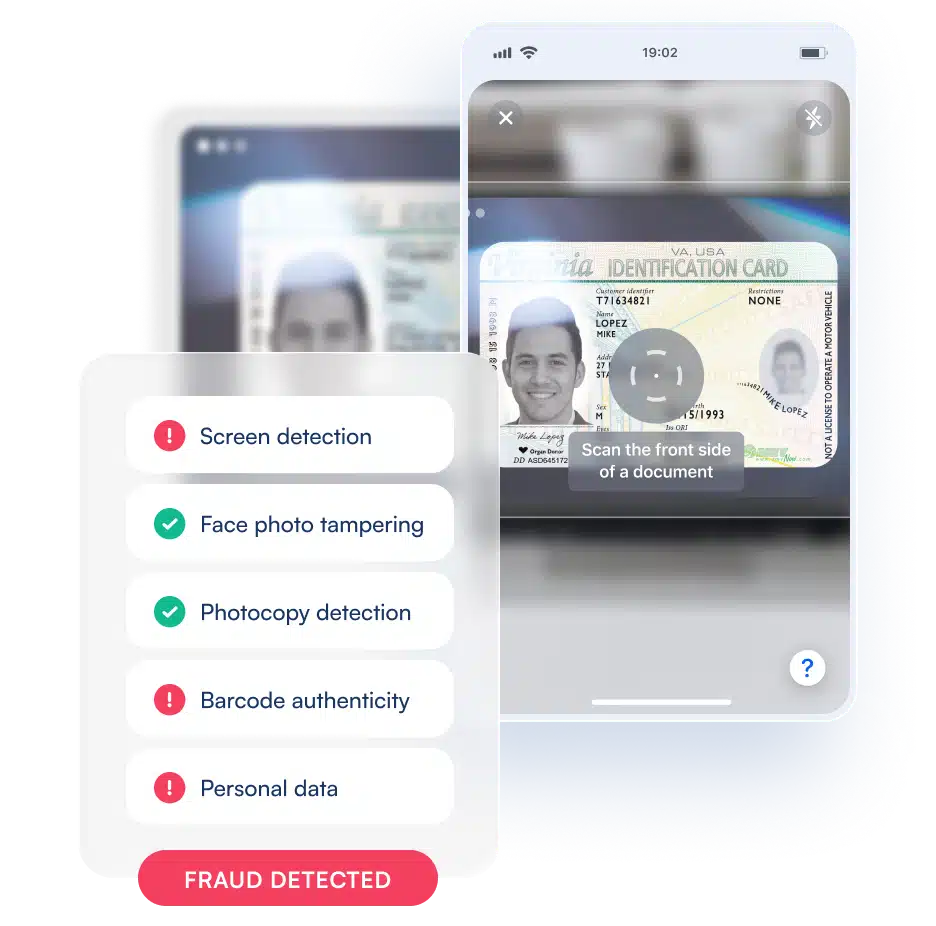
Picture this—you’re shopping online when you get notified of a suspicious login attempt to your account. Did the algorithm get it wrong, falsely flagging you? Or did it correctly catch a criminal? Understanding True Rejection Rates helps tune such fraud detection.
What if the algorithm frequently blocks legitimate shoppers? That frustrates users. But rejecting too rarely also poses dangers. Balancing security and convenience requires meticulously measuring these rates.
In this article, we’ll explore why the True Rejection Rate is a vital statistical metric. We’ll look at how to calculate it, how tuning thresholds affects tradeoffs, and techniques to optimize true rejection across diverse applications—from security to AI.
Understanding the True Rejection Rate
Both of these metrics are equally significant in the realm of quality control. Here, it refers to the system’s ability to correctly reject products that fail to meet the set standards. This is crucial in industries like manufacturing or pharmaceuticals, where the cost of accepting a substandard product can be extremely high financially and in terms of consumer safety and brand reputation.
These metrics are especially crucial in scenarios where precision is paramount but often overlooked, such as identity verification processes.
True Rejection vs. False Rejection
You might often see these terms used in the same context. This is because False Rejection Rate (FRR) and False Acceptance Rate (FAR) provide the same information as TRR and TAR—essentially interchangeable metrics.
This is because TAR and FRR are mathematical complements, as are TRR and FAR. Specifically:
- TAR = 1 – FRR
- TRR = 1 – FAR
You can calculate the other pair by knowing one pair (TAR/TRR or FAR/FRR).
Balancing these two metrics is crucial for system efficiency. Why? A system too sensitive might have a high FRR, causing inconvenience to legitimate users, while a system with a low TRR might compromise on security or quality.
Calculation of True Rejection Rate
Calculating the TRR is a critical process in assessing the efficacy of various systems, from security protocols to quality control mechanisms. This calculation involves understanding the factors that influence TRR and following a systematic process that integrates these factors.
The process for calculating TRR typically involves analyzing system logs to determine the rate at which unauthorized users are correctly rejected.
This rate is calculated by dividing the number of successful true rejections by the total number of unauthorized access attempts:
TRR = Number of true rejections / total number of invalid access attempts
A key metric often used with TRR is the Equal Error Rate (EER), which occurs when the rate of false acceptances equals the rate of false rejections. Understanding the EER can help set the optimal threshold values for a system, ensuring a balanced approach between security and usability.
Analyzing EER in conjunction with TRR is vital for system designers and operators hoping to fine-tune their systems to achieve the desired level of security and efficiency.
Applications of True Rejection Rate
TRR finds its application in various real-world scenarios beyond traditional security and biometrics.
In digital platforms, particularly in the eCommerce sector, TRR’s role is becoming increasingly critical. With the surge in online payment fraud, estimated at $41 billion globally in 2022 and expected to grow to $48 billion by 2023, TRR is essential in accurately identifying and rejecting unauthorized access to financial accounts or sensitive data.
TRR ensures that only products meeting stringent quality criteria make it to the market in industrial settings. This is particularly important in sectors like automotive or electronics manufacturing, where a single faulty component can have far-reaching consequences.
Machine learning applications of True Rejection Rate
In the field of machine learning, TRR is essential in refining algorithms and models. It ensures these systems learn to accurately identify and reject outliers or erroneous data, thus improving their decision-making capabilities. This application is particularly crucial in systems where precision is key, such as fraud detection or predictive analytics.
Role of TRR in facial recognition
Facial recognition technology heavily relies on TRR to ensure accuracy and reliability. The technology must correctly identify and grant access to authorized users while maintaining a robust defense against unauthorized access attempts.
A high TRR in these systems means they can effectively differentiate between similar facial features and prevent mistaken identity cases, which is critical for maintaining security and user trust.
TRR in security systems
In access control systems, TRR is pivotal for determining who can or cannot enter a secure area. High TRR means the system is adept at rejecting unauthorized users, thus safeguarding sensitive areas from potential intruders. This aspect of TRR is especially important in high-security environments like government buildings, data centers, and research labs.
Surveillance systems use TRR to assess their effectiveness in identifying potential threats or unauthorized activities. A reliable TRR ensures these systems can discern between normal and suspicious activities accurately, thereby reducing the rate of false alarms and enhancing overall security monitoring.
TRR in quality control
TRR plays a critical role in ensuring products meet quality standards in manufacturing. Correctly rejecting defective products is crucial for maintaining a high standard of product quality, which is essential to consumer safety and brand reputation. This aspect of TRR is especially vital in industries where precision and reliability are non-negotiable, such as automotive or electronics manufacturing.
In pharmaceutical production, TRR is crucial for ensuring every batch of products meets the required safety and efficacy standards. A high TRR here means the production line can accurately weed out any products that do not meet strict pharmaceutical standards—which goes a long way in guaranteeing patient safety and complying with regulatory requirements.
Factors affecting TRR
The TRR can be influenced by various factors, from technological aspects to environmental conditions and user-related variables. Understanding these factors is crucial in minimizing error types, such as incorrectly rejected legitimate users or incorrectly accepted unauthorized users, and maintaining a certain threshold for accuracy.
Technological factors
Technological factors affecting TRR primarily come down to sensor quality and algorithm accuracy.
High-quality sensors are the foundation of an accurate TRR. The sensor’s ability to capture detailed, nuanced data is crucial in systems like biometric scanners or quality control machinery.
Poor sensor quality can lead to a high error threshold, increasing the chances of incorrectly accepting or rejecting inputs. This is particularly vital in applications where precision is key, such as high-security access control or intricate manufacturing processes.
The precision of algorithms also directly influences TRR. Algorithms that accurately process and interpret data from sensors can significantly reduce the rate of errors.
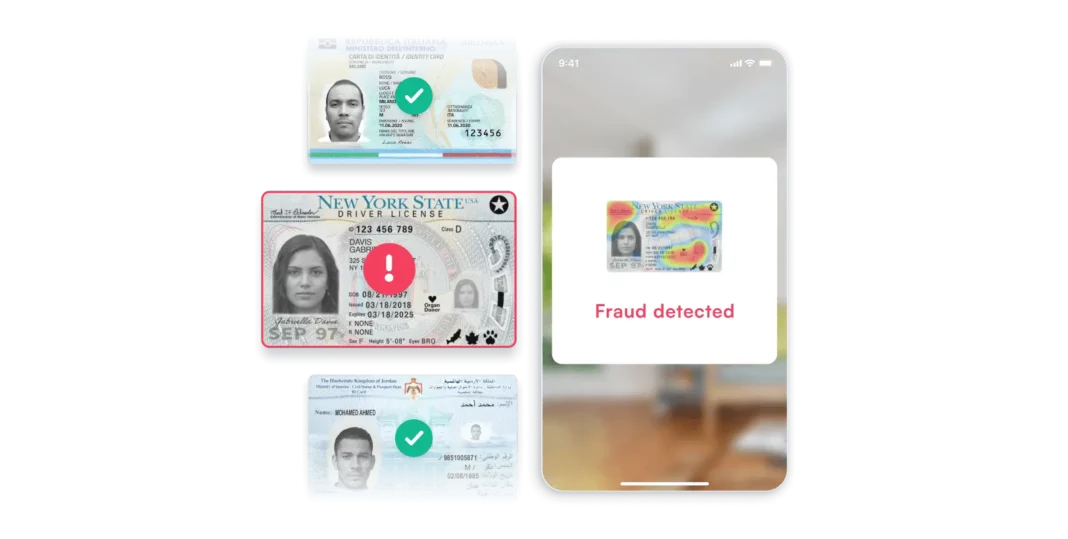
For example, the algorithm must discern between legitimate and illegitimate patterns in machine learning models to ensure high TRR. This accuracy is essential in applications like fraud detection, where the cost of incorrectly accepting a fraudulent transaction can be substantial.
Environmental factors
In systems that rely on visual data, like facial recognition, lighting conditions can greatly impact TRR. Inconsistent or poor lighting can lead to the system incorrectly rejecting authorized users or accepting unauthorized ones. Ensuring consistent, adequate lighting can help maintain these systems’ accuracy, particularly in security-sensitive areas.
For audio-based authentication systems, background noise is a significant factor affecting TRR. Systems need to be sophisticated enough to filter out extraneous sounds and focus on the relevant audio cues. High levels of background noise can lead to a higher rate of incorrectly rejecting or accepting users, which is especially problematic in environments like busy public spaces or industrial areas.
User-related factors
User behavior and consistency play a significant role in TRR. Inconsistent behavior, such as varying the angle of a face in facial recognition or changing voice modulations in voice recognition systems, can lead to higher rates of incorrect rejections or acceptances. Systems must be designed to accommodate a reasonable range of user behavior variations without compromising security.
Different user authentication methods can impact TRR in various ways. Methods like biometrics, PINs, or smart cards have their strengths and weaknesses regarding TRR.
Biometrics, for instance, while highly secure, can be affected by physical changes in the user, whereas PINs or smart cards can be lost or stolen, leading to unauthorized access. Balancing these methods to optimize TRR is crucial in designing effective security systems.
The critical role of True Rejection Rate in statistical inference
Properly calculating and analyzing TRR is critical for accurate statistical inference. As we have seen, TRR directly measures the ability of a model or system to correctly reject invalid inputs.
A high TRR ensures noise, outliers, and errors do not skew the results. Additionally, balancing TRR and TAR helps optimize the threshold for separating signal from noise.
As technology advances, the need for precise and accurate means of verification becomes more pronounced. Integrating sophisticated sensors, advanced algorithms, and a deeper understanding of environmental and user-related factors all enhance TRR. This ever-evolving comprehension enables us to construct more perceptive systems and technologies that enhance security, privacy, and dependability in the modern digital landscape.
Speaking of, opt in for a demo today for all your verification needs.