
How to Have a Successful Customer Digital Onboarding Experience

Research demonstrates that customers overwhelmingly value a business’s experience just as much as its products or services. So, if the onboarding process is tedious or frustrating, those customers aren’t going to stick around.
But what is digital onboarding? It focuses on the registration and activation of users on a platform or service, often leveraging other technologies to enhance the process.
It should be quick, engaging, and even fun. This approach is more efficient for consumers and increases ROI for businesses by streamlining operations and optimizing their methods.
Understanding the customer journey
The customer journey revolves around someone’s experiences with a brand and its offerings. And digital onboarding is a funnel—regardless of someone’s unique customer journey, everyone goes through the same onboarding process.
This means that onboarding ranks among the most critical touchpoints.
When an onboarding process is filled with pain points—like clunky manual data entry, a lack of real-time feedback, or unnecessary steps—the customer journey often stops there.
User testing—analyzing activity to see where users navigate, what they ignore, and what features they didn’t even realize existed—is crucial to identifying potential pain points and refining the digital onboarding portion of a target audience’s journey. Each test should identify clear goals, like whether users tried certain features or understood the app’s value.
This, in turn, helps optimize onboarding and ensures a smooth customer journey from start to finish, increasing conversion rates.
Designing a seamless onboarding process
Complex registration drives customers away. Account setup needs to be minimalist and simplified, with an intuitive user interface and instructions (and onboarding documents) that leave no room for interpretation.
The goal is to set up a straightforward process that is frictionless, easy to follow, and potentially even fun for potential customers.
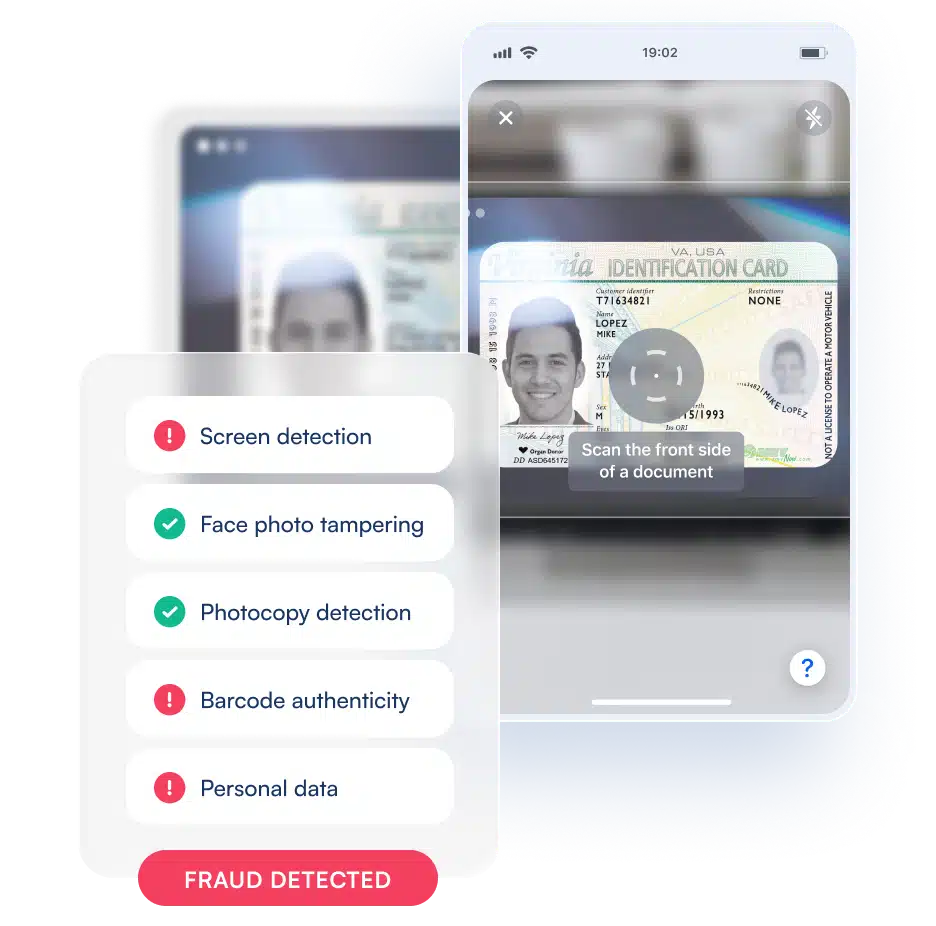
Implementing automation can help ensure a seamless digital onboarding experience for customers. Technologies such as OCR tools like BlinkID for automated form filling can significantly enhance the process, especially when combined with personalization. This improves convenience and speed, making the onboarding experience more efficient.
The technical aspect needs to be taken into account as well. Compatibility across different platforms and devices, for example, is imperative.
Leveraging technology for efficiency
Companies that do not leverage technology to customize onboarding and refine internal processes are leaving money on the table and letting users walk.
Using digital tools like Microblink’s BlinkID to implement document scanning, Blink ID Verify for document verification, or others for digital signatures is necessary to streamline and simplify the process. However, only those quickly integrating the latest technologies will stay ahead of the competition.
Take artificial intelligence, for example. Although AI chatbots have long been used to assist and support customers, the recent explosion of interest in this new technology has birthed earth-shattering changes in numerous sectors.
The chatbot market is slated to grow at a remarkable 23.3% annually, which is no wonder given that 9 out of 10 consumers rate their experiences with chatbots as neutral or positive.
No matter how you feel about AI, these numbers are difficult to ignore, especially when considering the big picture, which also includes integrating CRM with other business applications and exploring the potential of blockchain for security and transparency.
Building trust and security
The modern consumer grows increasingly aware of the risks of sharing personal data online, but businesses need to shield themselves from liability. Noncompliance with the EU’s GDPR or the growing number of state data privacy laws across the US can result in hefty consequences.
Communicating privacy policies clearly and collecting opt-ins early during onboarding activities becomes essential. Then, implementing robust data protection measures, such as multi-factor authentication, remains necessary.
Moreover, providing transparency regarding data usage and sharing allows companies to establish trust and maintain a positive reputation.
Successful businesses complement this with clear communication and responsive support, which also helps create a seamless digital onboarding process.
Measuring success and continuous improvement
Setting up a successful digital onboarding experience is an evolving endeavor that requires continuous improvement. To replicate success, one must measure it first, which is achieved by defining key performance indicators and analyzing user feedback.
Key performance indicators, or KPIs, are quantifiable measures of progress. To effectively track performance, it is necessary to define key KPIs first.
Typically, these include metrics such as:
- Retention rate
- Engagement rate
- Average session duration
- Activation rate
- Number of support tickets
Based on the insights gained from KPI analysis and user feedback, companies can tailor digital onboarding materials to deliver the ideal customer journey and meet their goals.
Customer needs and industry trends shift constantly, so companies need to stay on top of these metrics and regularly update and optimize their approach. With the proper digital onboarding tools, companies can create an engaging and efficient onboarding process that sets the foundations for long-term engagement and loyalty.
Facilitate seamless digital onboarding with Microblink
The benefits of streamlining and enhancing digital onboarding with additional technologies like Microblink’s BlinkID are clear. Speed, ease, scalability, and cost-effectiveness are just some of the main advantages organizations with an efficient onboarding program can leverage to integrate new customers.
With a global customer base, Microblink provides reliable scanning and document verification solutions powered by AI and cutting-edge technology. Flexible and highly intuitive, Microblink’s suite of document verification solutions enables businesses to onboard customers quickly, securely, and efficiently.
Contact our experts to find out more, or try our demo.