
What Exactly Is Digital Identity Theft? And How the Financial Industry Can Fight It

Digital identity theft has been a threat since the advent of the internet, but it skyrocketed to epidemic proportions during the pandemic. In fact, the number of cases doubled between 2019 and 2020, affecting approximately 1.4 million people.
This is why it’s more important than ever to have proper identity theft protection in place.
Digital identity fraud remains prevalent today and continues to take a substantial toll on those who fall victim to it. Financial institutions may face catastrophic recovery fees and legal expenses.
Businesses suffer from damaged reputations and the loss of revenue that comes with it. Meanwhile, the repercussions consumers experience can be debilitating.
Financial institutions may be profoundly affected by online identity fraud, but they’re also uniquely positioned to lead the fight against it. In this article, we’ll dive into online identity fraud, its primary manifestations, and the most up-to-date prevention strategies.
Unpacking digital identity theft
Officially defined by the Department of Justice as “all types of crime in which someone wrongfully obtains and uses another person’s personal data in some way that involves fraud or deception, typically for economic gain,” digital identity theft generally assumes one of these guises:
- Financial theft: Financial fraud involves using one’s personally identifiable information (PII)—such as their bank statements, social security number, and date of birth—to open accounts, make purchases, and more.
- Medical identity theft: Medical identity theft refers to stealing a person’s sensitive data to receive medical help, acquire prescription drugs or a medical device, and/or submit insurance claims for reimbursement.
- Synthetic identity theft: Presently characterized as the most ubiquitous type of digital identity fraud, synthetic identity theft indicates cases in which one’s stolen SSN is used with a fake identity to obtain a loan, open a fake account, or apply for government benefits.
- Deepfake identity fraud: Deepfake identity theft utilizes AI/ML to represent an individual’s “likeness,” primarily in voice and appearance, to bypass biometric authentication, extort money, and commit other fraudulent activities.
- Child identity theft: Less common (but no less sinister) is child identity theft, wherein a child’s PII is used to procure a credit card, employment, or benefits.
Cybercriminals use a variety of basic and sophisticated methods to nab personal information. The most common tactics include outright hacking, phishing scams, malware, spyware, keystroke recording, SIM jacking, social engineering, pretexting, and what’s known as credential stuffing (or amassing usernames and passwords during data breaches).
The impact of digital identity theft
The reputational and financial effects of digital identity theft on financial institutions can be devastating. Recent data put forth by LexisNexis shows that fraudulent incidents cost financial services $4.23 for every dollar lost—costs that are chiefly due to:
- Penalties and fines
- Legal expenses
- Business disruptions
Other businesses—airlines, money transfer businesses, eCommerce—have also been hit hard, to the tune of an estimated $200 billion in cumulative losses between 2020 and 2024.
For individuals, the repercussions of online identity fraud can be emotionally and financially devastating. Recouping their identities can take several months, not including the damage to their credit status.
Role of financial institutions in fighting digital identity theft
Preventing identity theft isn’t just a moral imperative for financial institutions; it’s legally required. According to the Fair and Accurate Credit Transactions (FACT) Act, financial institutions must have an explicit program in place to detect, thwart, and mitigate identity fraud.
At the same time, financial institutions can leverage existing, enhanced, and emerging measures to combat digital identity theft, namely through the following:
Protecting customer data
From PII to bank account information and credit card details, financial institutions hold a vast amount of confidential customer data. And they’re required to safeguard all of it through financial data security—a duty that has become increasingly crucial (and vulnerable) as data has moved to cloud storage and data breaches have increased.
Protecting this information is also crucial for compliance and risk management. This can be accomplished through tools common to cybersecurity in finance, such as:
- Data encryption
- Secure storage and data masking
- Anti-virus protection
Implementing robust security protocols
Shielding a customer’s identity begins before an account can even be opened. Protocols such as know your customer (KYC) are legally required in the fight against identity theft, money laundering, and other forms of financial fraud. It’s also employed to halt impersonators from opening fraudulent accounts.
Additionally, financial institutions may refine existing protocols like:
- Two-factor authentication
- Secure Socket Layer (SSL) encryption
- Employee safety awareness and training
Monitoring for suspicious activity
Under the Bank Secrecy Act (BSA), financial institutions are responsible for performing ongoing monitoring to detect and report suspicious activity to the Financial Crimes Enforcement Network (FinCEN).
With the use of ever-advancing software, banks may flag nearly any activity that’s out of the ordinary, like:
- Unusual transactions
- Mixed deposits
- Repetitive wire transfers
Financial institutions can spot and stop identity theft by finding and reporting deviations before it becomes catastrophic.
Providing support and assistance to victims of identity theft
Many banks, credit card companies, and other financial institutions have protection programs to help victims of identity theft recover money from fraudulent purchases. Personnel can also be trained specifically to help customers manage the emotional consequences of online identity fraud and recover stolen identities, which may ultimately boost customer retention.
Emerging technologies in fraud prevention
The proliferation of digital identity theft has a silver lining: Innovative security technologies are consistently surfacing.
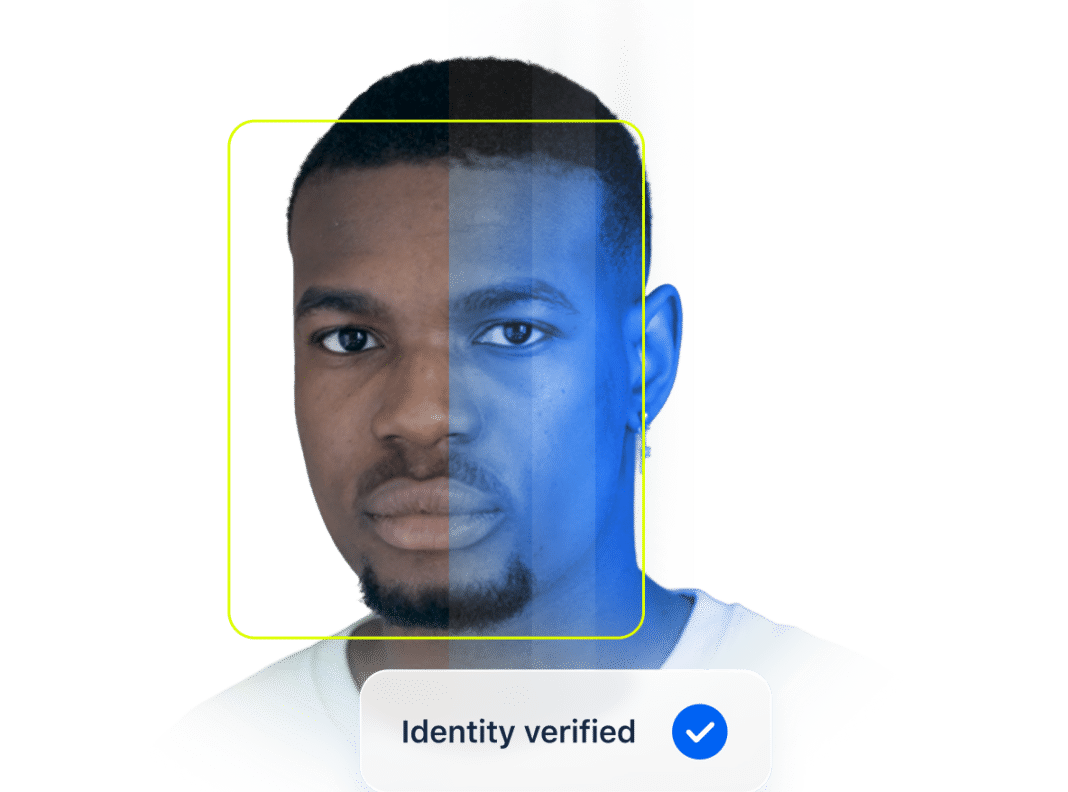
In addition to liveness detection, two of the most promising technologies are:
- AI/ML-powered risk-based analytics: As mentioned, artificial intelligence/machine learning can be used to commit fraud—but it can also be used to combat it. Equipped with the power to evaluate enormous data sets in real time across multiple devices and transactions, AI can create predictive models and pinpoint patterns—and anomalies—that may not otherwise be discernible.
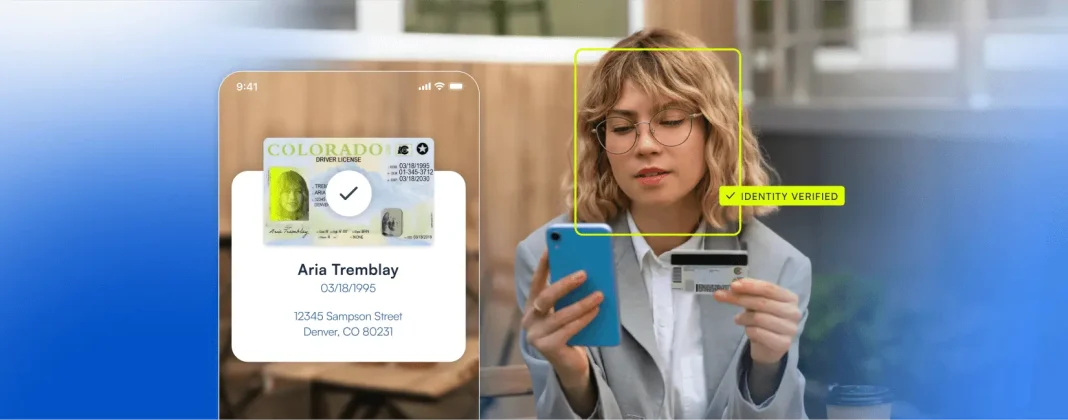
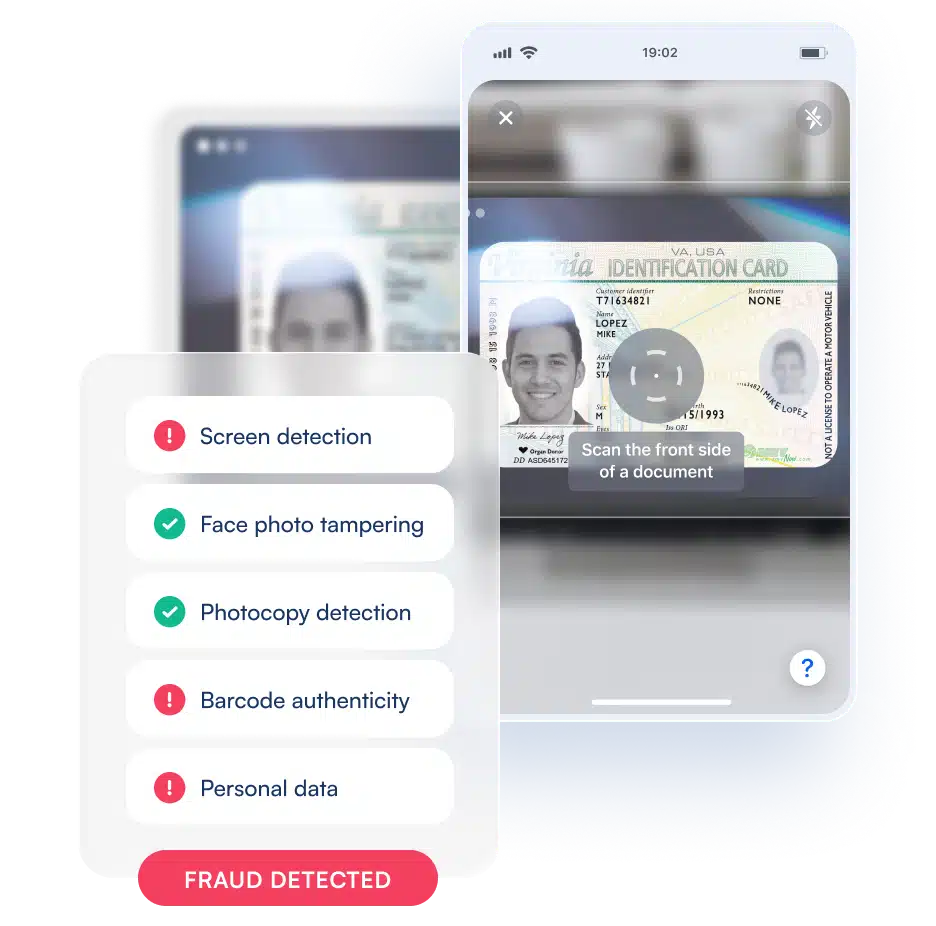
- Document verification: The rise of fraudulent documents and an upsurge in digital financial services has intensified the need for secure online identification verification—and what’s used to ensure consumers are who they say they are. AI-powered technology, such as Microblink’s BlinkID, can safely, swiftly, and accurately capture and exrtact data from identity documents. While technology like BlinkID Verify can can perform advanced fraud checks..
Implementing effective fraud prevention measures
Digital identity fraud occurs roughly every 22 seconds, wreaking havoc on consumers’ lives, the companies they conduct business with, and the financial institutions that represent them. Selecting which fraud prevention measures are right for you depends on the nature of your business, its size, and the tweaks you must make to stay ahead of the curve.
Read more on protecting against digital identity theft—and how Microblink’s technology enhances security—before giving our demo a whirl.