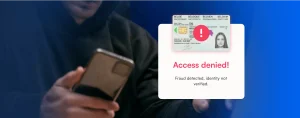
In the high-stakes environment of financial services, relying on static passwords and OTPs leaves applications vulnerable to sophisticated credential theft and AI-generated spoofing. Our AI Biometric Authentication solution replaces these legacy friction points with a sub-three-second verification engine that combines facial matching, advanced liveness detection, and «Know Your Actor» intelligence.








IDs processed every month
countries supported for verifying identities
to capture and extract data
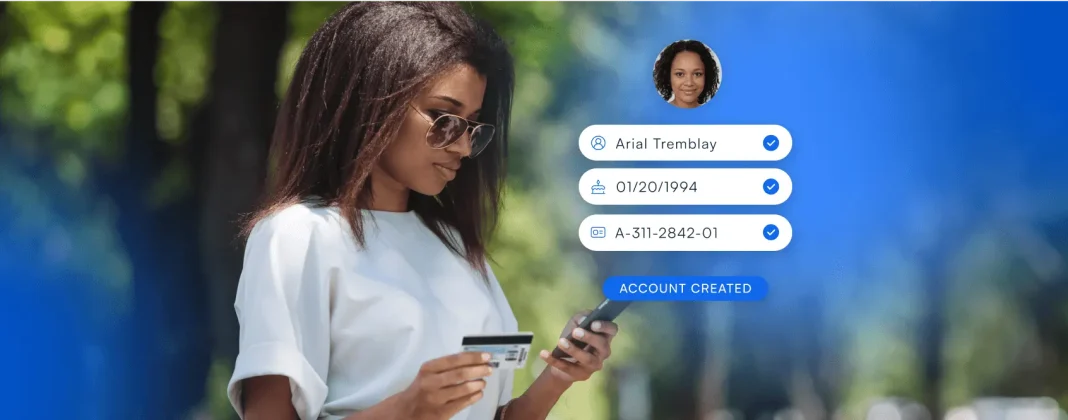
Safeguard your financial applications with Microblink’s advanced biometric authentication solutions. We empower product managers to dramatically reduce fraud losses from synthetic identities and deepfakes, while simultaneously streamlining customer onboarding for higher conversion.
Achieve seamless KYC/AML compliance and deliver a frictionless user experience with our robust liveness detection and accurate document verification. Our scalable, API-first platform ensures rapid integration and adapts to evolving AI-powered threats, protecting your enterprise at every touchpoint.


Microblink’s advanced AI, including ‘Know Your Actor’ technology, proactively detects and prevents even the most sophisticated deepfake and synthetic identity fraud attempts.
This safeguards your financial institution from evolving threats, ensuring secure customer onboarding and significant fraud loss reduction.
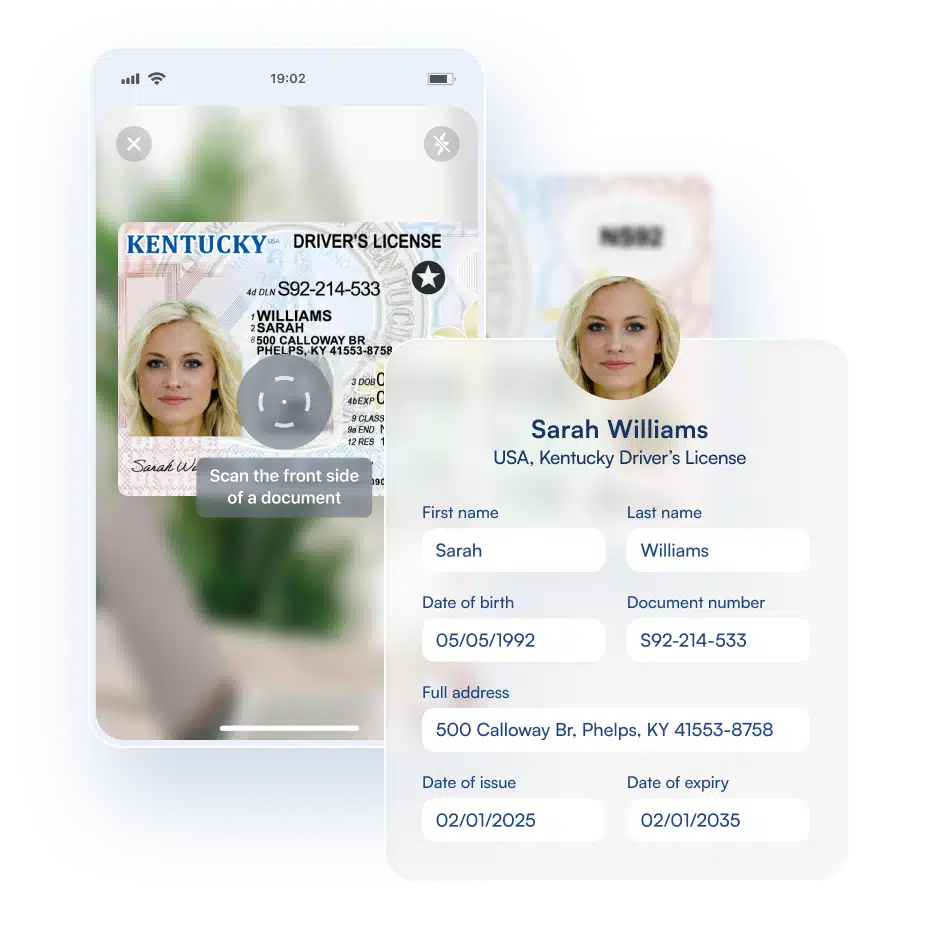
Deliver a superior customer experience with sub-3-second biometric verification, combining ID document capture, facial matching, and liveness detection.
This dramatically reduces onboarding friction, leading to higher conversion rates and faster customer acquisition in financial services.

Meet stringent KYC/AML requirements with a comprehensive biometric verification stack and the configurable Decision Command Center.
Gain granular control over identity workflows, enabling dynamic, risk-based authentication that adapts to evolving regulatory and fraud landscapes.

First Abu Dhabi Bank partners with Microblink to accelerate ID scanning during KYC verification.

Discover how Attain is transforming the consumer-permissioned future with BlinkReceipt.

Discover how BlinkID revolutionized Jurat’s user experience and contributed to their success in the digital notary industry.

Quick and accurate ID verification, ensuring a seamless and secure registration process

Meet regulatory requirements with ID document verification and non-documentary signals


Verify identity and prevent unauthorized transactions through secure document scanning
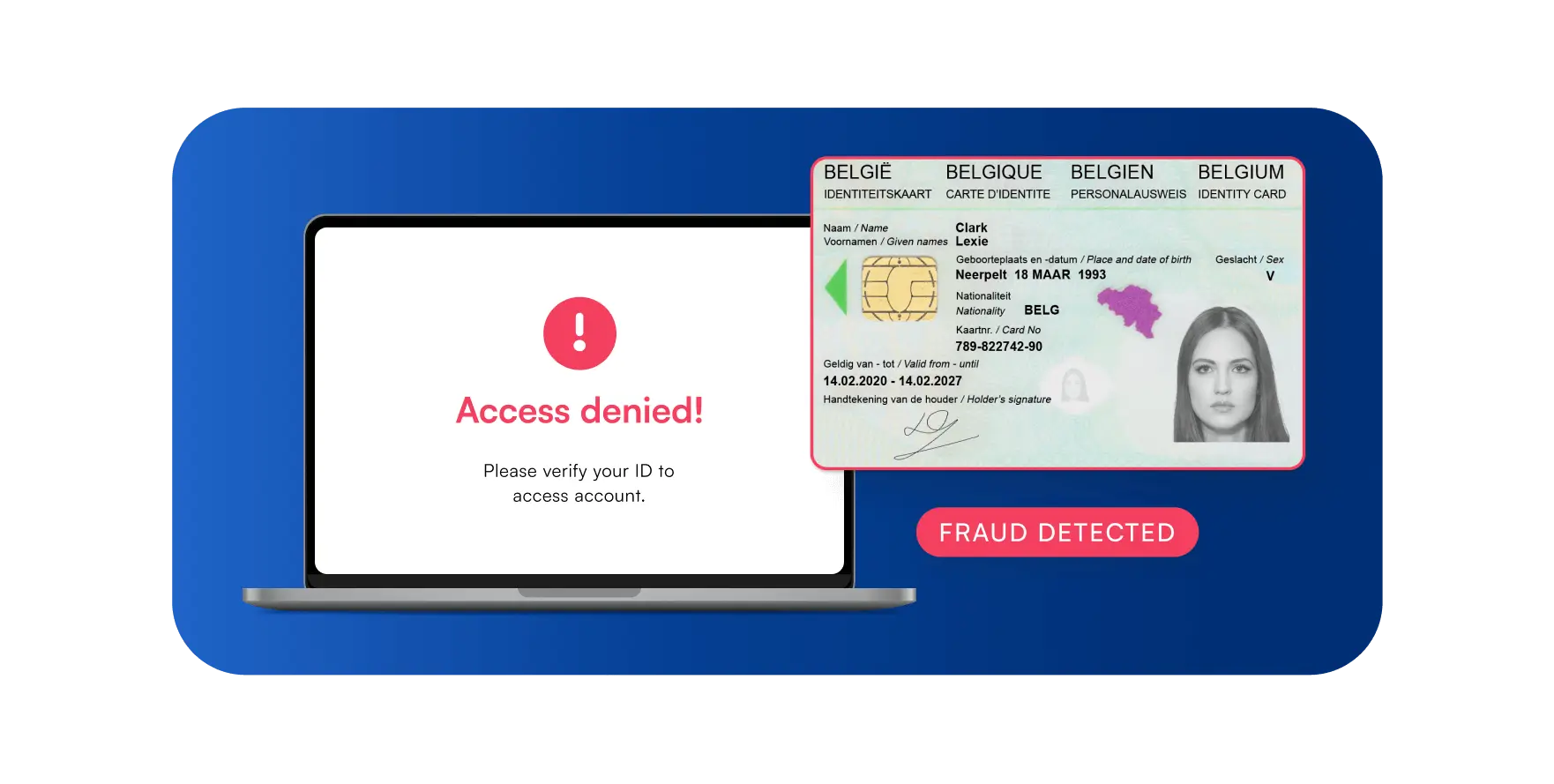
Detect stolen or synthetic identities with precision and verify IDs to prevent fraudulent account creation and transactions

Ensure compliance and prevent underage access by instantly verifying customer ages through secure ID scanning

With 12 years of expertise in computer vision R&D, Microblink has been at the forefront of AI-driven identity verification, continuously innovating to deliver fast and accurate solutions.

We pioneered AI-driven identity verification, setting the standard for fast, secure, and accurate ID scanning solutions.

We develop our AI in-house, using proprietary data and a dedicated team of machine learning specialists to ensure unmatched accuracy and performance in identity verification.
With 12 years of expertise in computer vision R&D, Microblink has been at the forefront of AI-driven identity verification, continuously innovating to deliver fast and accurate solutions.
We pioneered AI-driven identity verification, setting the standard for fast, secure, and accurate ID scanning solutions.
We develop our AI in-house, using proprietary data and a dedicated team of machine learning specialists to ensure unmatched accuracy and performance in identity verification.
Passwords and OTPs can be stolen, shared, or intercepted, which makes them highly vulnerable to account takeover. AI biometric authentication ties access to something the user is, not something they know or have. Advanced models analyze facial features, voice patterns, or behavioral biometrics in real time, making it significantly harder for fraudsters to replicate. The real advantage is that authentication becomes resistant to credential theft and phishing, which are still the primary attack vectors in most systems.
It can if the experience is not optimized. Poor lighting conditions, low-quality cameras, or overly sensitive matching thresholds can lead to false rejections and user frustration. However, when implemented correctly, biometric authentication can actually speed up login and reduce friction by eliminating the need for passwords or OTPs. The key is to benchmark success rates across devices, monitor drop-off points, and continuously tune the system to balance security with usability.
This is one of the most critical concerns. A strong AI biometric solution goes beyond simple image matching and includes liveness detection, challenge-response mechanisms, and device-level integrity checks. It should be able to distinguish between a real person and attempts using photos, videos, masks, or deepfake injections. If the system lacks robust anti-spoofing capabilities, it can be bypassed, which undermines the entire authentication process.
Biometric data is classified as highly sensitive under many regulations, which means misuse or breaches carry significant legal and reputational risk. A well-designed solution minimizes these risks by avoiding storage of raw biometric data and instead using encrypted templates or tokens. You still need explicit user consent, clear data retention policies, and transparency around how the data is used. Compliance teams should also verify whether the vendor acts as a data processor or controller, as this affects your regulatory obligations.
Biometric authentication should not operate in isolation. It needs to integrate with your existing login systems, fraud detection tools, and risk engines to enable adaptive authentication. For example, low-risk logins might pass with minimal checks, while high-risk scenarios trigger biometric verification. This requires APIs and real-time decisioning capabilities that allow biometric signals to influence access control without creating latency or breaking the user experience.
Failure scenarios are inevitable and need to be handled carefully. Users may fail authentication due to device limitations, environmental conditions, or changes in appearance. You need fallback options such as OTPs, device-based authentication, or manual verification. At the same time, fallback paths must be secure enough to prevent fraudsters from exploiting them as a weaker entry point. Designing these recovery flows is just as important as the primary authentication method.
The value depends on your risk profile and user behavior. If you are experiencing high rates of account takeover, fraud losses, or user friction from password-based systems, biometrics can provide a strong return on investment. However, implementation requires upfront effort in integration, user education, and ongoing tuning. A practical approach is to deploy biometrics as a step-up authentication method in high-risk scenarios first, measure the impact on fraud and user experience, and then expand based on results.