
Simplifying Client Onboarding Compliance with Identity Verification APIs

Companies often struggle to balance stringent KYC/AML requirements with delivering a frictionless onboarding experience. Add the growing threat of synthetic identity fraud and mounting regulatory scrutiny, and the stakes couldn’t be higher. Fortunately, automated identity verification APIs are transforming how financial institutions approach onboarding by delivering compliance, efficiency, and user-centricity all at once.
In this blog, we’ll break down the essential steps to achieve client onboarding compliance, explore the role of identity verification APIs, and explain how Microblink can help streamline your onboarding workflows.
The Compliance Challenge in Client Onboarding
For Chief Compliance Officers, VP/Directors of Compliance, and AML/KYC Officers, the onboarding process is fraught with challenges:
- How do you ensure every new client meets evolving KYC/AML regulations?
- How do you detect synthetic identities and document forgeries without bottlenecking legitimate users?
- How can you scale onboarding without ballooning operational costs?
The answer lies in adopting a risk-based approach and automating the verification of low-risk customers while allocating human resources to high-risk, complex cases. But to do this effectively, compliance teams need robust identity verification APIs that integrate seamlessly into existing workflows.
Essential Steps for Client Onboarding Compliance
1. Risk-Based Customer Due Diligence
Regulators expect financial institutions to implement risk-based onboarding processes that adjust scrutiny levels based on customer profiles. This includes:
- Customer risk scoring using behavioral and transactional data.
- Enhanced due diligence (EDD) for high-risk clients.
- Automation of routine KYC checks for low-risk profiles.
2. Identity Document Verification
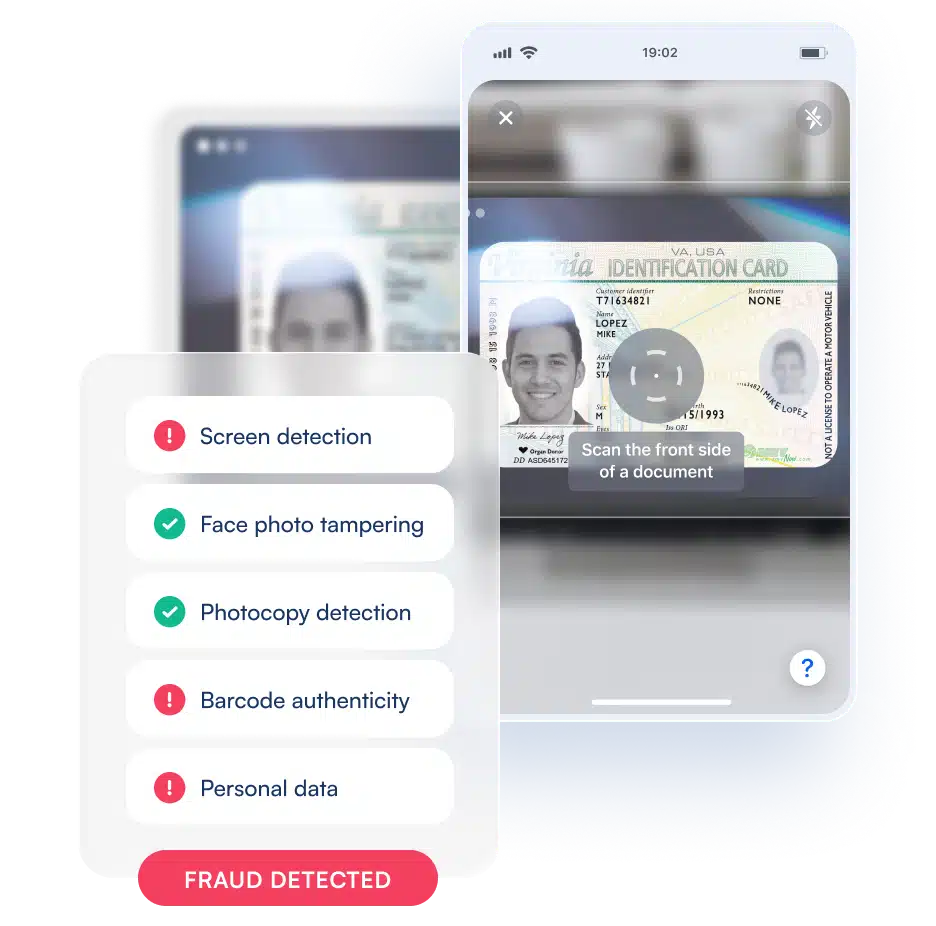
Ensuring that submitted documents are authentic and untampered is non-negotiable. Manual reviews are too slow and error-prone to keep up with sophisticated document fraud. AI-driven document verification APIs automate this process in real-time, verifying:
- Document authenticity (holograms, fonts, security patterns)
- Data extraction accuracy (OCR with field validation)
- Tampering or synthetic identity indicators
3. Ongoing Monitoring & Alerts
Compliance doesn’t end at onboarding. Periodic reviews and real-time alerts are necessary to maintain compliance throughout the customer lifecycle. Identity verification APIs integrated with fraud detection systems can:
- Continuously monitor for suspicious activity
- Trigger alerts for unusual behavior patterns
- Automate periodic KYC refreshes
4. Technology Integration with Identity Verification APIs
API-first solutions are the backbone of modern onboarding workflows. They:
- Seamlessly integrate with existing CRM and onboarding platforms
- Enable real-time identity verification at scale
- Provide auditable logs for compliance reporting
An online identity verification API should be flexible, scalable, and secure, ensuring that it adapts to evolving regulatory requirements while maintaining operational efficiency.
Common Questions To Answer
How do I know if my current onboarding process meets the latest KYC/AML requirements?
- Regularly audit your processes against updated regulatory guidelines. Automating verification with API-based solutions ensures consistency and reduces human error.
What are the financial risks of failing an audit due to gaps in identity verification?
- Non-compliance can result in hefty fines, often ranging from hundreds of thousands to millions of dollars. Beyond fines, reputational damage and operational disruptions are severe consequences.
Why are so many legitimate customers abandoning our onboarding process?
- Lengthy, manual verification steps create friction. Streamlining workflows with real-time identity verification APIs significantly reduces abandonment rates.
How can I detect forged documents or synthetic identities without a forensic expert team?
- AI-powered verification APIs analyze documents for micro-patterns, tampering signs, and cross-reference data in milliseconds, eliminating the need for manual inspection.
How do I ensure our automated systems catch fraud attempts effectively?
- Use APIs with embedded fraud analytics, anomaly detection, and real-time risk scoring. Ensure they offer detailed audit trails to demonstrate efficacy during regulatory reviews.
How APIs Help
Manual compliance processes are not only costly and time-consuming but also prone to human error. APIs for identity verification bring:
- Speed: Instant identity verification reduces time-to-onboard.
- Accuracy: Machine learning models trained on millions of document samples improve detection of forgeries and synthetic identities.
- Scalability: Handle onboarding surges without increasing headcount.
- Auditability: Automated logs simplify audit preparations and satisfy regulators.
Cost-Benefit Framework for API-Based Onboarding
| Benefit | Manual Process | API-Driven Process |
| Onboarding Time | 24-48 hours | Under 2 minutes |
| Fraud Detection Accuracy | Moderate (80-85%) | High (95%+) |
| Operational Costs | High (manual reviews) | Lower (automated) |
| Audit Readiness | Manual file collection | Real-time audit logs |
| User Experience | High abandonment rate | Seamless, real-time |
How Microblink Helps
Microblink’s identity verification API is purpose-built to help compliance leaders navigate the complexities of client onboarding. Our solution integrates seamlessly into your existing workflows, eliminating the need for costly system overhauls. With real-time document and card verification, Microblink accelerates onboarding while ensuring every identity is thoroughly checked for authenticity, tampering, and synthetic fraud indicators.
Our API also enhances operational efficiency by automating manual processes, reducing review times from hours to seconds, and providing fully auditable logs to simplify compliance reporting. This allows your team to focus on high-risk cases while maintaining full regulatory adherence. With Microblink, you can reduce operational overhead, improve fraud detection accuracy, and deliver a frictionless, trust-building user experience.
Conclusion: Optimizing Client Onboarding
Client onboarding compliance doesn’t have to be a burden. By leveraging identity verification APIs, compliance professionals can ensure regulatory adherence, detect fraud effectively, and create a seamless user experience that supports business growth. With Microblink, you gain the technology edge to transform compliance from a cost center into a strategic advantage.
Ready to streamline your onboarding processes? Get in touch today.