
Payment Processing with Fraud Detection: 2025 Buyer’s Guide and Implementation Playbook
Feature Comparison and Competitive Landscape
Payment processing with fraud detection has evolved into a sophisticated, layered discipline, blending real-time machine learning, identity verification, and chargeback management. Across the market, leading solutions like Microblink, Stripe, Adyen, PayPal, Braintree, and Authorize.Net all offer integrated fraud prevention, but their strengths, pricing, and target audiences vary widely. Below, we break down the top options, their unique features, practical use cases, and where each stands out in the 2025 landscape.
Microblink
Best for: High-accuracy identity verification and document intelligence at onboarding and step-up moments.
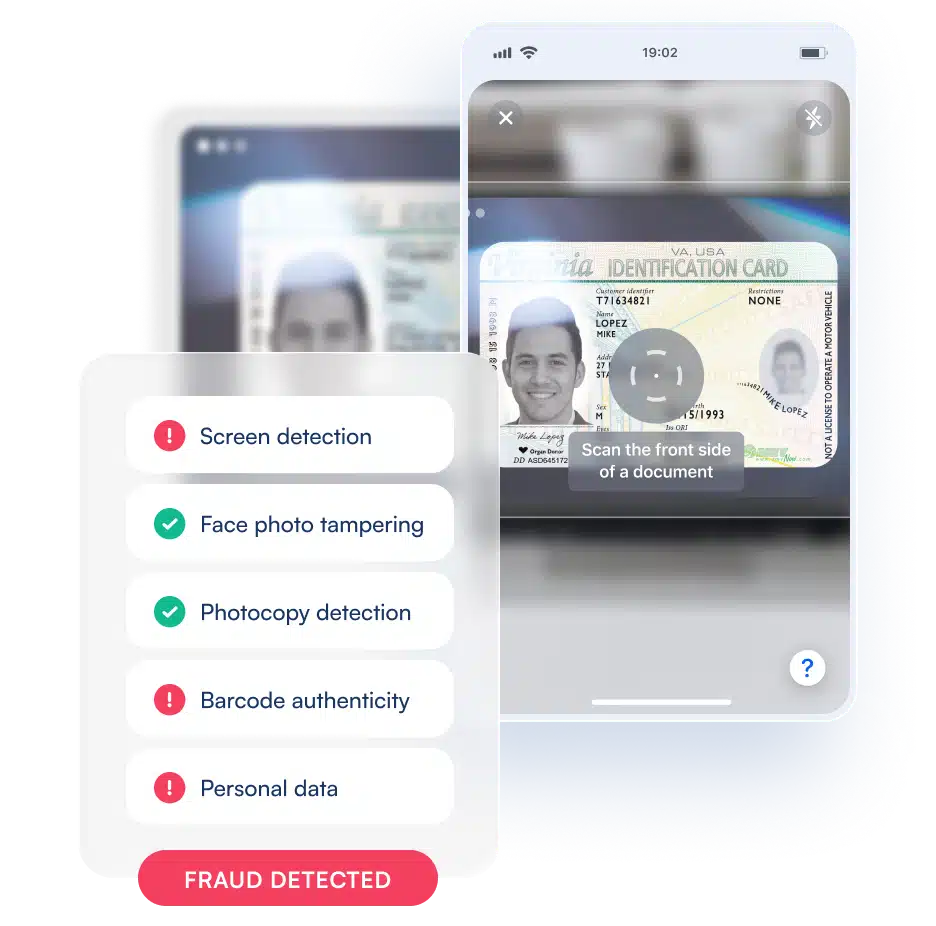
Microblink specializes in identity verification and document intelligence, making it a top choice for businesses that need to stop synthetic and first-party fraud before a payment is even attempted. Its BlinkID technology delivers high-accuracy ID document capture and OCR, supporting global IDs with MRZ/barcode parsing. Microblink offers both on-device and server-side processing, balancing speed, privacy, and compliance. Microblink’s auto-capture UX with built-in quality checks reduces friction for users, while extracted data can be piped directly into KYC/AML providers and risk engines for further analysis.
Key features include:
- High-accuracy ID capture and OCR across a wide range of government-issued documents
- Flexible deployment options for on-device or server-side processing
- Auto-capture UX that minimizes user drop-off
- Seamless integration into existing KYC/AML workflows and risk engines
Pros:
- Industry-leading accuracy in document intelligence
- Mature SDKs for iOS, Android, and web
- Reduces onboarding friction while boosting fraud prevention
Cons
- Not a full payment processor; best used alongside a payment gateway
- Requires integration for downstream KYC/AML workflows
Use cases:
- Fintech onboarding to prevent synthetic identity fraud
- Marketplace seller verification to weed out bad actors
- Age-restricted commerce with automated age checks
Unique differentiator: Microblink’s focus on document intelligence and a friction-free UX for ID verification sets it apart for critical onboarding and step-up verification moments.
Stripe
Best for: Developer-centric, global payment processing with network-informed fraud prevention.
Stripe offers a deeply integrated payment and fraud detection suite, with Stripe Radar at its core. Radar leverages machine learning trained on billions of transactions across millions of businesses, providing real-time risk scoring and customizable rules. The system is natively embedded across online checkout, mobile, and in-person (Terminal), making it a seamless upgrade for existing Stripe users. Stripe’s fraud tools minimize manual review burden and automate chargeback protection, all while maintaining high approval rates.
Key features include:
- Real-time ML fraud detection using global transaction data
- Customizable risk rules with simulation and policy versioning
- Built-in chargeback protection and dispute analytics
- Developer-friendly APIs and comprehensive documentation
Pricing: Per-transaction processing fee; core Radar included, advanced fraud protection billed per attempted transaction.
Pros:
- Seamless for existing Stripe users
- Global compliance and broad payment method support
- Quick developer onboarding with clear documentation
Cons:
- Advanced fraud features carry additional fees
- Standard resources offer limited industry-specific fraud insights
Use cases:
- E-commerce platforms protecting against CNP fraud
- Marketplaces leveraging network intelligence for buyer and seller screening
- Subscription businesses reducing churn from fraudulent sign-ups
Unique differentiator: Stripe’s network effect—drawing on data from millions of merchants—powers highly accurate fraud detection and rapid adaptation to new threats.
Stripe’s dispute management tools are covered in detail in our chargeback management guide, equipping you with best practices for handling chargebacks and representment.
Adyen
Best for: Unified, omnichannel payments and risk management for global enterprises.
Adyen’s RevenueProtect suite is built into its unified commerce platform, offering fraud detection across online, in-store, and mobile channels. Its risk engine combines behavioral analytics, customizable rules, and real-time transaction scoring, all accessible from a single dashboard. Adyen’s approach is highly verticalized, providing tailored risk guidance for industries like retail, travel, gaming, and mobility. The platform’s global scale and consolidated acquiring/risk operations make it a strong fit for large, complex businesses.
Key features include:
- Omnichannel fraud monitoring to close blind spots
- Behavioral analytics for refined risk scoring
- Customizable risk engine with adjustable thresholds
- Integrated reporting for payments and risk
Pricing: Custom, based on transaction volume and risk profile; payment and risk services often bundled.
Pros:
- Single platform for acquiring, risk, and reconciliation
- Scalable for global enterprises
- Industry-specific risk guidance
Cons:
- Opaque pricing requiring direct negotiation
- Limited public detail on underlying ML models
Use cases:
- Retailers managing fraud across physical and digital channels
- Travel and hospitality firms preventing high-value booking fraud
- Digital goods providers guarding against account takeovers
Unique differentiator: Adyen’s unified, omnichannel risk management and deep operational tooling for enterprise payments teams.
PayPal
Best for: Simple, trusted payment processing with built-in buyer and seller protection.
PayPal is synonymous with secure online payments, offering advanced fraud monitoring and comprehensive protection policies. Its real-time transaction reviews and automated alerts help merchants spot suspicious activity quickly. PayPal’s dispute resolution center streamlines chargeback handling, while global reach makes it ideal for international sellers and small businesses.
Key features include:
- Automated real-time fraud monitoring and alerts
- Integrated dispute resolution tools
- Buyer and seller protection policies
Pricing: Standard per-transaction fees; basic fraud tools included, premium protection available as an add-on.
Pros:
- Trusted brand recognized worldwide
- Quick onboarding with minimal technical setup
- Robust buyer/seller protection
Cons:
- Limited technical depth for advanced users
- Not optimized for large-scale enterprise needs
Use cases:
- Small businesses needing fast, secure setup
- Freelancers accepting payments with fraud checks
- Marketplaces protecting both sides of a transaction
Unique differentiator: PayPal’s brand trust and comprehensive protection policies make it a favorite for smaller merchants and newcomers to e-commerce.
Braintree
Best for: Developer-first payment processing with flexible, customizable fraud tools.
Braintree, a PayPal service, delivers integrated fraud protection with a strong focus on developer experience. Its fraud rules engine lets merchants craft bespoke controls, and real-time transaction monitoring flags suspicious activity instantly. Braintree’s robust APIs integrate easily with third-party fraud tools and offer detailed analytics for data-driven teams.
Key features include:
- Customizable fraud rules aligned to business logic
- Real-time transaction monitoring
- Easy third-party fraud tool integrations
Pricing: Flat per-transaction fee; no extra charge for basic fraud tools, custom pricing for advanced features.
Pros:
- Highly flexible, developer-friendly platform
- Scalable from startups to growing businesses
- Comprehensive reporting and analytics
Cons:
- Limited non-technical resources
- Sparse guidance on compliance or legal requirements
Use cases:
- Tech startups needing rapid payment and fraud control deployment
- SaaS platforms embedding fraud detection in subscription flows
- Mobile apps integrating fraud checks directly
Unique differentiator: Braintree’s developer-first approach and extensive API documentation enable granular control and fast integration.
Authorize.Net
Best for: Affordable, secure payment gateway with simple fraud protection for small businesses.
Authorize.Net offers a secure gateway with an advanced fraud detection suite, tailored to small retailers and non-technical users. Its customizable filters automate transaction screening, and built-in tools simplify chargeback management. Step-by-step onboarding guides and visual comparison tables help merchants get up and running quickly.
Key features include:
- Automated fraud screening with customizable filters
- Chargeback management tools
- Easy onboarding with visual guides and FAQs
Pricing: Monthly gateway fee plus per-transaction fee; standard fraud tools included, free trial available.
Pros:
- Affordable and user-friendly
- Customizable protection for small merchants
- Strong support resources
Cons:
- Limited advanced fraud capabilities
- Not designed for large or global operations
Use cases:
- Small retailers needing quick, secure payments
- Local service providers avoiding basic fraud
- Online stores automating chargeback processes
Unique differentiator: Authorize.Net’s simplicity and affordability make it ideal for small businesses seeking straightforward fraud protection.
Comprehensive Feature Comparison and Market Positioning
All leading payment processors now offer integrated fraud detection, but the depth and flexibility of their solutions differ:
- Machine learning and network intelligence: Stripe and Adyen lead with advanced ML models and global data networks, while Microblink excels in identity verification using AI-powered document capture.
- Customizable rules and behavioral analytics: Adyen and Braintree provide highly customizable risk engines, with Adyen adding omnichannel behavioral insights.
- Identity verification: Microblink stands out for document intelligence, a critical layer most processors lack natively.
- Chargeback management: Stripe, PayPal, and Authorize.Net offer robust dispute resolution, with Stripe’s analytics and automation highlighted in our chargeback management guide.
- Ease of integration: Stripe and Braintree are developer favorites; PayPal and Authorize.Net cater to non-technical users.
- Omnichannel and enterprise focus: Adyen’s unified risk management across all channels makes it uniquely suited for large, global brands.
Opportunities for Differentiation
- Industry-specific fraud insights: There’s room for tailored guidance by sector.
- Transparent pricing: Adyen and Braintree could publish more detailed pricing examples.
- Compliance and privacy: A gap remains in actionable resources on PCI DSS 4.0, GDPR, and PSD2/SCA—see our 3DS2 best practices guide for practical tips.
- Interactive tools and demos: Live risk assessment calculators or video walkthroughs would boost buyer confidence.
- Advanced identity proofing: Directly embedding document intelligence, as Microblink does, can further reduce synthetic and first-party fraud.
Choosing the Right Solution
Selecting the ideal payment processing and fraud detection platform depends on your business model, technical resources, and risk profile. Enterprises with complex, omnichannel needs may favor Adyen, while developer-led startups often choose Stripe or Braintree. For those prioritizing identity verification at onboarding or step-up points, Microblink leads the pack. Small businesses and non-technical teams will find PayPal and Authorize.Net accessible and effective for basic protection.
For more on optimizing your fraud stack, see our guides on chargeback management and 3DS2 best practices.
Ready to build a layered fraud strategy without tanking conversion?
Frequently Asked Questions
How do payment processors detect and prevent fraud?
Payment processors use machine learning, real-time transaction monitoring, customizable rules, and identity verification to detect suspicious activity and block fraudulent payments before they’re completed.
What’s the difference between basic and advanced fraud protection?
Basic fraud protection offers automated transaction screening and alerts. Advanced solutions add machine learning, behavioral analytics, customizable rules, and deeper integration with KYC/AML workflows for higher accuracy and flexibility.
Which solution is best for onboarding and identity verification?
Microblink specializes in high-accuracy ID document capture and verification, making it ideal for onboarding and step-up verification to prevent synthetic and first-party fraud.
Can I integrate these fraud tools with my existing systems?
Yes. Most providers, like Stripe, Braintree, and Microblink, offer robust APIs and SDKs for easy integration with your current onboarding, payment, and compliance workflows.
How do I choose the right payment processor with fraud detection?
Consider your business size, technical resources, risk profile, and compliance needs. Enterprises may prefer Adyen, developers often choose Stripe or Braintree, while small businesses benefit from PayPal or Authorize.Net.