
IATA One ID: How Airlines Verify Passenger Identity Faster and Safer

Air travel is undergoing a fundamental shift. Passengers increasingly expect seamless, digital-first experiences, while airlines and airports face growing pressure to strengthen security, prevent fraud, and meet regulatory requirements. At the center of this transformation is IATA One ID.
IATA One ID is more than a standard. It represents a new model for how identity is managed across the passenger journey, enabling travelers to move through airports using a single, trusted digital identity.
What Is IATA One ID?
IATA One ID is an initiative from the International Air Transport Association (IATA) designed to enable frictionless travel using a single digital identity.
Instead of repeatedly presenting documents at different checkpoints, passengers verify their identity once and then move through the airport using biometric recognition and digital credentials.
This creates a “biometric-enabled journey”, where identity becomes the key to accessing every stage of travel, from booking to boarding.
Why IATA One ID Matters for Airlines and Airports
Airlines and airports are facing increasing complexity across identity, security, and customer experience.
Traditional passenger processing relies on:
- Multiple document checks
- Manual identity verification
- Disconnected systems across checkpoints
This creates friction for passengers and inefficiencies for operators.
IATA One ID addresses these challenges by enabling:
- Faster passenger processing through automated identity verification
- Improved security with stronger identity assurance
- Reduced operational complexity through unified identity workflows
- Better passenger experience with fewer touchpoints and delays
For product managers, this represents a shift from fragmented identity checks to a unified identity-driven journey.
How IATA One ID Improves Passenger Processing and Security
At its core, One ID replaces repeated identity checks with a single, verified identity that can be reused across the journey.
Passengers enroll their identity once, typically by submitting a government-issued ID and biometric data. This identity is then used to authenticate them at key touchpoints, including check-in, bag drop, security, and boarding.
This approach delivers two major advantages.
First, it significantly reduces friction by eliminating redundant steps. Passengers move faster through the airport without repeatedly conducting document capture.
Second, it strengthens security by ensuring that identity verification is consistent, high-quality, and traceable across all interactions.
Addressing Fraud and Compliance Challenges with One ID
As digital travel experiences expand, so do fraud risks.
Airlines must contend with:
- Synthetic identity fraud
- Stolen or manipulated identity documents
- Account takeover and loyalty fraud
- Increasing regulatory requirements for identity verification
IATA One ID helps address these challenges by enabling strong, standardized identity verification at the start of the journey.
By verifying identity once and reusing it securely, airlines can reduce the risk of fraudulent bookings and unauthorized access.
At the same time, One ID supports compliance with KYC and AML requirements by creating auditable identity verification processes that can be applied consistently across systems.
What Implementation Looks Like in Practice
Implementing IATA One ID is not a single system upgrade. It is an ecosystem transformation that touches multiple systems and workflows.
Key components typically include:
- Document verification to validate government-issued IDs
- Biometric enrollment and authentication for identity reuse
- Integration with airline and airport systems
- Secure data sharing across stakeholders
- Real-time identity validation at each touchpoint
For product teams, the challenge is ensuring that these components work together seamlessly without introducing friction into the passenger experience.
Balancing Security and Passenger Experience
One of the biggest concerns in implementing One ID is maintaining a smooth passenger journey.
Overly complex verification processes can increase abandonment and frustrate travelers.
The key is to design identity workflows that are:
- Fast and intuitive
- Mobile-first
- Automated wherever possible
- Risk-based, applying additional checks only when necessary
Why Microblink Is a Strong Fit for IATA One ID
Microblink provides an AI-powered identity intelligence solution that aligns closely with the goals of IATA One ID.
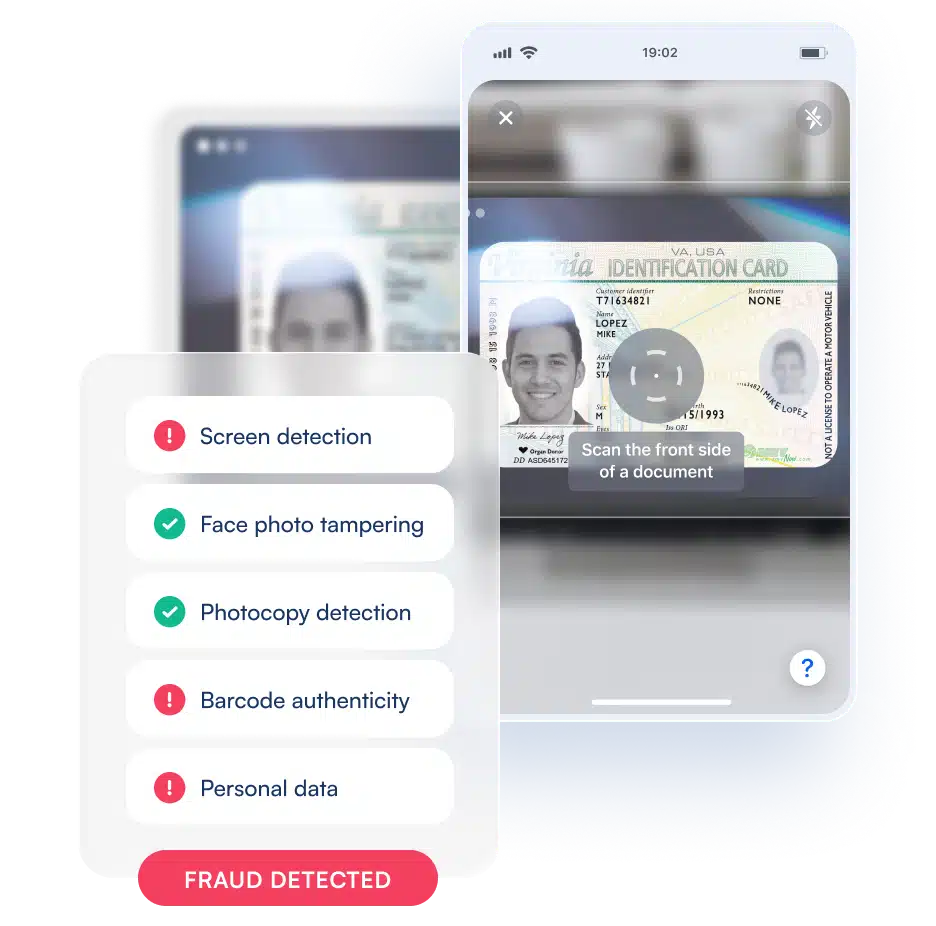
By combining document verification, biometric authentication, and real-time fraud detection, Microblink enables airlines and travel platforms to verify passenger identities quickly and accurately.
Key advantages include:
- Automated document verification to validate IDs at enrollment
- Biometric verification and liveness detection to ensure identity authenticity
- Fast, mobile-first user experience for seamless passenger onboarding
- Global document coverage for international travel scenarios
- Scalable integration with existing airline and airport systems
Microblink helps organizations implement identity verification workflows that support One ID while reducing fraud and improving passenger experience.