
AI Deepfake Detection: Prevent Account Takeover and Identity Fraud
Deepfake detection has moved from an abstract security concern to a frontline risk priority. As synthetic media attacks grow more realistic and accessible, fraudsters are increasingly using AI-generated faces, manipulated videos, and altered biometric signals to bypass traditional identity verification systems. For fraud and risk leaders, the challenge is no longer whether deepfakes are a threat, but whether existing controls are capable of detecting them before financial losses, regulatory exposure, or reputational damage occurs.
How Deepfake Attacks Bypass Legacy Identity Verification
Traditional identity verification methods were not designed to handle synthetic media at scale. Static document checks, basic facial matching, and rule-based fraud controls struggle to distinguish real users from high-quality AI-generated identities. Deepfakes exploit gaps between document verification and biometric checks, allowing attackers to present convincing but entirely fabricated identities that appear legitimate to outdated systems.
What Modern Deepfake Detection Technology Looks Like
Effective deepfake detection technology relies on advanced machine learning models trained to identify subtle anomalies in facial movements, texture inconsistencies, lighting artifacts, and biometric signal manipulation. Rather than relying on a single pass or static image comparison, modern systems analyze multiple data points across the verification journey, continuously evaluating risk as users progress through onboarding.
Why Deepfake Detection Tools Must Support Compliance
Deepfake detection tools are no longer just a fraud prevention measure; they are a compliance requirement. Regulators expect organizations to demonstrate that identity verification systems can withstand emerging threats, including synthetic media attacks. Audit-ready solutions must provide clear decisioning logic, documented controls, and defensible outcomes that align with KYC and AML requirements without introducing unnecessary friction for legitimate customers.
The Business Impact of Poor Deepfake Detection
When deepfake detection fails, the consequences extend far beyond a single fraudulent account. Financial losses, chargebacks, account takeovers, and regulatory scrutiny often follow. At the same time, overly aggressive controls increase false positives, slow onboarding, and frustrate legitimate users. The real cost is not just fraud loss, but missed revenue and damaged customer trust.
Key Capabilities Risk Teams Should Expect from Deepfake Detection Tools
| Capability | Why It Matters for Fraud & Compliance |
|---|---|
| Advanced Face Biometrics | Detects AI-generated and manipulated facial features beyond basic image matching |
| Presentation Attack Detection | Identifies spoofing attempts such as video replays, masks, or deepfake injections |
| Liveness Detection | Confirms the presence of a real, live user during verification |
| Audit-Ready Decisioning | Provides explainable results to support KYC and AML audits |
| Low-Friction User Experience | Minimizes false positives while maintaining strong fraud controls |
How Deepfake Detection Fits into a Modern Identity Platform
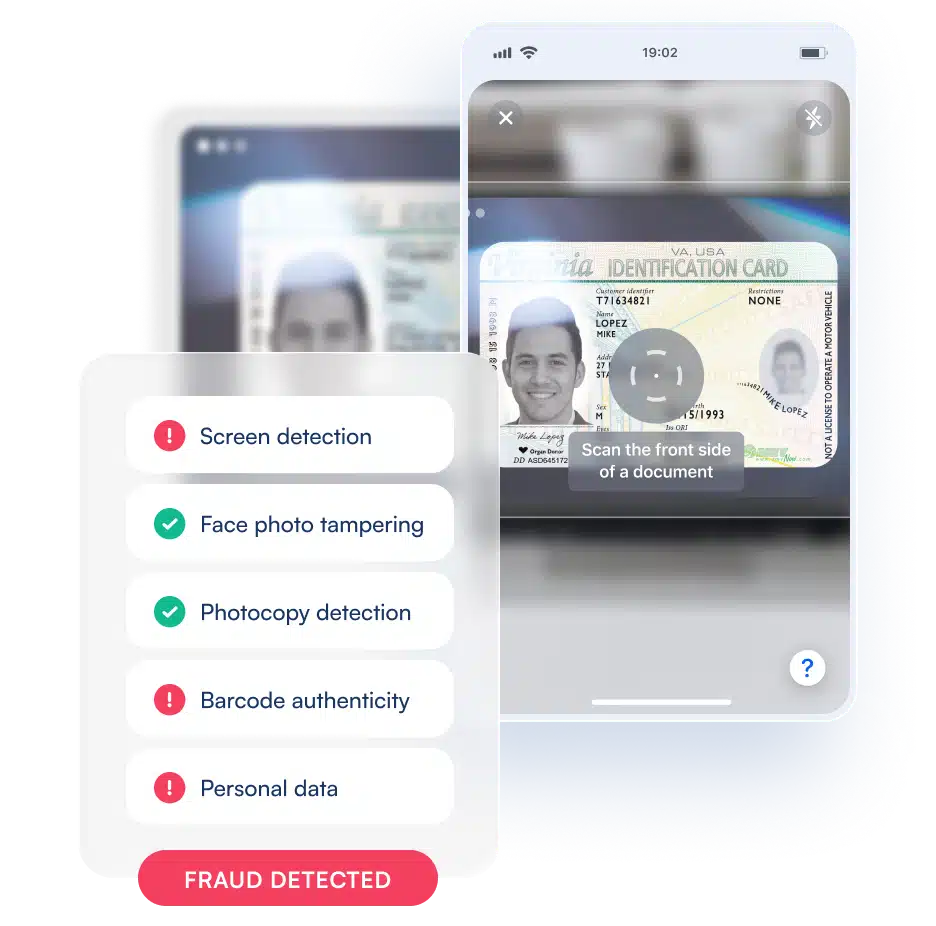
Deepfake detection is most effective when embedded within a unified identity verification platform rather than deployed as a standalone control. By combining document verification, face biometrics, liveness detection, and real-time risk assessment, organizations can create layered defenses that adapt to evolving attack techniques while maintaining fast, seamless onboarding experiences.
Strengthening Deepfake Defenses Without Slowing Growth
The goal of deepfake detection is not to add friction, but to remove uncertainty. With the right deepfake detection technology in place, fraud teams can confidently approve more legitimate users, reduce manual reviews, and demonstrate strong compliance posture. As synthetic media attacks continue to evolve, investing in advanced, AI-driven detection tools is no longer optional for organizations that take fraud prevention and customer trust seriously.