
Top 5 AI Solutions for Fraud Detection and Compliance in the Hospitality Industry

The hospitality industry is navigating a difficult balance: guests expect fast, low-friction digital experiences that improve their guest satisfaction score, while fraud teams are under pressure to stop chargebacks, identity abuse, stolen-card bookings, and reputational manipulation before losses hit the bottom line. For Fraud Decision-Makers (FDMs) in hospitality, that means evaluating tools not just on convenience, but on how well they support compliance, reduce operational risk, and fit into broader control frameworks.
Traditional manual review processes are no longer enough. Modern fraud controls increasingly rely on agentic AI and automated systems that can analyze booking behavior, verify identity documents in real time, secure payment workflows, and detect anomalous patterns across both guest-facing and back-office operations. In practice, the strongest programs combine multiple layers, including identity verification, payment security, transaction monitoring, and reputation protection.
This list reviews five leading options relevant to hotel groups and hospitality operators: Microblink, Mews, Canary Technologies, custom ML frameworks discussed by HFTP, and review integrity algorithms used by platforms like Tripadvisor and Yelp. Each solves a different part of the hotel fraud problem, so the right choice depends on whether your primary priority is secure onboarding, payment protection, operational controls, or brand trust.
Competitor Comparison Table
| Product | Compliance Features | Industry Focus | AI Capabilities | User Experience | Developer Experience |
| Microblink | Strong for KYC/AML and identity verification with real-time document checks; helps support chargeback prevention, but does not cover full property or payment workflows. | Best suited to hospitality onboarding and secure digital check-in, though the product itself is a cross-industry identity layer. | Advanced AI document scanning, data extraction, forged document detection, and screen-replay attack detection. | Fast, low-friction guest verification improves check-in flow, but performance can vary with end-user camera quality. | Requires SDK or app integration into existing mobile or web flows; easier than building custom AI, but not a turnkey PMS solution. |
| Mews | Strong payment security through embedded payments, tokenization, and automated reconciliation; reduces exposure of sensitive guest payment data. | Hospitality-native platform focused on hotel operations, PMS, POS, payments, and multi-property management. | Uses automation, guest intelligence, and activity monitoring, though it is more fintech and workflow-driven than a specialized fraud AI engine. | All-in-one cloud experience can simplify staff workflows, but there can be a learning curve and dependence on stable internet connectivity. | Broad platform integrations are valuable, but migration from legacy systems can be complex and advanced capabilities may require higher-tier plans. |
| Canary Technologies | Supports fraud reduction through guest verification, secure mobile check-in, and digital authorizations that help reduce chargebacks and reservation fraud. | Highly focused on guest-facing hospitality workflows such as contactless arrival, mobile entry, upsells, and pre-arrival processing. | Provides security-focused automation and real-time fraud alerting during check-in, but with a narrower AI scope than full transaction analytics platforms. | Convenient mobile-first check-in experience for guests and staff, though adoption depends on guest comfort with mobile web flows and staff dashboard training. | Works as an add-on with PMS integrations, making deployment lighter than custom builds, but it still requires a compatible PMS and added software spend. |
| Custom ML Frameworks (HFTP) | Most flexible option for fraud and audit controls, including anomaly detection, employee theft monitoring, and high-risk reservation analysis; requires internal governance and clean data. | Best for larger hotel groups or organizations with significant transaction volume and a need for highly customized fraud models. | Most sophisticated AI stack in the comparison, including neural networks, random forests, SVMs, and decision-tree-based analysis with strong adaptability. | Powerful for back-office analysts and auditors, but not a guest-friendly front-end product and may be difficult for non-technical teams to use directly. | Most demanding option by far: requires data science expertise, model training, infrastructure, labeled data, and continuous tuning and maintenance. |
| Review Integrity Algorithms (Yelp/TripAdvisor) | Useful for trust and moderation rather than direct financial compliance; helps identify fraudulent reviews, but hotels have limited control over moderation outcomes. | Focused on hospitality reputation management and review ecosystem integrity rather than bookings, payments, or PMS operations. | Uses linguistic cue analysis, behavioral footprint tracking, and sentiment-based pattern mining to flag fake or manipulated reviews. | Mostly invisible and automated from the hotel perspective, which is convenient, but false positives can affect legitimate reviews and analysis only happens after posting. | Very limited developer control or customization because the algorithms are proprietary platform systems rather than tools hotels can directly configure. |
1. Microblink
Summary: Microblink is a specialized AI-driven identity verification OS built to help operators tackle identity and fraud in the hospitality industry at the earliest and most vulnerable stage of the guest journey: booking and check-in. For FDMs, its value is clear: it verifies that a guest is who they claim to be, helps tie identity to payment credentials, and creates a more defensible audit trail for compliance and chargeback disputes. It is especially relevant for medium-sized businesses and enterprises that want stronger controls without introducing visible friction for legitimate guests.
Key benefits
- Stops fraudulent bookings earlier by verifying guest identity and payment credentials in real time.
- Reduces chargeback exposure by creating stronger evidence of guest identity and presence.
- Improves check-in efficiency by automating data capture and reducing manual entry errors (see how Poli Check-in and Microblink help Spanish hospitality providers save time and stay compliant).
- Supports compliance objectives by maintaining a secure, auditable verification workflow.
Core features
- Real-time AI-powered verification: BlinkID Verify and BlinkCard can authenticate identity documents and payment cards during online booking or check-in.
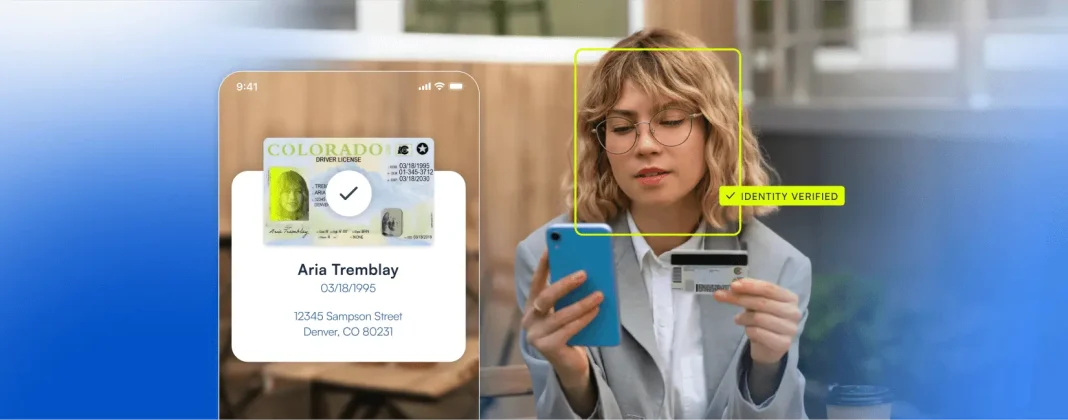
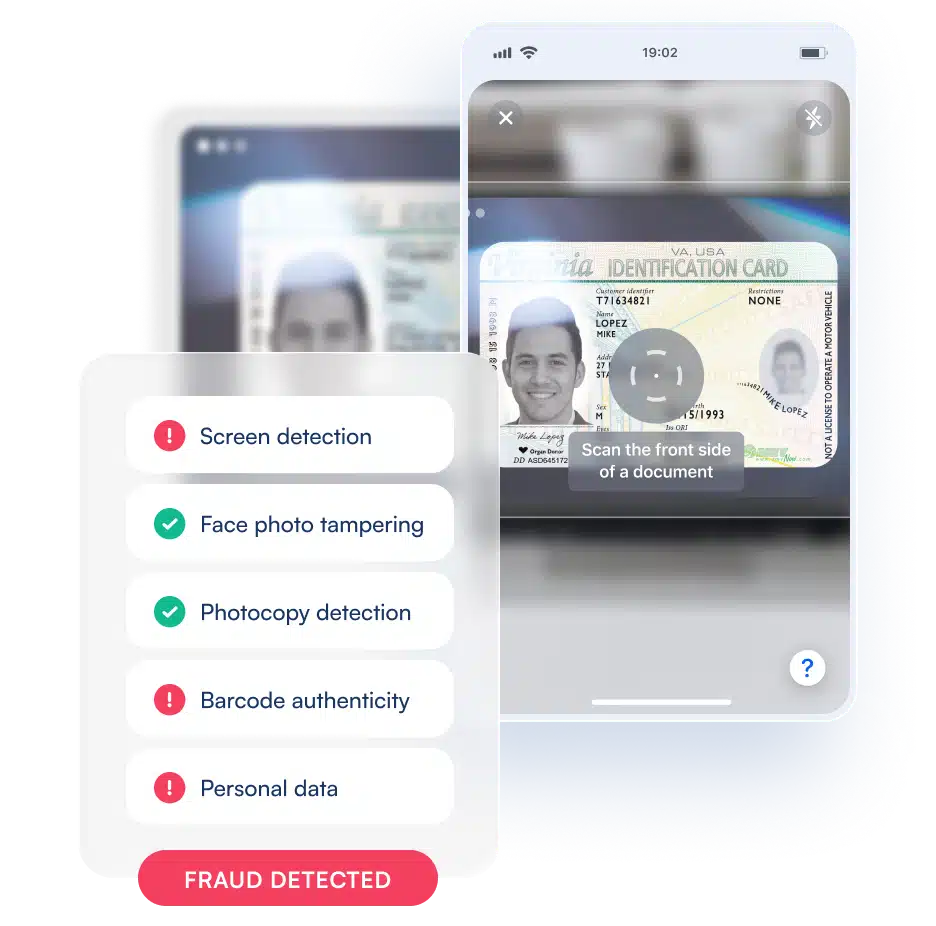
- Multi-layered document and biometric analysis: The platform checks document integrity, data consistency, face image tampering, screen replay attempts, and biometric/liveness signals.
- On-device data extraction: Critical capture and verification tasks can happen directly on the user’s device, improving speed and reducing unnecessary transmission of sensitive data.
- Broad document support: Microblink automates extraction from more than 2,500 document types, helping global hotel groups handle diverse guest populations.
Primary use cases
- Secure online and mobile bookings: Require guests to scan ID and payment cards to use the best detection tools for card-not-present fraud and fake reservations.
- Frictionless, secure check-in: Let staff or guests capture identity data in seconds and populate PMS records while validating the document.
- Age verification for ancillary services: Confirm eligibility for age-restricted amenities without lengthy manual review.
Recent updates
- Expanded global document coverage, including more niche regional IDs.
- Enhanced AI models trained to detect forged and AI-generated identity documents, including deepfake-style fraud attempts and synthetic media attacks.
- Improved browser-based scanning performance to support more consistent verification without requiring an app download.
Limitations
- Requires SDK or API integration into an existing mobile or web workflow.
- Focuses on the identity layer rather than full PMS, payments, or back-office fraud controls.
- Scan performance still depends partly on guest device camera quality.
For hospitality organizations looking to stop fraud at the source, Microblink stands out because it addresses identity risk before a booking becomes a chargeback, dispute, or compliance issue.
2. Mews
Platform summary: Mews is a hospitality-native cloud PMS that combines hotel operations, POS, and payments into a single operating environment. For compliance officers, CFOs, and risk leaders, its biggest advantage is not specialized identity verification but stronger payment hygiene. By embedding payments and tokenization directly into hotel workflows, Mews reduces the number of manual touchpoints involving cardholder data and helps tighten internal controls across properties.
Core features
- Embedded payments with tokenization: Protects card data from booking through checkout by replacing sensitive information with secure tokens.
- Automated financial reconciliation: Matches payments, bookings, and ancillary charges to identify discrepancies faster.
- Guest intelligence and activity monitoring: Tracks behavior and spending activity that may point to elevated reservation risk or misuse.
Primary use cases
- Preventing payment fraud: Reduces reliance on manual card handling and fragmented payment processes.
- Streamlining multi-property operations: Centralizes workflows and data visibility for hospitality groups managing multiple locations.
- Protecting revenue integrity: Automates fee handling, reconciliations, and exception management to reduce leakages.
Recent updates
Mews has continued expanding its embedded payments capabilities in 2025, including broader support for localized payment methods and additional automation announced through its Unfold event series. The direction is clear: reduce front-desk admin work while strengthening payment security within the PMS itself.
Limitations
- Migration from legacy systems can be time-consuming and operationally complex.
- Some advanced capabilities may be gated behind higher subscription tiers.
- Because it is cloud-based, smooth operation depends heavily on reliable connectivity.
Mews is strongest when the main priority is securing hotel payments and operational workflows in one hospitality-native system rather than adding a dedicated identity verification layer.
3. Canary Technologies
Platform summary: Canary Technologies focuses on securing the guest-facing portion of the hospitality journey, especially check-in, payment authorization, and pre-arrival workflows. For FDMs concerned about chargebacks, reservation fraud, and weak documentation during disputes, Canary is attractive because it creates a cleaner digital record of guest actions before keys are issued or services are delivered.
Core features
- Secure mobile check-in: Moves arrival and verification processes into a controlled digital flow.
- Digital authorizations and signatures: Replaces paper authorization forms with more defensible digital records.
- Digital tipping and upsell security: Helps route add-on revenue through secure, trackable channels.
Primary use cases
- Reducing chargeback losses: Captures authorization and guest-presence evidence that can support dispute resolution and teach teams how to prevent friendly fraud.
- Preventing reservation fraud: Flags mismatches between guest identity and payment details before arrival.
- Contactless guest processing: Reduces physical card handling and other manual risks at the desk.
Recent updates
In 2025, Canary has expanded integrations with major PMS platforms, including deeper real-time syncing and fraud alerting. It has also enhanced its contactless check-in suite with stronger biometric verification options, which helps hotels harden guest-facing identity controls.
Limitations
- Works best as an add-on layer, not a replacement for core PMS infrastructure.
- Adoption depends partly on guest comfort with mobile-based workflows.
- It is more guest-journey focused than back-office accounting or internal fraud monitoring.
Canary is a strong fit for hotel operators that want to modernize check-in while improving documentation around authorization, identity, and guest consent.
4. Custom ML Frameworks (HFTP)
Platform summary: Custom ML frameworks, often discussed in the context of HFTP and broader hospitality technology strategy, represent the most flexible and most resource-intensive path on this list. Rather than buying a packaged fraud product, large hotel groups can build proprietary fraud models using their own historical booking, payment, and operational data. For enterprise FDMs with mature analytics teams, this approach can deliver highly tailored fraud scoring and internal control capabilities.
Core features
- Neural networks and deep learning: Useful for finding non-obvious fraud relationships across large and complex datasets.
- Random forest models: Improve classification accuracy and reduce false positives compared with static rules alone.
- Support vector machines and decision logic: Help separate legitimate guest behavior from suspicious patterns in noisy environments.
Primary use cases
- Internal audit and theft detection: Analyze voids, refunds, staff actions, and transactional anomalies for signs of misappropriation.
- Predicting high-risk reservations: Score incoming bookings using behavioral, payment, and contextual signals.
- Large-scale data auditing: Surface longer-term patterns that inform enterprise fraud policy and risk strategy.
Recent updates
Recent developments have pushed these frameworks closer to real-time use, including instant fraud scoring during booking flows and broader incorporation of techniques such as real-time random forests and linguistic analysis for suspicious communications.
Limitations
- Requires in-house data science, engineering, governance, and maintenance capacity.
- Setup costs can be high due to data preparation, infrastructure, and model training needs.
- Performance depends heavily on the quality and quantity of labeled historical data.
For large hospitality enterprises, this route offers the highest level of customization. For most teams, however, it is best viewed as a complement to core fraud tooling rather than a quick operational win.
5. Tripadvisor and Yelp Review Integrity Algorithms
Platform summary: Review integrity algorithms are a different kind of fraud control. They do not stop stolen-card bookings or verify guest identities, but they help protect a hotel’s reputation from manipulated reviews, competitor attacks, and synthetic feedback campaigns. For FDMs, that matters because reputational fraud can directly affect occupancy, ADR, and long-term brand trust.
Core features
- Linguistic cue analysis: Detects exaggerated phrasing, repetitive language, and text patterns associated with fake reviews.
- Behavioral footprint tracking: Monitors reviewer activity, posting velocity, and account behavior for suspicious signals.
- Sentiment-dependent pattern mining: Looks for coordinated spikes in suspiciously positive or negative sentiment.
Primary use cases
- Identifying malicious competitor attacks: Helps surface clusters of fake negative reviews aimed at lowering rankings.
- Detecting solicited positive reviews: Flags attempts to manipulate platform trust systems through purchased or coordinated feedback.
- Supporting reputation risk management: Gives hotels some protection against large-scale review abuse that would be impossible to monitor manually.
Recent updates
In 2025, major platforms have continued tightening moderation around AI-assisted review fraud, including stronger filtering for LLM-generated content and expanded labeling or suppression approaches for suspicious submissions.
Limitations
- Hotels have limited visibility into how proprietary moderation decisions are made.
- False positives can occasionally affect legitimate guest reviews.
- These systems are reactive, since the review must usually be posted before analysis occurs.
These algorithms are best understood as a reputation-protection layer, not a financial fraud control. Still, for hotel brands where online trust directly shapes revenue, they remain an important part of a broader fraud and compliance strategy.
What types of fraud are most common in the hospitality industry today?
Hospitality fraud now spans far beyond basic stolen-card transactions. The most common risks usually include:
- Card-not-present (CNP) booking fraud: Fraudsters use stolen payment credentials to make online reservations, often for high-value stays or last-minute bookings. This is a challenge shared by other travel sectors, similar to the key challenges car rental companies face regarding digital identity.
- Chargeback abuse: A guest completes a stay or uses services, then disputes the transaction and claims the booking was unauthorized.
- Identity misuse: Fraudsters use fake, forged, stolen, or AI-manipulated identity documents during booking or check-in.
- Reservation fraud: Bad actors create fake bookings, exploit promotions, resell rooms, or use false identities to avoid accountability.
- Account takeover and loyalty fraud: Compromised guest accounts can be used to redeem points, change reservation details, or access stored payment methods.
- Synthetic or manipulated reviews: Fraudulent reviews can damage a property’s reputation or artificially inflate trust signals.
- Internal fraud and revenue leakage: Staff misuse, unauthorized refunds, voids, or manipulation of charges can create major financial losses.
For most hotel groups, the highest-impact starting point is the front end of the guest journey: booking, identity verification, payment authentication, and check-in. That is where many downstream losses begin. If a business verifies who the guest is before arrival and ties that identity to the payment method and reservation record, it becomes much harder for fraudsters to move through the system undetected.
A strong hospitality fraud strategy usually combines:
- Identity verification
- Payment security
- Transaction monitoring
- Audit and exception review
- Reputation and account protection
This layered approach is especially important for Fraud Decision-Makers because no single control catches every threat.
How does AI-based identity verification help reduce hotel chargebacks and fraudulent bookings?
AI-based identity verification helps by stopping fraud earlier, before it turns into a disputed transaction, operational disruption, or compliance issue. In hospitality, that matters because many losses are created when hotels cannot confidently prove who made the booking, who checked in, and whether the cardholder or guest actually authorized the stay.
A modern identity verification system can:
- Validate government-issued IDs in real time
- Detect forged or tampered documents
- Compare document data against reservation details
- Check for liveness or biometric consistency
- Flag screen replay, deepfake, or image injection attempts
- Create an auditable trail of verification activity
That directly supports fraud reduction in several ways:
- Fewer fake reservations: Fraudsters using stolen identities or manipulated documents are more likely to be caught before check-in.
- Stronger chargeback evidence: If the hotel can show the guest completed identity verification, submitted a valid document, and matched booking details, dispute responses become more defensible.
- Lower manual-review burden: Risk teams can focus on exceptions instead of reviewing every questionable reservation by hand.
- Improved compliance posture: Verification records help support internal controls and broader requirements around secure handling of guest identity data.
For many hospitality organizations, identity verification is one of the most valuable early controls because it addresses fraud at the point where bad actors are still easiest to stop. That is also why solutions like Microblink are particularly relevant: they strengthen the identity layer without requiring hotels to replace their entire PMS or payments stack.
What should Fraud Decision-Makers look for when evaluating AI fraud tools for hospitality?
Hospitality leaders should avoid evaluating fraud tools on “AI” claims alone. The better approach is to assess whether a solution improves risk outcomes, supports compliance, and fits real hotel workflows.
Key evaluation criteria include:
- Coverage of the actual fraud problem:
Determine whether the tool is designed for identity fraud, payments fraud, internal theft, reservation abuse, chargeback prevention, or review manipulation. Many products are strong in one area but not across the full fraud lifecycle. - Integration with existing systems:
The solution should work with your PMS, booking engine, mobile check-in flow, payment processor, CRM, or case-management tools. A strong control that cannot fit operational workflows often underperforms in practice. - Auditability and evidence quality:
For compliance officers, internal auditors, and CFOs, it is not enough to detect risk. The platform should also create clear records of what was checked, what was flagged, and what evidence supports the decision. - False-positive management:
Hospitality operators cannot afford to block large numbers of legitimate guests. Look for tools that balance fraud detection strength with guest experience and allow risk-based escalation rather than all-or-nothing decisions. - Data privacy and security controls:
Verify how sensitive guest identity and payment data are captured, processed, stored, and shared. This is especially important for multinational hotel groups dealing with varying privacy and compliance requirements. - Real-time performance:
Fraud decisions often need to happen during booking or check-in, not hours later. Delayed controls may be useful for analytics, but they are less effective at preventing immediate losses. - Operational fit for staff and guests:
Front-desk teams and guests need simple, intuitive workflows. The best tools reduce manual steps rather than adding complexity. - Scalability across properties and regions:
Enterprise hospitality groups need solutions that can handle multiple brands, jurisdictions, languages, and document types.
In practice, many FDMs choose a layered stack: a specialized identity verification tool, secure payments, operational controls in the PMS, and broader transaction monitoring. That structure usually provides better risk coverage than relying on one platform to do everything.
Can hotels add stronger fraud controls without creating friction for guests?
Yes, but only if the controls are implemented carefully. The goal is not to add more steps for every guest. The goal is to make verification fast, targeted, and mostly invisible for legitimate users, while applying stronger checks only where needed.
The most effective low-friction approaches usually include:
- Mobile or browser-based ID capture instead of manual desk review
- Automated data extraction to reduce form filling and front-desk typing
- Real-time document validation so staff do not have to inspect IDs manually
- Risk-based workflows that escalate only suspicious bookings
- Pre-arrival verification so checks happen before a guest is standing at the desk
When implemented well, AI can actually improve the guest experience by:
- speeding up check-in,
- reducing repeated document handling,
- minimizing payment disputes later,
- and giving staff more time to focus on service instead of manual verification tasks.
For example, if a guest can securely scan an ID and payment card before arrival and have that data validated automatically, the hotel gets stronger fraud protection while the guest gets a faster arrival experience. That balance is especially important in hospitality, where revenue and brand perception depend on convenience as much as security.
The main implementation risks are:
- overusing manual review,
- forcing app downloads when a browser flow would work,
- and applying the same friction level to every booking regardless of risk.
That is why specialized identity tools are often valuable: they can harden security at the earliest stage without turning check-in into a compliance bottleneck.
Is one fraud platform enough for hospitality, or do hotels need a layered approach?
Most medium-sized and enterprise hospitality businesses need a layered approach, not a single tool. Fraud in hospitality touches multiple systems and stages of the guest journey, so no single platform usually covers everything well.
A practical fraud stack often looks like this:
- Identity verification layer: Confirms the guest is real and the submitted document is authentic.
- Payment security layer: Protects card data, supports tokenization, and reduces exposure to payment fraud via payment fraud API integrations.
- PMS and workflow controls: Tracks reservations, check-in activity, authorizations, and operational exceptions.
- Transaction monitoring and analytics: Detects suspicious booking patterns, unusual refunds, or internal anomalies.
- Dispute and audit support: Preserves records for investigations, chargebacks, and compliance reviews.
- Reputation integrity monitoring: Helps identify suspicious review manipulation or trust abuse.
For many FDMs, the identity layer is the best place to begin because it prevents bad actors from entering the process in the first place. From there, payment controls and monitoring tools provide additional protection.
This is also why a tool like Microblink often fits well in hospitality environments: it does not try to replace the entire hotel tech stack. Instead, it strengthens a critical early control point — identity verification during booking and check-in — while complementing PMS, payments, and broader fraud operations.
In short:
- One tool may solve one major problem
- A layered program is what creates durable fraud resilience
That is usually the right model for hotels balancing guest experience, financial risk, and compliance accountability.