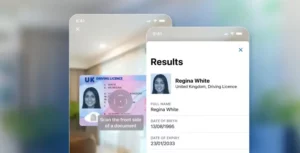

What is Face Liveness Detection?
Face liveness detection is a security technology that verifies a person is physically present during facial recognition by detecting signs of life and preventing spoofing attacks using photos, videos, or masks. This technology addresses a critical vulnerability in facial recognition systems by distinguishing between genuine human faces and fraudulent presentation attacks. As digital identity verification becomes increasingly important across industries, face liveness detection serves as an essential safeguard against sophisticated fraud attempts.
How Face Liveness Detection Confirms Human Presence
Face liveness detection operates as a security layer that analyzes biometric markers and behavioral patterns to confirm human presence during facial authentication. The technology uses artificial intelligence and machine learning algorithms to examine multiple indicators simultaneously, creating a complete assessment of whether a face belongs to a live person.
The core detection mechanisms work through several complementary approaches:
- 3D depth sensing measures facial contours and spatial relationships that cannot be replicated by flat images or screens
- Texture analysis examines skin patterns, pore details, and surface characteristics that distinguish real skin from printed materials or digital displays
- Motion detection monitors natural micro-movements, breathing patterns, and involuntary facial expressions that indicate life
- Biometric marker analysis tracks blood flow patterns, pulse detection, and micro-expressions that occur only in living tissue
These detection techniques work together to prevent common spoofing attacks including photograph presentations, video replay attacks, 3D masks, and digital screen displays. The system works with existing facial recognition infrastructure, adding this security layer without requiring complete system overhauls.
Common Spoofing Attacks and Security Threats
Face liveness detection addresses several sophisticated attack methods that attempt to bypass facial recognition systems. Understanding these threats helps explain why liveness detection is essential for secure authentication.
Print Attacks
Attackers use high-resolution photographs printed on paper or displayed on screens to impersonate legitimate users. These attacks exploit the fact that basic facial recognition systems cannot distinguish between a real face and a flat image. Advanced print attacks may include:
- High-quality photo prints with realistic skin tones and facial details
- Screen replay attacks using tablets or smartphones to display stolen photos
- Cut-out attacks where eye regions are removed from photos to simulate blinking
Video Replay Attacks
More sophisticated than static photos, video replay attacks use recorded footage of legitimate users to fool facial recognition systems. These attacks can include:
- Pre-recorded video playback showing natural facial movements and expressions
- Loop attacks that repeat specific facial gestures like blinking or head movements
- Interactive video manipulation where attackers edit videos to respond to authentication prompts
3D Mask Attacks
Physical masks created from photographs or 3D scans attempt to replicate facial geometry and features. These attacks represent advanced threats because they can fool systems that rely on basic depth detection:
- Silicone masks with realistic skin texture and facial contours
- 3D-printed masks based on stolen biometric data or social media photos
- Partial masks that cover specific facial regions while leaving others exposed
Deepfake and AI-Generated Attacks
Emerging threats use artificial intelligence to create realistic but fake facial representations:
- Real-time deepfake generation that can respond to authentication challenges
- AI-generated synthetic faces that don’t correspond to real individuals
- Voice and video synthesis combining multiple biometric spoofing techniques
Digital Injection Attacks
Technical attacks that bypass camera input by injecting fake video streams directly into the authentication system:
- Camera feed manipulation replacing live input with pre-recorded content
- Software-based spoofing that intercepts and modifies biometric data
- API attacks targeting the communication between cameras and authentication systems
Three Main Approaches to Liveness Detection
Organizations can choose from different liveness detection approaches based on their security requirements and user experience priorities. Each method offers distinct advantages and trade-offs that make them suitable for specific applications.
| Method Type | User Interaction Required | Detection Technique | Accuracy Level | User Experience | Best Use Cases
|
|---|---|---|---|---|---|
| Active Liveness Detection | Yes – specific actions like blinking, head movement, or speaking | Challenge-response with real-time verification | High security effectiveness | Moderate friction, requires user cooperation | High-security applications, banking authentication, government access |
| Passive Liveness Detection | No – works automatically | AI analysis of natural biometric markers and micro-expressions | Good security with advanced algorithms | Seamless, no user effort required | Consumer apps, mobile authentication, high-volume processing |
| Challenge-Response Methods | Yes – random prompts and actions | Dynamic challenges that change per session | Very high security through unpredictability | Higher friction, longer authentication time | Critical security systems, sensitive data access, compliance-heavy industries |
Active liveness detection requires users to perform specific actions such as blinking, turning their head, or speaking predetermined phrases. This method provides strong security assurance because it’s difficult for attackers to anticipate and replicate the required responses in real-time.
Passive liveness detection operates automatically without user interaction, analyzing natural biometric indicators and micro-expressions that occur during normal facial recognition. This approach prioritizes user experience while maintaining reasonable security levels through sophisticated AI algorithms.
Challenge-response methods present users with random, unpredictable prompts that change with each authentication attempt. These systems offer the highest security levels but require more user engagement and longer authentication times.
Implementation Best Practices and Considerations
Successful deployment of face liveness detection requires careful planning and attention to multiple technical and operational factors. Organizations should evaluate these key considerations when implementing liveness detection systems.
Privacy and Compliance Requirements
- Data protection regulations such as GDPR, CCPA, and BIPA require specific handling of biometric data
- Consent management ensuring users understand how their biometric data is collected, processed, and stored
- Data minimization collecting only necessary biometric information and implementing secure deletion policies
- Cross-border data transfer compliance when operating in multiple jurisdictions with different privacy laws
Performance Optimization
- Lighting conditions ensuring the system works effectively in various environmental conditions
- Camera quality requirements specifying minimum resolution and hardware capabilities for reliable detection
- Processing speed balancing security thoroughness with user experience expectations
- False positive/negative rates tuning detection sensitivity to minimize authentication failures while maintaining security
Integration Approaches
- API integration connecting liveness detection with existing authentication infrastructure
- SDK implementation embedding detection capabilities directly into mobile applications
- Cloud vs. on-premise deployment choosing between scalable cloud solutions and local processing for sensitive environments
- Fallback mechanisms providing alternative authentication methods when liveness detection fails
User Experience Design
- Clear instructions providing users with simple, understandable guidance for authentication steps
- Accessibility considerations ensuring the system works for users with disabilities or physical limitations
- Multi-language support accommodating diverse user populations with localized interfaces
- Error handling offering helpful feedback when authentication attempts fail
Security Architecture
- Anti-spoofing algorithm selection choosing detection methods appropriate for identified threat models
- Regular security updates maintaining protection against evolving attack techniques
- Monitoring and logging implementing comprehensive audit trails for security analysis
- Incident response procedures establishing protocols for handling security breaches or system compromises
Industries and Applications That Rely on Liveness Detection
Face liveness detection strengthens security across diverse industries where identity verification is critical for preventing fraud and protecting sensitive resources. The technology adapts to various implementation contexts while maintaining consistent anti-spoofing capabilities.
Key application areas include:
- Mobile device authentication and app security – Protecting personal devices and sensitive applications from unauthorized access through photo or video attacks
- Banking and financial services – Securing Know Your Customer (KYC) processes, mobile banking authentication, and account opening procedures where regulatory compliance is essential
- Identity verification for online services – Enabling secure user onboarding for digital platforms, e-commerce accounts, and subscription services that require verified identities
- Access control and physical security systems – Preventing unauthorized entry to buildings, secure facilities, and restricted areas using advanced biometric verification
- Government applications including border control – Supporting passport verification, visa processing, and immigration checkpoints where security requirements are paramount
The technology proves particularly valuable in scenarios where remote identity verification is necessary, such as digital account opening, telemedicine patient verification, and online education proctoring. Financial institutions rely heavily on liveness detection to meet regulatory requirements while providing convenient customer experiences.
Healthcare organizations implement these systems for patient identification and secure access to medical records, while educational institutions use them for exam proctoring and campus security. The versatility of face liveness detection makes it applicable across any industry where confirming human presence is essential for security or compliance purposes.
Final Thoughts
Face liveness detection represents a critical security advancement that addresses fundamental vulnerabilities in facial recognition systems by confirming human presence and preventing spoofing attacks. The choice between active, passive, and challenge-response methods depends on balancing security requirements with user experience considerations, while implementation success relies on selecting appropriate detection techniques for specific use cases.
As digital identity verification continues to evolve, face liveness detection will remain an essential component of robust authentication systems, providing the security foundation necessary for trusted digital interactions across industries. Organizations implementing these systems must carefully consider privacy requirements, performance optimization, and integration approaches to ensure successful deployment that serves both security and user experience objectives.