
Front Desk Automation That Stops Deepfakes and Speeds KYC Compliance
Front desk automation has moved from a “nice to have” to an operational necessity. Across hospitality, travel, healthcare, financial services, and other regulated industries, customer expectations have changed permanently. People expect fast, self-service onboarding experiences that feel digital-first, while organizations are under pressure to maintain strict security, identity verification, and compliance standards. The front desk sits at the center of this tension, where efficiency, trust, and user experience collide.
Traditional front desk workflows rely heavily on manual processes: visual ID checks, form filling, staff judgment calls, and system hopping between disconnected tools. These approaches are slow, error-prone, and increasingly ineffective against modern fraud tactics like synthetic identities, stolen documents, and deepfakes. Front desk automation addresses this gap by replacing manual verification with real-time, AI-driven identity checks that are faster, more accurate, and easier to scale.
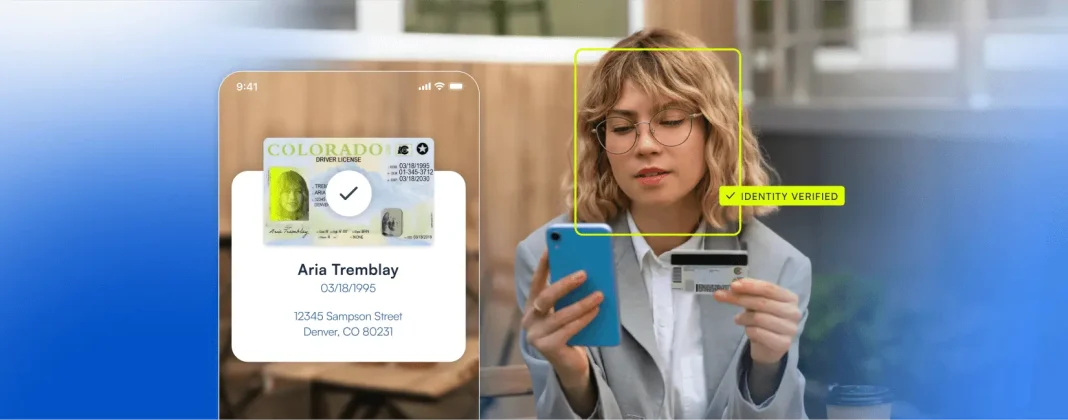
At its core, front desk automation modernizes how organizations verify identities and onboard customers. Instead of relying on staff to manually inspect documents or rekey data, automated systems capture government-issued IDs, validate authenticity, perform biometric face matching, and confirm liveness in seconds. This dramatically reduces wait times while increasing assurance, allowing teams to focus on service rather than paperwork.
Security and compliance are often cited as reasons to delay automation, but in practice, automation strengthens both. Manual processes struggle to keep up with evolving KYC and AML requirements, especially when volumes spike or staff turnover is high. Automated front desk systems apply verification rules consistently, log every step of the process, and generate audit-ready records by default. This makes it easier to demonstrate compliance during regulatory reviews without slowing down the customer journey.
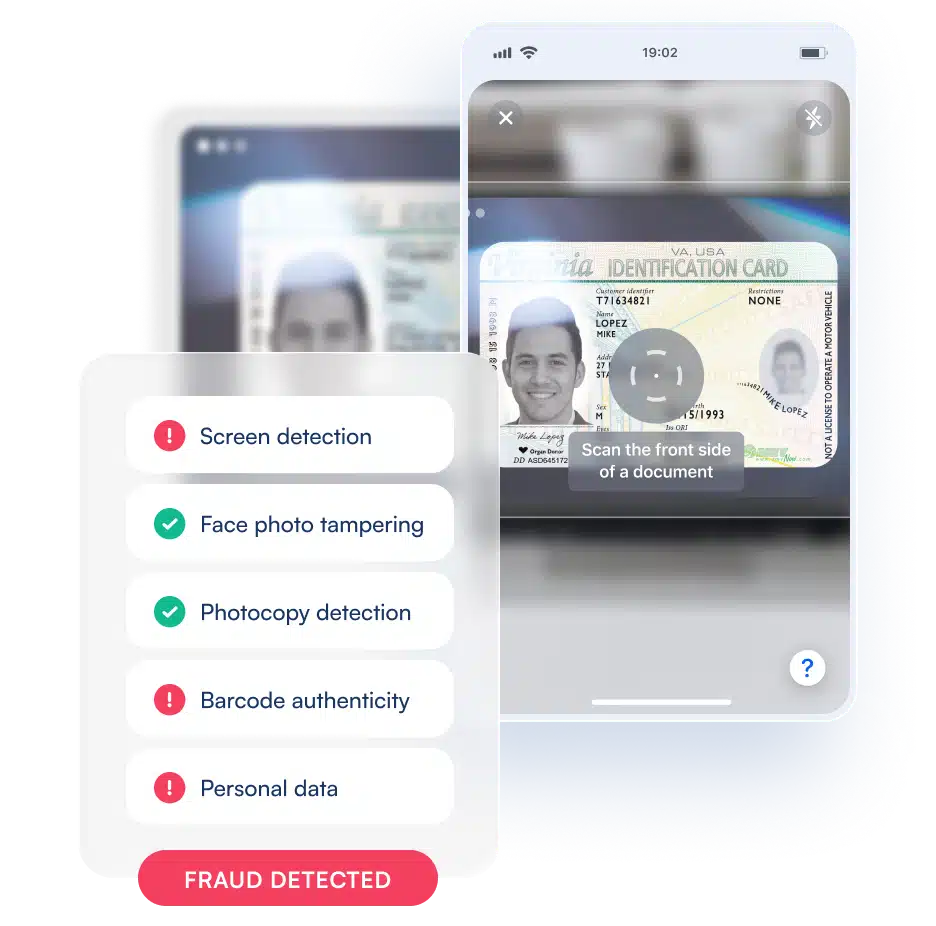
Fraud prevention is another critical driver behind front desk automation. Synthetic identities and AI-assisted document forgeries are specifically designed to bypass human inspection. Automated verification systems use machine learning to analyze document structure, security features, and biometric signals that are invisible to the human eye. When combined with liveness detection and risk-based decisioning, automation can detect fraud attempts early while allowing legitimate customers to move through quickly.
From a product perspective, front desk automation is also about resilience and scalability. Peak periods, seasonal spikes, or unexpected surges often overwhelm manual workflows, leading to long queues and frustrated customers. Automated systems scale instantly, processing verifications in parallel without adding staff or compromising accuracy. This is especially valuable for businesses operating across multiple locations, time zones, or connectivity conditions.
Core Capabilities to Look for in a Front Desk Automation Solution
- Automated government ID capture and authenticity verification
- Biometric face matching with active liveness detection
- Built-in KYC/AML compliance workflows and audit trails
- Real-time fraud and deepfake detection
- Seamless integration with existing CRM, PMS, POS, or onboarding systems
The best front desk automation solutions are designed to fit into existing operations rather than forcing a complete overhaul. Modern platforms provide lightweight SDKs and APIs that integrate directly into mobile apps, kiosks, tablets, and staff devices. This allows organizations to digitize front desk interactions incrementally, starting with high-impact use cases and expanding over time without disrupting core systems.
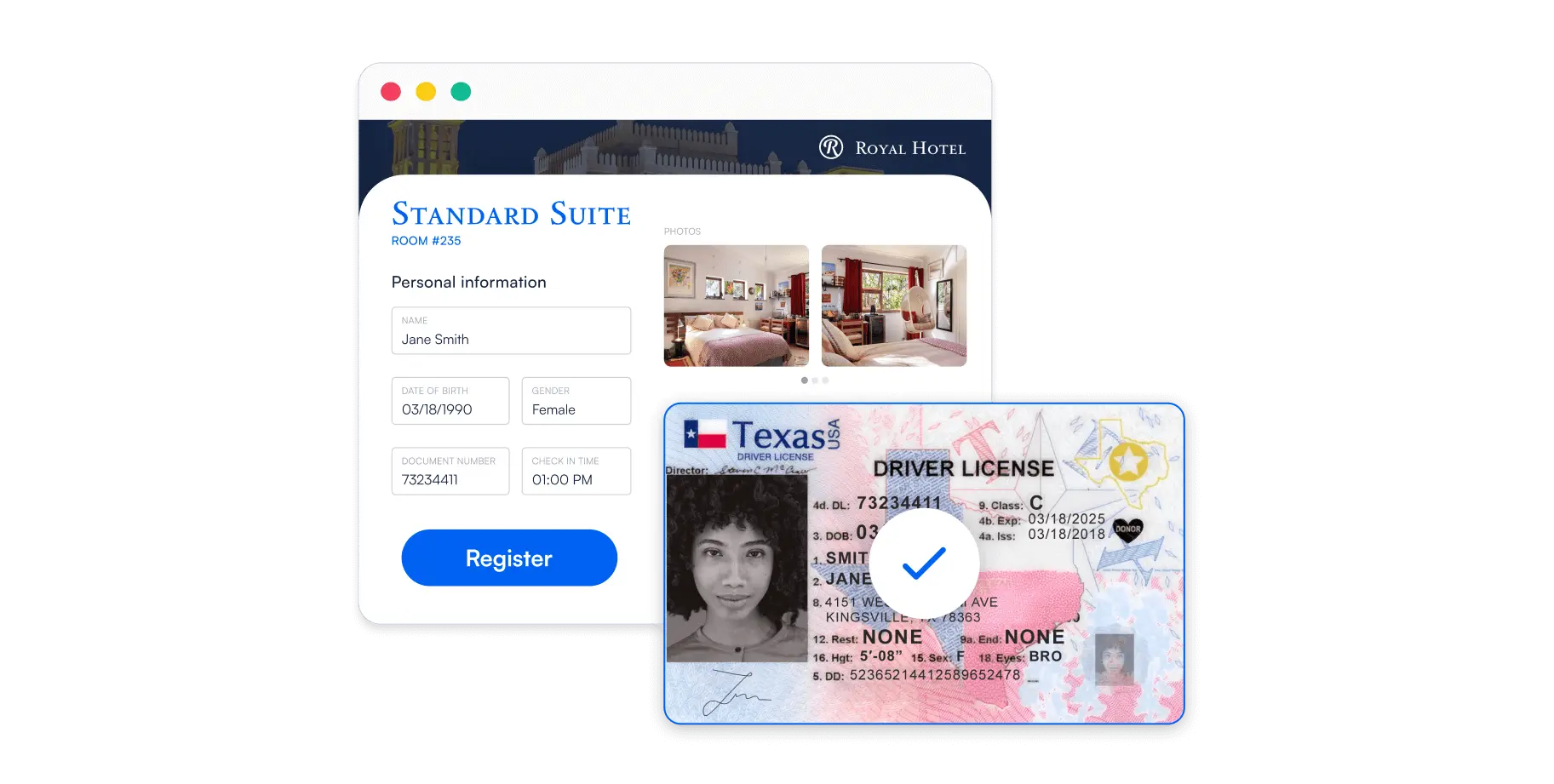
Customer experience is where front desk automation delivers the most visible gains. Automated verification reduces friction, removes repetitive data entry, and shortens check-in or onboarding to seconds instead of minutes. Guests and customers benefit from faster service and greater transparency, while staff are freed from tedious verification tasks and can focus on higher-value interactions.
Front desk automation is no longer just about speed. It is about control, consistency, and trust at scale. As identity fraud becomes more sophisticated and regulatory expectations continue to rise, businesses need systems that can adapt in real time without adding complexity. Automation provides a foundation where security, compliance, and user experience reinforce each other rather than compete.
For product managers, the opportunity is clear. Front desk automation is not a single feature but a strategic capability that touches onboarding, risk, compliance, and customer satisfaction. Implemented correctly, it transforms the front desk from a bottleneck into a competitive advantage, enabling organizations to move faster while staying secure in an increasingly digital world.