
Balancing Compliance, UX and Fraud Prevention in Financial Services Onboarding

Creating a great onboarding experience in financial services has always been challenging for a number of reasons, specifically the complex regulatory environment the industry must deal with and the high levels of fraud that target it. Financial institutions must verify identities, meet KYC/AML regulations, detect sophisticated fraud, and deliver a seamless user experience. This can sometimes feel like a herculean task for product managers. But doing it right can reap great rewards: research shows that banks can lose up to 60% of potential customers due to bad onboarding experiences. That means those who do onboarding right can gain a significant competitive advantage.
Why Onboarding Is Unique in Financial Services
Unlike other industries, onboarding in banking and financial services is governed by strict regulatory mandates. Institutions are required to:
- Verify identity under Know Your Customer (KYC) regulations
- Perform Anti-Money Laundering (AML) checks and sanctions screenings
- Understand beneficial ownership and customer intent via Customer Due Diligence (CDD)
- Maintain audit-ready compliance records
And as fraudsters turn to synthetic identities, deepfakes, and stolen credentials, financial services onboarding must go beyond checking boxes. It must be dynamic, secure, and smart enough to adapt in real time.
Where Financial Services Product Teams Struggle
Product managers in financial services face a unique set of challenges when designing onboarding experiences. The table below outlines some of the most common pain points and why they matter.
| Challenge | Description |
| KYC/AML Compliance vs. UX | Ensuring regulatory compliance without creating a clunky onboarding flow |
| Sophisticated Fraud | Difficulty detecting synthetic identities and manipulated documents with legacy tools |
| Manual Processes | Over-reliance on human checks slows onboarding, adds risk, and increases cost |
| Tech Silos | Identity systems that don’t integrate with core banking platforms or customer databases |
| Geographic Variability | Different KYC/AML standards across regions complicate global onboarding strategies |
How to Create a Great Customer Onboarding Experience
To meet modern demands, onboarding must be reimagined. Here’s what best-in-class looks like:
1. Risk-Based Tiered Due Diligence
Not all clients require the same level of scrutiny. High-net-worth or commercial clients may trigger Enhanced Due Diligence (EDD), while retail clients may only require Standard CDD. A progressive decisioning framework enables you to scale verification based on risk signals.
2. Digital Identity Verification
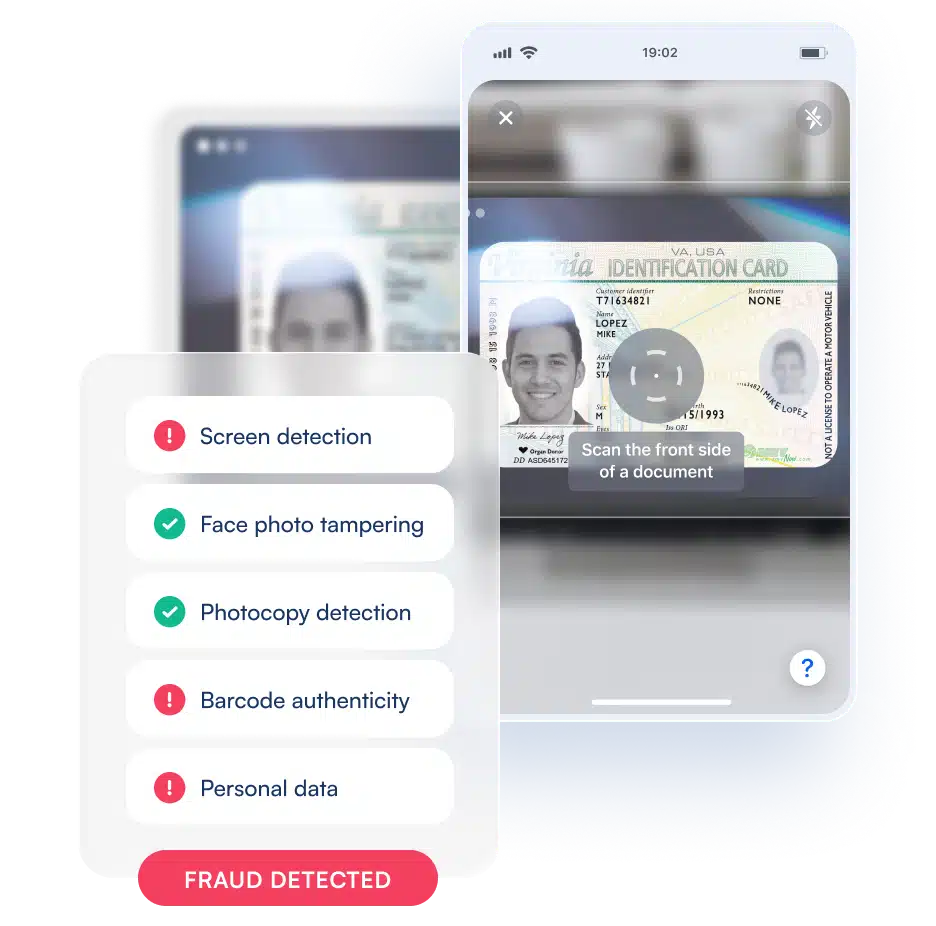
Automated ID checks, using AI to verify government-issued IDs, selfies, and even detect liveness, speed up onboarding without sacrificing accuracy. Regulatory standards in financial services require more robust checks than most sectors, so look for platforms that meet those thresholds.
3. Perpetual KYC (pKYC)
The concept of pKYC moves away from point-in-time checks. Instead, it continuously monitors and updates customer risk profiles. It’s ideal for preventing fraud long-term and reducing the burden of re-verification.
4. Seamless API Integrations
Onboarding tools should integrate with your existing systems—core banking, CRM, compliance dashboards—via digital onboarding APIs to ensure straight-through processing and reduce operational overhead.
5. Automated AML Screening
Real-time checks against global watchlists and sanctions databases are essential. Automation here saves time, improves consistency, and reduces the risk of compliance gaps.
Best Practices for Client Onboarding in Banking and Financial Services
To deliver a successful client onboarding experience in financial services, product teams must prioritize both regulatory compliance and user-centric design. This starts with mapping onboarding flows around user intent. This provides clear guidance, contextual explanations, and interactive checklists that walk clients through each step.
Transparency is also key; explaining why certain documents or verifications are needed helps build trust and reduce friction. Institutions should also localize onboarding experiences to account for regional regulations, such as GDPR in Europe or FINCEN requirements in the U.S. Continuous optimization is essential. By tracking key metrics like conversion rates, abandonment points, and time-to-onboard, teams can identify areas of friction and improve performance over time.
Finally, it’s crucial to use technology that supports audit-readiness, ensuring all onboarding activity is properly logged and easily exportable for compliance reviews.
Common Questions About Onboarding Financial Services Clients
How long does onboarding take?
Anywhere from a few minutes (with automation) to several days for high-risk clients. Streamlining identity verification significantly reduces time.
What documents are required for KYC compliance?
Typically a government-issued ID, proof of address, and for businesses, beneficial ownership documents.
How can we reduce abandonment?
Minimize steps, offer clear guidance, and let users save progress. Real-time identity verification also keeps friction low.
How can we automate AML screening?
Leverage tools with built-in access to sanctions and PEP (Politically Exposed Person) databases that update automatically.
What happens if we fail an audit?
Institutions may face fines, reputational damage, or licensing issues. That’s why audit trails and real-time compliance monitoring are essential.
How Microblink Helps: Simplifying Financial Services Customer Onboarding
Many product teams are held back by outdated tools and legacy vendors that weren’t built for the challenges of modern fraud or modern UX expectations. That’s where Microblink comes in.
Our fully automated identity verification platform is purpose-built for financial services. Features include:
- High verification success rates
- Fast, real-time processing
- Support for global documents and regulations
- Liveness detection and fraud prevention baked in
- API integration into your onboarding flow or mobile app
You can onboard more customers, more securely, and with fewer drop-offs, without sacrificing compliance.
Real-World Use Case
A digital bank using Microblink reduced onboarding time by 65%, while increasing approval rates and lowering fraud attempts, all while staying fully KYC/AML compliant.
Conclusion: Future-Proof Your Onboarding Strategy
Client onboarding in financial services is no longer just a regulatory requirement; it’s a competitive differentiator. Institutions that can verify identities fast, comply with evolving regulations, and create a positive first impression will win more clients and build longer-lasting relationships.
By adopting risk-based frameworks, leveraging RegTech tools like Microblink, and designing with the user in mind, your onboarding can evolve from painful to powerful. To learn more about how Microblink can help your institution create safe, secure and seamless onboarding flows, get in touch today.